Showing posts with label historical fiction. Show all posts

Wednesday, June 30, 2010

Book Review: The Endless Forest

After reading five books in the Wilderness series, reading The Endless Forest was a little bittersweet. And while it was glad to have some closure, overall I felt a little let down by this book.

The Endless Forest tells Daniel Bonner's story, and to be honest, most of it felt like a romance novel. Except there wasn't much tension. Unlike a lot of other books in the series, you know right away that his match is Martha Kirby, a girl from Paradise whose parents have played significant roles in previous books. Not only that, but Daniel and Martha get married pretty early on. I think that was part of the reason why I felt like there wasn't much conflict between the two main characters. There was conflict among the secondary characters, but it just didn't feel like enough to keep me really invested in the book.

I enjoyed reading about Daniel and Martha, though, I won't deny it. But most of what I wanted from this book was, as I said, closure. Most of the closure here comes in the form of newspaper articles placed at the end of the book. The articles are snippets from the future, years after the text of the text of the book has ended. That's when you find out who has had children, who has died, and when they have died. A couple of the choices Donati made there were upsetting. I would have preferred that she just ended the book where the text/story ended and left the rest to our imagination.

I hate to say it, but in a lot of ways, this story could have ended with Queen of Swords...

Sunday, June 20, 2010

Book Review: Queen of Swords

Queen of Swords is a bit of a departure from the other books in Sara Donati's Wilderness series because none of the book takes place in New York state. In fact, most of the action in this book takes place in New Orleans during the War of 1812.

At the end of Fire Along the Sky Jennet had been kidnapped by some bad dude, and her lover Luke Bonner set off to find her. When he didn't find her right away, he recruited his half-sister Hannah, a half-Mohawk physician, to come with him. It takes a year, but they eventually track her down to the Caribbean, to an island in the French Antilles. Unfortunately, their reunion is not complete because Jennet had given birth to Luke's son three months prior, but had been forced to smuggle him away out of fear for his life. As it turns out, she chose a poor foster parent, because the man's family claims the child for their own and takes him to New Orleans. So Luke, Jennet, and Hannah follow.

Now, this book is slightly annoying because I never felt like I got a satisfactory answer as to why Jennet was abducted. Maybe I skimmed over that part, but it just felt like some cheap plot device in order for Donati to write a book set in New Orleans. But whatever, I got over that.

Really this book belongs to Hannah. Luke and Jennet are reunited, and I have to say, a little too conveniently. They both have issues from the year-old abduction, and Donati doesn't try to sweep it under the rug, but at the same time I just felt like, realistically, that would be too much strain for any relationship. But again, whatever, I got over that.

And again, Donati surprises the readers in Queen of Swords. I felt like I couldn't predict what was going to happen. I gotta hand it to her, though, she is not afraid to rake her characters over the coals. I mean, hell, poor Jennet was abducted and forced to give her child away. Luke spent a whole year chasing her down only to learn that he had a son who was now missing, too. But Hannah really gets it in this book. It's extra sad, too, because she's already had a rough go of it.

Luckily for Hannah, there's a hunky man who is perfect for her. Donati can write a sexy hero, I will give her that. Both Hannah's mate and Lily's mate in Fire Along the Sky were well done.

I felt like this book just dragged on and on and on at times. I'm not sure that it was really necessary, either. But it was still enjoyable to read. I find that I'm anticipating the next book The Endless Forest more, however, because I like the books that are set back in Paradise, New York. Although I liked Hannah's story, I also like when there are multiple protagonists and antagonists going on.

Book Review: Fire Along the Sky

So, it's pretty obvious from my recent posts that I'm charging through Sara Donati's Wilderness series. It was a slow start, but things really got moving in Lake in the Clouds. And I'm happy to report that Fire Along the Sky is my favor of the series thus far.

Here's a quick synopsis: the whole series centers around Elizabeth Middleton Bonner, a late 18th century Englishwoman who was raised by her aunt in England. When she's in her late 20s she moves to Paradise, New York, a small town founded by her father, the local judge. Her father intends her to marry Richard Todd, the local doctor, but she falls for woodsman Nathanial Bonner instead. Nathanial is the son of Hawkeye and Cora (basically like Last of the Mohicans). Hawkeye was raised Mohawk, so Nathanial kind of was, too. His first wife was Mohawk, and they had a daughter, Hannah, before his wife died. Into the Wilderness centers around Elizabeth's marriage to Nathanial, through which they save the Bonner's home, Lake in the Clouds, from Richard Todd's clutches. At the end of that book, the family learns that Hawkeye's birth father was the brother of a Scottish earl. That connection brings the family to Scotland shortly after Elizabeth gives birth to her twins, Daniel and Lily, all of which takes place in Dawn on a Distant Shore. In that book we learn that Nathanial has a son, Luke, that he never knew about from a short relationship he had when he was only about 17 or 18. Luke ends up staying in Scotland with the family there. Lake in the Clouds picks up eight years later, and mostly centers on hijinks that take place in Paradise. Hannah is now 18, and Richard Todd has been mentoring her as a physician. He sends her to Manhattan to study smallpox vaccinations so she can come home to vaccinate the people in Paradise. I hesitate to say more because I don't want to give stuff away.

Fire Along the Sky picks up about ten years after Lake in the Clouds ended. Elizabeth and Nathanial have another son, Gabriel, and the twins are now 18. Lily is desperate to leave Paradise to study art somewhere, but mostly she wants to leave because she's fallen in love with a married farmer in Paradise. Daniel is eager to join the American forces against the British in the War of 1812. Luke has been back from Scotland for a number of years, and he left because he was in love with the earl's daughter, Jennet, who was forced to marry a man she didn't love. (Jennet and Hannah became good friends as girls in Dawn on a Distant Shore. Once Jennet's husband dies, she sets off for Montreal (and Luke), and Luke brings her to Paradise. I forget why. Anyway, Lily goes back to Montreal with her half-brother, and Daniel joins the war. Hannah has returned to Paradise, but she is wrestling with inner demons.

The most enjoyable parts of the book, for me, were about Lily. What I love about Sara Donati is that she's unpredictable; you don't know what is going to happen. Even when it comes to the romances in the series, you don't really know who is going to end up with who. I've been wrong a number of times. I like that she allows her characters to fall in love more than once in their lifetimes, because it feels really realistic, especially when they make mistakes. Lily's love life came as a surprise, but a pleasant one. I really liked it. Also, she's not afraid to let the villains win a few. There is one Paradise woman, Jemima Southern, who causes trouble in Lake in the Clouds and in this book. It's maddening for someone who is used to the good guys always winning, but at the same time, it makes things more believable and more interesting.

Luke and Jennet's relationship is enjoyable, too, but it's less of a focus in the book. Hannah's medical practice is really emphasized, but that's okay, because I like Hannah, even though it is sad to see the change in her from when she was a girl. (She's been through a lot.)

Thursday, June 17, 2010

Book Review: Lake in the Clouds

Okay, so I'm finally hooked on Sara Donati's Wilderness series. Why? Well, as it turns out, Nathanial and Elizabeth Bonner's offspring are more interesting than their parents.

Lake in the Clouds itself feels a bit like a space-filler book, because there's not a lot of significant action going on. However, I get the feeling that it sets up the rest of the series. This is the first book where Nathanial's half-Mohawk daughter Hannah is an adult. I get the impression that Hannah is going to play a significant role in the rest of the books.

Like I said, there's not a whole lot of action going here, per se. Elizabeth and Nathanial get caught up in operation that helps runaway slaves escape to Canada while Hannah goes to Manhattan to study smallpox inoculation, and then they all return to Paradise where trouble brews. One prominent character is Liam Kirby, a man who was taken in by the Bonner's as a young boy in In the Wilderness but who disappeared while the family was in Scotland during Dawn on a Distant Shore. It was always obvious that there was a special friendship/relationship between Hannah and Liam, and it's obvious in this book that Liam is still in love with Hannah. What I like best about this book is the way that Donati makes the reader uncomfortable. There is some complicated shit going on between Hannah and Liam, stuff that made me mad, but I still can't help but feel that someday it's all going to come full circle. I look forward to reading the other books to find out how this all plays out.

Wednesday, June 16, 2010

Book Review: Dawn on a Distant Shore

If anyone pays attention to the "What We Are Reading" box on the right side of this blog, they'd know that it took me a long time to read Dawn on a Distant Shore. Mostly it took me a while because the book starts off kind of slow, and I just kept encountering other books that I would rather read.

I still had mixed feelings about Sara Donati's Wilderness series after reading this book. Like I mentioned in my review of Into the Wilderness, I like Elizabeth and Nathantial Bonner, but there's just something that keeps me from loving them. Even though I do genuinely like Elizabeth's character, there is something off-putting about her. She's just a little too perfect for my liking. But, that could be said of all the Bonners.

But the story in this book was more likeable than I thought it would be based on the book's description. The story does take the Bonners from upstate New York to Scotland, but it doesn't force a separation on Elizabeth and Nathanial like I thought it would. (There is a separation, though.) Actually, I think I ended up liking it better than if the story had been set in Paradise, where most of Into the Wilderness took place.

I say that because I'm currently reading Lake in the Clouds, the next book in the series, and damn if those Paradise people aren't driving me crazy. But in a strange way, that is good, because finally I am having strong reactions to the characters. That was lacking in the first two books.

Saturday, February 13, 2010

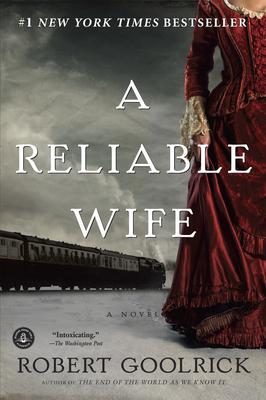
Book Review: A Reliable Wife

This book... confuses me.  I wish I could take a picture of the back cover so you could see the description and reviews that made me super eager to buy this book.  "Thrilling," "suspenseful," "intoxicating," etc, etc, etc.

Seriously?  No.  (And I'm not alone.  The customer reviews at Amazon.com are all over the map.  Some love it and some, like me, thought it was pretty bad.)

The description is what sucked me in.  Ralph Truitt is a lonely man who places an add for "a reliable wife."  The woman who responds, unbeknown to him, plans on killing him and taking his money after they wed.

I'm a sucker for shit like that, what can I say?  And in the hands of one of my favorite romance novelists, I think it could have been a damn good story.

But this was not.  The writing, my God, the writing.  It is praised and praised and praised, but I thought it was not very good.  It just felt forced, like the author was trying really hard.  A lot of the negative customer reviews at Amazon.com point out that it is repetitive, and YES, it is!  And really, this book is ALL about sex.

Ralph is simultaneously obsessed with sex and celibate for twenty years.  Maybe that's not so contradictory, but the way Goolrick writes it, it seems that way.  We hear all about what a libertine Ralph was as a young man.  But we also hear all about how he is convinced that his lust is evil because he uber-religious, crazy mother told him so as a child.  Now that I thought made no sense.  There's no indication that Ralph believes anything else his mother ever told him, or anything else about religion, yet for some reason he's had this skewed view of sex his whole life.  But even though he thinks it's evil and will only hurt people, I wasn't sure how that supposedly affected him.  He's promiscuous as a young man, then goes completely celibate after losing his wife.  Then when Catherine, his new wife, arrives he is again obsessed with sex.  I don't know, it just all felt very disorganized and contradictory to me.

Catherine was certainly more likable, but she was utterly predictable.  As was the plot.  There were no shocking twists and turns, despite what the reviews say.  There were a few things held back from the reader, but they didn't blow my mind when they were revealed.   

Let me just give you an example of what I'm talking about as far as the sexual obsession and not-so-good writing goes:

He wanted to slice her open and lie inside the warm blood of her body.

Jesus.  What the fuck is that?  That shit is straight out of Star Wars.

In the end, I guess I just can't enjoy a book that's essentially about the constant sexual thoughts of a fifty-some year old man.  Ick.  This book is not very original and not well-written.  I'm really, really pissed that I bought this one instead of Roses.

Thursday, September 03, 2009

Book Review: Birdsong

It seems to me that the majority of war movies and war novels that I've encountered have dealt with World War II. I don't know why that is exactly, but I suspect it has to do with a few things: (1) It is seen as the "noble" war because of Hilter and the Nazis; (2) There are so many high-profile things to come out of WWII such as the Holocaust, Pearl Harbor, and Hiroshima/Nagasaki; and (3) Many people have known people who are still alive that fought in the war.

World War I, on the other hand, doesn't seem to get much attention. That is one thing I liked about Birdsong by Sebastian Faulks—it pays the proper homage to the men that fought in the trenches. This book is pretty intense. When Faulks takes his characters through the Battle of Somme in July of 1916, I had to stop reading and take a break. It was just too much for me. Normally I don't have a problem watching or reading about horrible things, but somehow this was different. I think that when you read a work of fiction that deals with a homicidal psychopath, or even hear about something like that on the news, it is not so difficult to take in because, although you know these things happen to actual people, you can assure yourself that it's rare and isolated.

You can't do that when you read about the lives of the soldiers in Birdsong because these experiences were not rare and isolated. A generation of men lived through this hell, and it was hell.

Once more in ragged suicidal lines they trudged toward the pattering death of mounted guns. Bloodied beyond caring, Stephen watched the packets of lives with their memories and loves go spinning and vomiting into the ground. Death had no meaning, but still the numbers of them went on and on and in that new infinity there was still horror.

It feels real because it is real. Great Britain just lost its last WWI veteran about a month ago, and the knowledge that a man who had experienced all of this lived on this earth with me is pretty powerful. I didn't much care for Part I of this book, which involved the pre-war experiences of the main character, Stephen Wraysford, because I felt that it was a pretty run-of-the-mill romance. But I suppose it's necessary to set you up for Stephen's experiences during the war. There are also a few portions set in 1978 with Stephen's granddaughter that I could have done without, but they also just serve to amplify the other portions of the book.

As far as war novels go, this is one of the best I've ever read. This was supposed to be "The War to End All Wars," and I can certainly understand why. How anyone who lived through that could ever want to enter into another war twenty years later is beyond me.

Wednesday, September 02, 2009

Summer Book Clubs

I joined two books clubs this summer, and between the two clubs I read four books. (I did not read a fifth book club book due to a longer-than-expected recovery from wisdom teeth extraction surgery. Ouch!) But anyway, here they are.

I don't even know where to start with this book. It is (inexplicably) set in 1991, and it centers around Connie, a doctoral candidate in history at Harvard University. Connie has just been granted candidacy and has to start thinking about thesis subjects when her mother asks her to look after an old house about an hour from Cambridge that belonged to Connie's grandmother. While Connie is exploring the old house, she finds a piece of paper with the words "Deliverance Dane" on them. Because she's curious and seems to want to avoid her thesis work, Connie starts investigating and discovers Deliverance Dane was a witch (at least ruled to be one) that bequeathed a book to her daughter, who then passed it on, etc, etc. Connie searches for this book for the rest of the novel.

Don't waste your time reading this book. I personally don't think it ever goes anywhere interesting. The ending is predictable, and Connie is a fucking idiot. We're supposed to believe she's this brilliant scholar, but the damn woman doesn't even realize what her own name is. Seriously. I'm not making that up. I figured out what her name actually was and what significance it held before she did. Lame. Katherine Howe seems to think that her readers are retarded and will put up with Connie being so dumb.

But what I disliked most about The Physick Book of Deliverance Dane was that is so obviously full of smug. Howe is clearly a New Englander who did graduate work at Harvard, because, from the way she writes this book, she seems to think that Connie's life is pretty normal. Not only that, she is always throwing in little comments about grad school, Harvard, New England, etc, to prove to the reader that she's an insider or something. It's so annoying, because I really felt like the privilege of her life was completely lost on Howe. I know people say to write about what you know, but most of the world doesn't give a shit about some lame-ass grad student from 1991 who wears a lot of turtlenecks and spends her summer doing NOTHING worthwhile. Meanwhile, people are losing their homes and children are going hungry.

Don't read Sarah's Key if you don't want to shoot yourself in the head afterwards. Okay, that's unfair. But this book is super depressing.

It is mostly set in modern Paris. The main character Julia is an American who is married to a Frenchman and has lived in Paris for years. She works as a journalist, and one day she is assigned to write about the anniversary of an event in Paris history when the French government collaborated with the Nazi occupiers to detain and deport Parisian Jews. From one of the first deportations, most people went to Auschwitz and a staggering percentage of them died.

I forget how Julia makes the connection, but she eventually links the apartment she and her husband have inherited from his grandmother to a Jewish family that lived there before being taken away, particularly their young daughter. The incredibly sad story revolves around this girl.

I did like this book, but at the same time I didn't. I liked it because it alerted me to a part of French history that I really didn't know about. The author's characterizations of the French people in the book and the way they reacted to it was very interesting, and I got the impression it was something she'd experienced firsthand. A lot of French people do not like to talk about these events because it is a very shameful part of their history. This was not Nazi's knocking on doors, rounding people up, and busing them to their deaths—this was French police and French people. But on the other hand, Julia's reaction to events 60 years in the past that she had nothing to do with struck me as very manufactured. You'd have to read the book to know what I mean, but it just seemed unnatural to me how emotionally involved Julia got.

Fun tidbit: I got a little worked up at the book club discussion of this book after a woman in the group shared her thought that "religion is to blame for all bad things," or something along those lines. I'm all for laying blame at religion's feet when it's due, but I hardly think that the Holocaust can be laid at the feet of religion.

Here's what I will say about Run: it was a good story, but I didn't really take away any deeper message. The story revolves around an incident in Boston during the winter. Tip and Teddy are black, biological brothers who were adopted by a white couple. When they were very small, their adopted mother died of cancer, and they were raised by their father, Doyle, who eventually becomes mayor of Boston. They have an older brother, Sullivan, who is their parent's biological child.

When they're older, Sullivan is the black sheep who lived through a scandal that damaged his father's career. Doyle has poured all of his energy into Tip and Teddy with aspirations of them going into politics, but neither is interested. Tip just wants to study ichthyology (his major in college), and Teddy is interested in the priesthood (their mother's uncle is a Catholic priest). The three of them (Doyle, Tip, and Teddy) go to a Jesse Jackson lecture Doyle forced them to go to, and as they're leaving a car nearly hits Tip as he's not paying attention. He is saved when a woman knocks him out of the way, only to be hit herself. Her ten year-old daughter Kenya witnesses it. It's not really a spoiler if I tell you that the woman is Tip and Teddy's biological mother, and she's severely injured.

The rest of the book is basically about the aftermath of the accident, and Kenya. Like I said, I really enjoyed the story, but I was not really moved by it, in the sense that I'll remember this book for years to come. Not a bad read, though.

A Thousand Splendid Suns, however, is great. A very, very good book. It is centered around two woman from Afghanistan, and their stories are so sad. It is a great way to get a better grasp on what life is like for Afghani women, even though this book spans a couple decades.

Friday, April 11, 2008

Book Reviews

I've read all these books in the past few months. And honestly, they were all pretty good. No major complaints.


Thursday, March 27, 2008

Book Review: The Far Sweet Thing

Well, I didn't enjoy this book as much as Rebel Angels, but I still liked it.

In this third and final installment of the Gemma Doyle triology, Gemma is starting to come into her own as she is forced to deal with all the creates of the Realms since she is now the sole holder of the magic. (Sorry, that was a spoiler.)

There are some things that annoyed me in this book, too. Mainly all the time spent in the Realms and how Gemma was sooooo dumb for sooooo long about her friend Pippa. (I know, this review is useless to anyone who hasn't read the book. Oh well.) Part of the reason why I liked Rebel Angels so much is that most of the book took place in London instead of at Spence Academy, so there was a lot more going on. And there weren't really any surprises left for The Far Sweet Thing as most of those had been resolved in Rebel Angels. so I felt like I was just waiting to see what would happen for most of this book instead of being actively engaged in the story.

Anyhoo, that's all I have to say. Not a bad trilogy.

Book Review: Rebel Angels


(Hey! I'm back! Once I finished with that pesky Moot Court stuff I had time to read again!)

I read the prequel to this book, A Great and Terrible Beauty, over a year ago, and I bought this one not long after. But I wasn’t really crazy about the first book so I put off reading this one until just a few weeks ago. I was rather surprised to discover that I liked this one much more!

These books center around the life of sixteen (then later seventeen) year old Gemma Doyle around 1895. Gemma grew up in India with her British parents, but after her mother died a mysterious death she and her family moved back to England and Gemma was enrolled in Spence Academy for Young Girls. It is at Spence that Gemma starts having mysterious visions and learns about a group of women sorceresses called The Order. The background information is all set up in the first book, so maybe that’s why I felt it was dry. By the second book Bray was really able to delve into the secrets of The Order and The Realms (a magical world that only members of The Order are able to access).

There are a lot of things about Gemma that annoyed me at first--mainly that she has an uncanny ability to trust the wrong people. But the more I thought about it, the more I realized that is probably very true to life. A young girl without a mother who suddenly finds herself possessing magical powers and being hailed as the next High Priestess would probably be a little confused. Moreover, she is so young and faces so many tough choices and responsibilities that she was probably overwhelmed!

By the way, I should mention that these are YA (young adult) books, but I don’t really care. I AM STILL YOUNG ENOUGH TO READ YA WITHOUT SHAME, DAMN IT.

Anyway, if you like books that have magic and stuff you might like this series.

Wednesday, January 23, 2008

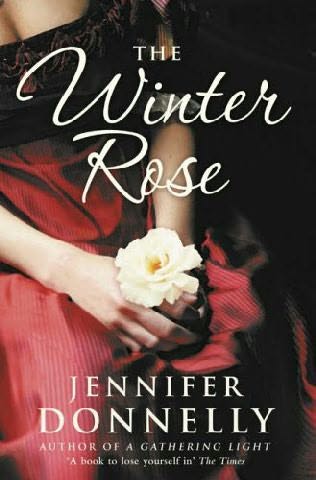
Book Review: The Winter Rose

I'm not really sure how I feel about this book, honestly. I found the plot engrossing and the 700 pages went pretty quickly, but at the same time I had some problems.

This book starts in 1900 London with the graduation of India Selwyn Jones from a female medical school. She grew up in a wealthy, aristocratic family, but is somewhat estranged from her family because of her decision to pursue medicine. India is determined to make a difference in the poorer parts of London, particularly the East End, but once she starts working she realizes that she knows nothing about the people there. The high morals standards and health habits that she'd been taught and had been preaching didn't seem to have much place in Whitechapel. It takes a while for her to realize that, and she does it with the help of Sid Malone, the most infamous crime lord in the East End.

When India was young she lost the boy that she loved in tragic circumstances, so she is determined never to love like that again. That's the reason why she settles and accepts the proposal of her childhood friend, Freddie, a young MP who is blazing a trail for himself through Westminster. But Sid Malone makes her feel things that Freddie never did, and suddenly India starts to believe that Sid might be worth taking another chance on.

There is way, way more going on in this book, but I don't want to to give too much of it away. I was really impressed by the effort that went into the plotting, and Donnelly clearly has a real talent for coming up with gripping stories. But at the same time this book was filled with so many coincidences that it was just hard to believe all of them. After reading this book you would think that there were only a dozen people living in London's East End in 1900 because of the rather remarkable connections between all of these people. But I've read The Classic Slum. I'm pretty sure that wasn't the case. When those coincidences and connections start spanning the globe, it gets even more ridiculous, I thought. But hey, it is a novel, so I guess I can excuse that for the sake of entertainment.

My other complaint is Donnelly's writing style. I always hesitate to criticize the writing style of the authors I review because I know I could never in my wildest dreams do what they go, so who am I to judge? At the same time, there is something to be said about a writer who can tell you something without coming out and telling you in a sentence that looks like something a third grader would diagram (noun, verb, etc.). Donnelly isn't quite to that point in her own writing because there were so many blunt statements that lacked any kind of lyrical quality which I consider to be the mark of fine writing. This is only her third book and only her second adult novel (she wrote a YA novel as well). I really think my complaints in that department have more to do with that than anything else. I'm sure that a couple books down the road she will really have come into herself because this book shows a lot of talent.

So in conclusion, I'd say that this was an engrossing historical novel that I enjoyed reading, but it was far from flawless.

Lindsey's Grade: B

Sunday, November 18, 2007

Book Review: Atonement


I'm not particularly eager to describe the plot of this book, partially because it's too detailed to sum up quickly. So I will just repeat the synopsis from the publisher (Anchor Books) that appears on the back of the book:

On a summer day in 1935, thirteen-year-old Briony Tallis witnesses a moment's flirtation between her older sister, Cecilia, and Robbie Turner, the son of a servant. But Briony's incomplete grasp of adult motives and her precocious imagination bring about a crime that will change all their lives, a crime whose repercussions Atonement follows through the chaos and carnage of World War II and into the close of the twentieth century.

The first three pages of the paperback edition I purchased are made up entirely of critical praise for this book. It's described as "resplendent," "extraordinary," "astonishing," "magnificent," and "a masterpiece."

I'm going to agree.

Here are a few of the reviews that resonated the most with me:
In the seriousness of it's intentions and the dazzle of its language, Atonement made me starry-eyed all over again on behalf of literature's humanizing qualities.
—Daphne Merkin, Los Angeles Times

Magnificent. . . . Memorable. . . . Suspenseful. . . . McEwan forces his readers to turn the pages with greater dread and anticipation than perhaps does any other 'literary' writer working in English today.
—Claire Mussed, The Atlantic Monthly

Atonement can't be laid down once it's been picked up. McEwan writes like an angel and plots like a demon. . . . He can write rings around most others writing in English today.
—The Weekly Standard

This book exemplifies everything that I love about novels. The writing is so exquisite, particularly in the first half, that it makes me despair about anything I have ever written. Not only are his insights so remarkable that more than once I found myself thinking, "Yes! Exactly! That's how I always feel, too!" but the way that he phrases them are pure perfection.

But the writing style aside, this is one of those books that stays with you when you put it down. Fiction will always be my favorite genre because no other genre is able to invoke such powerful emotions. I think of fiction writing like a chemical reaction is a way. The author is able to craft a story that combines characters, events, emotions, and these are the reactants that are thrown into the vessel. They stay there together, not reacting and existing separately. But then the author gives us the catalyst—it could be a fact that was withheld, or an event, or maybe just insight or character realization. But suddenly that catalyst transforms those reactants that had just been sitting there into the products of emotion and wonder. Suddenly there is something new to be seen from what had been there before, all because of that catalyst that the author gave us. It's this ability to manipulate the reactants and catalysts of a particular story that gives fiction writing its power. McEwan has done this in Atonement. That catalyst is given on the last three pages of Atonement, and it left me breathless.

Tuesday, November 13, 2007

Gag-worthy Passage of the Week

Charley's people sat by the fire with Axe and his wife and ate the meal off wood trays with cane-stalk implements. Charley had a pattern to eating a squirrel. He kept it on its skewer and worked back to the front, eating the little hams first, each by each, and then he went at the body meat, eating it off the ribs as if it lay in rows like corn kernels. When he finally got to the head, he broke it off and put it in his mouth and worked it around for quite some time like he was gumming tobacco. And then when he was done, he reached in a finger and pulled out a bare little skull and showed it cupped in his palm like it was a fine achievement, his own creation worthy of favorable comment.

-Thirteen Moons by Charles Frazier

How's THAT for imagery? Thanks, Chuck, thanks. For just about making me barf up my lunch.

Sunday, October 29, 2006

Book Review: The Alchemist's Daughter

It's been a while since I picked up a book without knowing anything about the author or reviews, but only because I liked the synopsis on the back cover. So earlier this week I picked up Katharine McMahon's The Alchemist's Daughter because I thought it sounded interesting. Basically the back of the book told about a young woman who is raised in near isolation by her father at his country estate in the first quarter of the eighteenth century. Her father is a natural philosopher, some say an alchemist, and he teaches his daughter all that he knows. But then when she is about nineteen she falls in love for the first time and is banished to London, as the book says. And because of her upbringing, she knows almost nothing about human nature, etc.

I liked the book, but not as much as I thought I would from the description. Historical novels are pretty popular, what with Tracy Chevalier and Sarah Dunant out there, but I'm getting a little tired of these "coming of age" books about young women back in historical times. Mostly because they're usually depressing stories (although I think McMahon here and Dunant in The Birth of Venus include some redeeming happiness at the end) and I don't like to read about sad things. Another thing I learned - I read a lot of romance novels so I've read my fair share of sex scenes, but I do not like reading sex scenes when there is no affection and love between the people. I don't care if it's realistic. I don't want to know about it.

I do think that McMahon did a good job of laying out the theme of this book. Emilie, the main character, did have to come to terms with the harsh consequences of choices that she made because of her inexperience, and I felt sorry for choices that she made in her innocence. I think the best quote of the book come from when she explains to a fellow scientist that her father taught her to believe in what she can see, touch, smell, etc. The scientific way, essentially. But that method does not translate over to people because sometimes they are not what they seem, and she had to learn that the hard way. And in that one statement, the theme of the book can pretty much be summed up.

Lindsey's Grade: B+

Sunday, July 23, 2006

Book Review: Birth of Venus

Barnes and Noble says that people who bought Sarah Dunant's book also bought Tracy Chevalier's "The Lady and the Unicorn." I find that kind of funny because when I was reading this book I kept being reminded of "The Lady and the Unicorn." They are both set back in old times (Dunant's book was in late 1400's) and revolve around a world of art. And they are both very, very good books.

At first I wasn't crazy about the heroine in this book because, even though she was supposed to be a strong and independant woman, I found it kind of annoying because historical novels are always about strong, independant women who break the mold of their times and refuse to conform to societies roles for women. A nice theory, but definitely cliche in books. However, Dunant redeemed herself in Alessandra in that she wonderfully captured her process of maturing as her life became more and more... difficult, I guess you could say.

But what I really loved about this book was that it wasn't just a story about a girl, but rather a story about a city. Florence was as much a character as anyone else in the book, and while I don't know a whole lot about Florentine history, the period that Dunant wrote about was absolutely facinating. Her religious theme was also beautifully constructed and perfectly executed. I wasn't happy at the end of the book, but I was very satisfied with the way it was written.

Lindsey's Grade: A

Thursday, May 04, 2006

No Happily Ever After


There are some authors that I find, to borrow a phrase I once heard in a book review, “compulsively readable.” For me Tracy Chevalier is one of those authors, although at times it’s hard for me to understand why.

Chevalier is probably best known for her book Girl With The Pearl Earring which was made into a movie starring Scarlett Johansson and Colin Firth. Since finishing Falling Angels I’ve now read all four of her books and I’ve absolutely loved all but one of them, even though I HATED EVERY SINGLE MAIN CHARACTER! I don’t understand how she does this to me!

Also, I like happy books. That’s why I primarily read romance novels – they’re guaranteed to have a happy ending. But there is a darker side to my persona that delights in sadness and despair, apparently. I cannot resist certain authors that I know are going to piss me off by not making everyone happy at the end. Chevalier, along with Anita Shreve (who I LOVE) is one of the best at doing this.

Falling Angels is set in London between 1901 and 1910 and it revolves around the lives of the Coleman and Waterhouse families, whose daughters Livinia and Maude are best friends. Let me just say this – I HATED MAUDE’S MOTHER WITH A PASSION! She was a selfish bitch. No other way to put it. All she cared about was herself and could focus on nothing but how discontent she was with her life. Sure, it probably wasn’t easy being a woman in 1901, especially one who was an independent thinker, but buck up, missy! Maude desperately wanted attention and love from her mother but Kitty (the mother) never gave it to her. Oh, and Kitty was also adulterous on more than one occasion. This was “justified” in her mind because she was unhappy in her marriage. Her husband, although he loved her, didn’t appreciate her independent nature enough. Nevermind that she made the decision to marry him! Chevalier did this in her first book, The Virgin Blue, as well, but at least here Kitty was not set up as the protagonist. In my opinion Maude was the protagonist, even though the book was written through multiple character voices. Towards the end of the book Kitty gets involved in the suffrage movement, but I couldn’t get behind her at all because her motivations were purely selfish. You got the distinct impression that she wasn’t doing it because it was something she really believed in, but rather because she just wanted a “cause” to get behind that would make her feel important. She needed the attention and her neglect of Maude was heartbreaking.

There were other heartbreaking turns of events in this book that nearly brought me to tears. The more I think about it the more I realize I read romances not just because I like a happy ending, but also because I can’t handle these somber, sad, depressing stories all the time. They’re great for unleashing the vulnerable and human side, but Lord Almighty they’re downers.

Lindsey’s Grade – A-

Tuesday, May 02, 2006

Sounds Familiar

Well, I FINALLY finished this book last night. It was pretty good, I have to admit. I did stay up until I reached the end. But while it was entertaining, I couldn't help but feel that I had heard this story somewhere before...

...Hmm, let's see, this book had:

- a young person whose mother sacrified herself to save her child
- a young, motherless person who is "the chosen one" and has special abilities
- a group of children at a boarding school that are experimenting with magic
- an evil bad-person who went over to the dark side of the magical world and is determined to destroy the motherless child

Where have I heard that before? Gee... Oh wait!

Now, this book still had a lot of creativity, but honestly it was lacking in originality and that kind of put me off. I know, I know, I read romance novels and I'm put off by a book that lacks originality? I admit it doesn't make much sense, but nevertheless... But it was entertaining. And I'll probably read the sequel

Oh yeah, and the big "surprise" at the end? I totally called it about half-way into the book.

Wednesday, April 19, 2006

It's a Magical World

Considering that my last contribution was pretty embarrassing, I've decided to post again even though I haven't finished the book I'm reading (and final exams are coming up so I have a good excuse for that, anyway). Besides, Kim wrote about the Venetian whore and her dwarf and she NEVER finished that one.

From the publisher:
After the suspicious death of her mother in 1895, sixteen-year-old Gemma returns to England, after many years in India, to attend a finishing school where she becomes aware of her magical powers and ability to see into the spirit world.

When you put it that way, it sounds a little silly. This is actually a YA (young adult) book, but it's received positive reviews from adults so I decided to give it a try. So far I'm liking it, although Gemma makes me sad because she's so sad over losing her mother. I've never been a big fan or paranormal or magical plots, though, so we'll have to see how I feel when I finish.

What about you guys? Do you like reading about magic or do you prefer to read books that could (theoretically) be grounded in reality?

Tuesday, April 18, 2006

Its not that great....


I'm sorry. I just CANNOT finish this book. It has no plot, suspense, or anything to keep me wanting to read it! I read 275 pages (out of 350) and feel bad that I have no desire to complete it but I'm positive that the Venetian whore and her dwarf will live happily ever after!

I checked it out from the library and I am compelled to leave a note on page 30 for the future reader who recalled it from me! "Don't read any further! Nothing happens, no deaths, no interesting characters, NOTHING!"

The sad part is that I actually bought another Sarah Dunant book (for a dollar 25) and I am iffy about reading it.