Tuesday, October 27, 2009

Book Review: Les Liaisons Dangereuses

If you've seen the movie "Dangerous Liaisons" or "Cruel Intentions," then you have a pretty good grasp of what Les Liaisons Dangereuses is about. But I would still recommend reading the book because it's awesome.

Don't you love how my book reviews read like 6th 3rd grade book reports? I thought so.

Okay, I will say more. Les Liaisons Dangereuses is set in France during the 1780's (pre-Revolution). The format of the book is 175 letters written between the various characters. The two principle characters are the Vicomte (Viscount) de Valmont and the Marquise (Marchioness) de Merteuil. The book revolves around them and their relationship. Valmont is generally known as a rouge, a rake, a man who seduces women for sport. The Marquise, however, is a wealthy aristocratic widow who has maintained an air of social respectability. But she is the really the one to watch out for.

Valmont and M. de Merteuil meet when their respective lovers cast them aside in order to "hook up," for lack of a better term. The two of them form their own attachment (and by "attachment" I mean sexual dalliance) after the experience, and remain friends after they part ways. M. de Merteuil, however, holds quite a grudge against the man who cast her aside, the Comte (Count) de Gercourt. When the opportunity to get back at him presents itself, she takes advantage of it.

A distant relative of hers, the Madame de Volanges, has a fifteen year-old daughter fresh out of the convent, named Cecile, and she has arranged a marriage between her daughter and Gercourt. M. de Merteuil is outraged and insulted when she discovers this, in part because it adds insult to injury that she should in any way to related to Gercourt. So she hatches a plan to cuckhold Gercourt by ensuring that his innocent bride-to-be is not-so-innocent when she marries him. For this, she needs the assistance of her friend and legendary seducer-of-women, Valmont.

But Valmont has a scheme of his own. He is visiting his aunt's country home when he meets the Presidente de Tourvel, a beautiful and virtuous woman who is renowned for her faith, piety, and fidelity. What better challenge could there be, what greater claim to greatness could he acquire, than if he were to seduce the Presidente and gain her submission? He turns down M. de Merteuil's offer to seduce Cecile Volanges in order to focus on the Presidente. But M. de Merteuil does not give up, she just uses other means to accomplish her goal. Particularly she looks to a young chevalier (knight), Danceny, who shares a mutual affection with Cecile.

But when Valmont's efforts are hindered after Madame de Volanges tells the Presidente about his reputation, he decides to take his revenge upon Madame de Volanges by taking on the seduction of both the Presidente and Cecile.

Valmont and the M. de Merteuil are absolutely ruthless. They lie effortlessly in letters to their victims, then gleefully relate their successes in letters to each other. I love the letter format of this book because it beautifully demonstrates their duplicity and utter lack of shame. And although Valmont is the character who does most of the work in this book—he is the one doing the on-the-ground seduction—this book belongs to the M. de Merteuil. She's a fascinating character, and I think Laclos is an absolute genius for creating her and knowing exactly how she would act and react in certain situations. My favorite line of hers comes when she is describing her latest boy toy and how he wants their relationship to be exclusive: "He must rate me lightly indeed, if he believes he has worth enough to make me constant!" God, is that the story of my life or what?

Valmont's character development is certainly a crucial plot point of this book (and if I recall, it seemed to dominate the movie Cruel Intentions, too) as he begins to fall for the Presidente. But the M. de Merteuil is always one step ahead of him. She sees where he is heading long before he does. She knows just what buttons to push, exactly what to say in order to get Valmont to do what she wants him to do. She's not immune herself, however. The events she and Valmont have put into motion also drag her along a path she never intended to go down. But she was never manipulated. Unlike the other female characters in the book, she falls victim only to herself and her own weaknesses. Despite how evil she is, I love her for that. I respect her for it. She is a one-of-a-kind woman, and she knows it:

Oh! keep your advice and your fear for those delirious women who call themselves sentimental; whose exalted imagination would make one believe that nature has placed their senses in their heads; who, having never reflected, persist in confounding love with the lover; who, in their mad illusion, believe that he with whom they have pursued pleasure is its sole depository; and truly superstitious, show the priest the respect and faith which is only due to the divinity. Be still more afraid for those who, their vanity being larger than their prudence, do not know, at need, how to consent to being abandoned. Tremble, above all, for those women, active in their indolence, whom you call women of sensibility, and over whom love takes hold so easily and with such power; who feel the need of being occupied with it, even when they are not enjoying it; and, giving themselves up unreservedly to the fermentation of their ideas, bring forth from them those letters so sweet, but so dangerous to write, and are not afraid to confide these proofs of their weakness to the object which causes it: imprudent ones, who do not know how to discern in their present lover their enemy to be.

But what have I in common with these unreflecting women?


Above all else, Laclos's story is exquisitely crafted. And the translation I read by Ernest Dowson was also great; everything flowed wonderfully, and each character had their own tone that remained consistent throughout the book. There are parts of this book that made me laugh out loud and parts that made me gasp in disbelief at just how debase Valmont and the M. de Merteuil could be. As far as classics go, it is one of the most entertaining books I've read. If it weren't for the sexy sexy sex all throughout the book, I would have wondered why this isn't more standard school reading. Loved it.

Lindsey's Grade: A+

Sunday, September 27, 2009

Book Review: On Beauty

Anyone who even tangentially follows book news will remember that when Zadie Smith's On Beauty came out a few years ago, it was basically hailed as a masterpiece. It made all sorts of "Best of" lists, and I think it won some awards, too. So when I was looking for a book to read at Charles de Gaulle airport this summer, before a long flight home to the States, I picked this one up. (Also, I had a few euros I needed to get rid of.) I anticipated a reading experience that would knock my socks off.

Not so much.

I truly, honestly think that I am not intellectual enough to "get" this book. The reviews on the cover and all that talk about how funny and hilarious it is. Uh, not funny. Not hilarious. Apparently it's a satire. Of what, I'm still not sure, but I think maybe intellectuals and intellectualism. I am not an intellectual. I will admit that without hesitation. So I think that's why I wasn't able to pick up on the satire.

Zadie Smith, however, is an incredible writer. There's nothing I hate more than reading a book where the author's efforts are so obvious. Good writing is effortless, and Smith's writing is effortless. Unfortunately, I just didn't care about the people she was writing about. The book centers around a family in Massachusetts—the Belseys. The father, Howard, is an art professor at a small college in the town where they live. The mother, Kiki, is a nurse/health administrator. Their three children are Jerome, Zora, and Levi. Everyone has their own story in this book, and most of them are interconnected. I liked Kiki and the kids, but Howard... gross. No. Didn't like him at all. I think he was being satirized, but like I said, if you don't know what is being satirized, it's not funny. (Like that whole New Yorker cover of Michelle Obama during the campaign.)

I read a lot of reviews of this book on Amazon.com, and a lot of people seemed to agree with me that this book was not all that and a bag of chips, as the industry reviews would have led us to believe. So it's nice to know that I'm not the only one who found this to be a rather forgettable book. I guess that in the end I'm not sorry I read it, though. Maybe someday I can have a pseudo-intellectual conversation with someone about how I'm not intellectual enough to enjoy it.

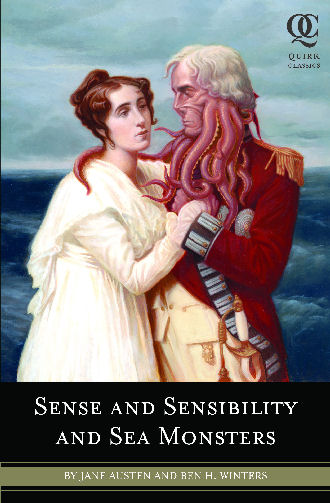
Book Review: Sense and Sensibility and Sea Monsters

Earlier this year I read Pride and Prejudice and Zombies, and as one would expect from the title, it was amazing. When people expressed puzzlement over what the book would be like, I responded with, "It's Pride and Prejudice. With zombies." And a big part of what made the book so enjoyable was reading familiar dialogue that had a whole different meaning. For instance, my favorite example of this is when Lady Catherine questions Elizabeth about her education, etc. In the original novel, Lady Catherine is of course asking about the standard education for young women of gentility. She expresses shock that five girls have been brought up without a governess. In P & P & Z, the "education" they discuss is their martial arts education (aimed of course at how to defend oneself against zombies). Lady Catherine expresses shock that they have no ninjas, if I recall correct.

I don't know, maybe it's just me, but the whole concept of the same, traditional dialogue having a new, zombie-related meaning, was my favorite thing about the book.

After reading P & P & Z, I anxiously awaited the release of Sense and Sensibility and Sea Monsters. Now, Sense and Sensibility is actually the only one of Austen's books that I have not actually read, but I own two separate film adaptations, and I love both of them.

But I didn't find S & S & SM to be nearly as enjoyable as P & P & Z. Mostly because the story had much more significant deviations from Austen's story than P & P & Z did. Apparently this was intentional. I read in an article by S & S & SM's author that the feedback on P & P & Z asked for less of Austen's original text. (As the article reports, 85% of P & P & Z was Austen's text.) So the publisher gave the author of S & S & SM permission to embellish significantly more. Blasphemy, I say.

Not that there aren't high points to S & S & SM. The scene where Lucy Steele tells Elinor about her engagement to Edward is pretty awesome. And there was one line by Mrs. Jennings that was utter delight, but all in all, I didn't find as much humor here as I did in P & P & Z. I think there may be another reason for that, however, apart from the dialogue/text. Pride and Prejudice is just full of characters ripe for parody; Sense and Sensibility, less so. Mrs. Jennings and Sir John were pretty much it as far as humor goes in S & S & SM. But in P & P & Z we had Mr. Collins, Lady Catherine, Lydia, Wickham, and Charlotte Lucas (hands down the funniest).

I'm curious to see what Quirk books will tackle next, however.

Thursday, September 03, 2009

Book Review: Birdsong

It seems to me that the majority of war movies and war novels that I've encountered have dealt with World War II. I don't know why that is exactly, but I suspect it has to do with a few things: (1) It is seen as the "noble" war because of Hilter and the Nazis; (2) There are so many high-profile things to come out of WWII such as the Holocaust, Pearl Harbor, and Hiroshima/Nagasaki; and (3) Many people have known people who are still alive that fought in the war.

World War I, on the other hand, doesn't seem to get much attention. That is one thing I liked about Birdsong by Sebastian Faulks—it pays the proper homage to the men that fought in the trenches. This book is pretty intense. When Faulks takes his characters through the Battle of Somme in July of 1916, I had to stop reading and take a break. It was just too much for me. Normally I don't have a problem watching or reading about horrible things, but somehow this was different. I think that when you read a work of fiction that deals with a homicidal psychopath, or even hear about something like that on the news, it is not so difficult to take in because, although you know these things happen to actual people, you can assure yourself that it's rare and isolated.

You can't do that when you read about the lives of the soldiers in Birdsong because these experiences were not rare and isolated. A generation of men lived through this hell, and it was hell.

Once more in ragged suicidal lines they trudged toward the pattering death of mounted guns. Bloodied beyond caring, Stephen watched the packets of lives with their memories and loves go spinning and vomiting into the ground. Death had no meaning, but still the numbers of them went on and on and in that new infinity there was still horror.

It feels real because it is real. Great Britain just lost its last WWI veteran about a month ago, and the knowledge that a man who had experienced all of this lived on this earth with me is pretty powerful. I didn't much care for Part I of this book, which involved the pre-war experiences of the main character, Stephen Wraysford, because I felt that it was a pretty run-of-the-mill romance. But I suppose it's necessary to set you up for Stephen's experiences during the war. There are also a few portions set in 1978 with Stephen's granddaughter that I could have done without, but they also just serve to amplify the other portions of the book.

As far as war novels go, this is one of the best I've ever read. This was supposed to be "The War to End All Wars," and I can certainly understand why. How anyone who lived through that could ever want to enter into another war twenty years later is beyond me.

Wednesday, September 02, 2009

Summer Book Clubs

I joined two books clubs this summer, and between the two clubs I read four books. (I did not read a fifth book club book due to a longer-than-expected recovery from wisdom teeth extraction surgery. Ouch!) But anyway, here they are.

I don't even know where to start with this book. It is (inexplicably) set in 1991, and it centers around Connie, a doctoral candidate in history at Harvard University. Connie has just been granted candidacy and has to start thinking about thesis subjects when her mother asks her to look after an old house about an hour from Cambridge that belonged to Connie's grandmother. While Connie is exploring the old house, she finds a piece of paper with the words "Deliverance Dane" on them. Because she's curious and seems to want to avoid her thesis work, Connie starts investigating and discovers Deliverance Dane was a witch (at least ruled to be one) that bequeathed a book to her daughter, who then passed it on, etc, etc. Connie searches for this book for the rest of the novel.

Don't waste your time reading this book. I personally don't think it ever goes anywhere interesting. The ending is predictable, and Connie is a fucking idiot. We're supposed to believe she's this brilliant scholar, but the damn woman doesn't even realize what her own name is. Seriously. I'm not making that up. I figured out what her name actually was and what significance it held before she did. Lame. Katherine Howe seems to think that her readers are retarded and will put up with Connie being so dumb.

But what I disliked most about The Physick Book of Deliverance Dane was that is so obviously full of smug. Howe is clearly a New Englander who did graduate work at Harvard, because, from the way she writes this book, she seems to think that Connie's life is pretty normal. Not only that, she is always throwing in little comments about grad school, Harvard, New England, etc, to prove to the reader that she's an insider or something. It's so annoying, because I really felt like the privilege of her life was completely lost on Howe. I know people say to write about what you know, but most of the world doesn't give a shit about some lame-ass grad student from 1991 who wears a lot of turtlenecks and spends her summer doing NOTHING worthwhile. Meanwhile, people are losing their homes and children are going hungry.

Don't read Sarah's Key if you don't want to shoot yourself in the head afterwards. Okay, that's unfair. But this book is super depressing.

It is mostly set in modern Paris. The main character Julia is an American who is married to a Frenchman and has lived in Paris for years. She works as a journalist, and one day she is assigned to write about the anniversary of an event in Paris history when the French government collaborated with the Nazi occupiers to detain and deport Parisian Jews. From one of the first deportations, most people went to Auschwitz and a staggering percentage of them died.

I forget how Julia makes the connection, but she eventually links the apartment she and her husband have inherited from his grandmother to a Jewish family that lived there before being taken away, particularly their young daughter. The incredibly sad story revolves around this girl.

I did like this book, but at the same time I didn't. I liked it because it alerted me to a part of French history that I really didn't know about. The author's characterizations of the French people in the book and the way they reacted to it was very interesting, and I got the impression it was something she'd experienced firsthand. A lot of French people do not like to talk about these events because it is a very shameful part of their history. This was not Nazi's knocking on doors, rounding people up, and busing them to their deaths—this was French police and French people. But on the other hand, Julia's reaction to events 60 years in the past that she had nothing to do with struck me as very manufactured. You'd have to read the book to know what I mean, but it just seemed unnatural to me how emotionally involved Julia got.

Fun tidbit: I got a little worked up at the book club discussion of this book after a woman in the group shared her thought that "religion is to blame for all bad things," or something along those lines. I'm all for laying blame at religion's feet when it's due, but I hardly think that the Holocaust can be laid at the feet of religion.

Here's what I will say about Run: it was a good story, but I didn't really take away any deeper message. The story revolves around an incident in Boston during the winter. Tip and Teddy are black, biological brothers who were adopted by a white couple. When they were very small, their adopted mother died of cancer, and they were raised by their father, Doyle, who eventually becomes mayor of Boston. They have an older brother, Sullivan, who is their parent's biological child.

When they're older, Sullivan is the black sheep who lived through a scandal that damaged his father's career. Doyle has poured all of his energy into Tip and Teddy with aspirations of them going into politics, but neither is interested. Tip just wants to study ichthyology (his major in college), and Teddy is interested in the priesthood (their mother's uncle is a Catholic priest). The three of them (Doyle, Tip, and Teddy) go to a Jesse Jackson lecture Doyle forced them to go to, and as they're leaving a car nearly hits Tip as he's not paying attention. He is saved when a woman knocks him out of the way, only to be hit herself. Her ten year-old daughter Kenya witnesses it. It's not really a spoiler if I tell you that the woman is Tip and Teddy's biological mother, and she's severely injured.

The rest of the book is basically about the aftermath of the accident, and Kenya. Like I said, I really enjoyed the story, but I was not really moved by it, in the sense that I'll remember this book for years to come. Not a bad read, though.

A Thousand Splendid Suns, however, is great. A very, very good book. It is centered around two woman from Afghanistan, and their stories are so sad. It is a great way to get a better grasp on what life is like for Afghani women, even though this book spans a couple decades.

Sunday, June 28, 2009

Crazy For The Storm


I saw this book at Starbucks, and even though it seemed over-exposed and generic, I thought it sounded like a good read….it was.

It is the true, autobiographical story of Norm, an 11-yo California kid with divorced, but attentive parents. He just won the state championship for down-hill skiing and is flying back to pick up his trophy when his plane crashes, killing the pilot and his beloved father. The book flashes back between the crash and past experiences with him and his father as he was growing up.

At first, I felt like Norm was just a spoiled, un-appreciative kid that didn’t know what a good life he had. I think the author did this on purpose in order to juxtapose the reality of his situation before and after the crash. The scenes from the crash were kind of hard to picture (I just skipped over most of the descriptions because they didn’t make much sense). It was still very engrossing, and I had to keep reminding myself that he was only 11 years old!

My only beef was that I felt like there was a big chunk missing from the book. After telling the story of the crash, he takes the timeline up until he is about 13 years old, and he still hasn’t come to terms with his father’s death. Then he leaves all these issues unresolved and jumps up to when he is in his 40’s with a son of his own. While I enjoyed and was strangely touched by the scenes with his own son, I would have liked to know if he got counseling, why he chose to go to UCLA (instead of Yale or Harvard like his dad wanted), if he ever skied professionally again.

Love the one you're with


Emily Giffin really has a talented writing style. She makes you identify with the characters in her books to a degree that I have not experienced with any other author. Her other books include “Something Borrowed” and “Something Blue”. I really liked this book a lot. It was a little bit hard to read because I hate anything that has to do with adultery. This book is about a woman who has been happily married for only 3 months when she runs across her old boyfriend, the one who got away. She never fully understood why they had broken up, but he makes it clear that he wants to turn back the clock when he sees her again.

As the character progresses through the story, rationalizing and making decisions that place her closer and closer to her ex, however innocently, I inexplicably find myself thinking that I would have done the same. I won’t spoil the ending for all you readers because it is a great book that feels very real-to-life, don’t miss it!

Careless in Red


I’ve read every book that Elizabeth George has written. She is the best mystery/suspense writer out there. Her novels are not so much “scary” mysterious as they are “intellectually” mysterious. This is her latest book. Her hero, Detective Lynley is hiking along the England coastline, still reeling from the senseless and tragic murder of his wife and unborn child when he finds a body. Against his will, he is drawn into the investigation. While I wouldn’t rate this as one of her best books, I was pleasantly surprised. I had all but written George off because I loved the character of Helen, Lynley’s slain wife. I didn’t see how the story-line could be continued without her. However, I was pleasantly surprised that I still cared for the other characters enough to remain interested. I think George was laying the groundwork in this book for Lynley’s recovery and in future books there may be new romantic possibilities? There is one in this book, but he just isn’t ready. I’m looking forward to her future writings.

Born to Run

I can’t remember where I first heard of this book, but I never would have picked it up and paid full price if I hadn’t gotten a tip that it was good. But it wasn’t just good….

…it was amazing! It starts off with a 50-something guy who suffers from running injuries. He is told by multiple doctors that he was not built to run and needs to stop. This isn’t a option for him because he loves running and wants to complete an ultra-marathon (50-miles). He embarks on a journey to unlock the secrets of long-distance runners. Along the way he exposes the athletic-shoe industry and the marketing that duped us all into thinking we need ultra-padded, ultra-air/gel shoes to cushion this unnatural human activity…running. In reality, the human body was built for long distance running, most of us just go about it the wrong way. In fact, it may be our running prowess that gave us the evolutionary edge against the Neanderthals.

The author manages to transform himself into an injury-free distance runner with the help of a good coach, a new stride and an old, worn-out pair of shoes. The book climaxes with a secret 50-mile race through the Mexico mountains, pitting the greatest ultra-marathoner in the US against the greatest ones in the world, the Tarahumara Indians. While I can definitely guarantee that I’ll never run an ultra-marathon, I found this book to be inspirational to the human spirit and an excellent read, even if you aren’t an athlete…yet!

Monday, May 18, 2009

Book Review: Blue Smoke and Murder

Good news! Blue Smoke and Murder is classic Lowell and not the disappointing piles of poop The Wrong Hostage and Innocent as Sin were. This book is more on the scale of Always Time to Die (which I enjoyed).

It still centers around St. Kilda Consulting, which I think it totally weird, but whatever. The heroine, Jill, is a river guide who saves the life of a son of two St. Kilda operatives. In payment, his father tells her that if she ever needs help, to call him. Scarcely a month later, Jill's great-aunt dies in a suspicious fire, one of twelve family paintings is destroyed, and Jill's life is threatened. So she calls in her favor, and hottie operative Zach shows up to help her out.

The story really centers around the painting, and Lowell goes on and on about Western art. (If you've ever read an Elizabeth Lowell contemporary, you know how she tends to do that with art, jewels, minerals, etc.) But it isn't as boring as it usually is.

Also, there is real, genuine chemistry between Jill and Zach. That was something that was definitely missing in Innocent as Sin.

It was an entertaining read.

Book Review: Death Angel

Started off interesting.

Ended boring.

Too much internal contemplation by the characters.

Not enough dialogue.

Book Review: At Last Comes Love

Turns out, this review is a bit like the last one, given that I'm reviewing the third book in a series. This time it's Mary Balogh's Huxtable series. (I think there are going to be two more.) The series is about a family of siblings, the Huxtables, who grew up modestly as the children of a clergyman. Margaret is the oldest, then Vanessa, then Katherine, then the only son, Stephen. In the first book, First Comes Marriage they are living in a small village, all under the same roof except Vanessa, who married a local man and was widowed a year later. She lives with her in-laws until a nobleman shows up in the village one day and announces that Stephen, at seventeen, is now an earl due to the death of some distant relatives.

I can't exactly remember why the nobleman (I'm going to call him Elliott, because that's his name) decides that he's going to marry one of the Huxtable sisters, but he does. And he settles on Margaret, who is the oldest and also very beautiful. But Margaret has been in love with her childhood sweetheart for years, and he's been away at war for four years. Vanessa knows that her sister is waiting on her long-lost love, so she intervenes and offers herself to Elliott.

The rest of the book deals with their relationship, and I liked it, but that's probably because I like all Mary Balogh books. Vanessa has some issues she needs to deal with due to the fact that she's the ugly duckling among her beautiful siblings. And I can't remember Elliott's issues, but I seem to remember that he said some, too. I liked this book.

Then Comes Seduction is Katherine's story. It starts when she unfortunately becomes the object of a bet by Jasper, a young, rakish baron. He bets that he can get her to surrender her virginity in a fortnight, and he almost succeeds. But at the last minute he has an attack of conscience, and steps away.

Three years later, they encounter each other again, and because the bet was made publicly in a gambling house, the men of society know about their past. A scandal threatens, and Katherine reluctantly agrees to marry him.

I liked this book, too. Balogh's books are hard to describe because they focus so much on the relationship between the hero and heroine. There's usually not a whole else going on externally. I seem to remember, however, that Jasper had a motivation for entering the marriage, as well. He has a younger half-sister, and he shares guardianship with her cousin, who wants nothing more than to have full-guardianship (and access to her fortune). A respectable wife would help Jasper's cause in that area.

I think it is at the end of First Comes Marriage that Margaret finds out that the man she's been waiting for, Crispin Dew, married a Spanish lady when he was away at war. Naturally she's very hurt and feels betrayed. She's thirty when she encounters Crispin for the first time, and because he has wounded her pride, she lies and tells him that she's engaged. She actually expects to get engaged soon, because she has a male friend who has proposed many times but that she has always turned down. But lately she had been thinking that she wants to accept and start her own family, instead of just being aunt to her sister's children.

Unfortunately for Margaret, the night she plans on accepting him is the night her friend announces his engagement to someone else. So Margaret finds herself at a ball with Crispin and no fiance. Lucky for her, when she flees the ballroom she runs into a man who conveniently agrees to be her fiance. As it turns out, he's been a social outcast for the past five years due to the fact that he left his bride at the altar and ran away with her married sister-in-law.

Like I said, Balogh's books are all about the relationships, so there's not much more to say other than I liked this book, but I didn't love it.

Book Review: Always a Scoundrel

I just recently finished reading Always a Scoundrel by Suzanne Enoch, the third book in her Notorious Gentlemen trilogy. The series follows three male friends in Regency England who fought together in the Peninsular Wars. The hero of the first book, After the Kiss, is Sullivan Waring, the illegitimate son of a nobleman. The hero of the second book, Before the Scandal is Phinneas Something-or-Other, the younger brother of a nobleman. And this book is about Bramwell Johns, the second son of a duke. Perhaps it's the fact that the three of them lack the responsibilities that go along with a title that makes these guys act so "notoriously." Sully is a housethief, Phin is a highwayman, and Bram copies Sully to become a housethief himself.

I actually really enjoyed After the Kiss. I read a lot of Regency romance novels, so it's not uncommon that I'll read a book without really engaging in it in any way. But that didn't happen this book. I thought that the romance between the hero and heroine was sweet and genuine. Also, the development of their relationship came across as very natural, not rushed, as often happens in romance novels.

Before the Scandal, however, must have been very forgettable because I basically forgot everything about it. I couldn't even remember what the heroine's name was when I was reading Always a Scoundrel. Oops.

I would say that After the Scoundrel was better than the second book but not as good as the first. Bramwell Johns is supposed to be the ultimate bad guy, totally beyond redemption. He's friends with the worst guy in the ton. (I can't remember his name.) The two of them don't really have a real friendship because no one is really friends with the other guy. Also, Bram is not quite the lost cause his friend is because when he finds out that his friend is blackmailing a young lady to marry him, he feels the need to prevent the marriage.

As it just so happens, he falls in love with the lady himself.

What was hard for me to buy about the story was Bram's reformation. I'm kind of tired of that storyline. And, I didn't understand what it was about Rosamund that changed his mind. Smart Bitch Candy would attribute it to Rose's magic hoo-haa. Despite the fact that she's perfectly ordinary, he is dying to have her. It's a little hard to believe.

And there's another reason why I don't like that tired storyline. These rakish heroes are always total manwhores before they meet their heroines. And almost without fail, the women that they sleep with are portrayed as slutty, vindictive, moral-less women. Meanwhile, the heroes just move on to the virginal heroine.

That really bothers me. It takes two to tango, but it is only the women who have sex outside of love who are so villainized. They are written as really, really terrible people. It makes you wonder why these men even bothered with them to begin with, and why they seem to be capable of redemption but the women don't. It just makes me uncomfortable that they are always passed over for the pure virgins.

But all in all, Always the Scoundrel was a pretty good book if you can get past Bram's transformation from rakehell to devoted husband.

Saturday, April 11, 2009

Book Review: Mistress of the Monarchy

The first book I ever read by Alison Weir was The Wars of the Roses. I had just taken History of England in my freshman year of college and the people and events of the time period captivated me. After I read the book, I was also captivated by one historical figure in particular, John of Gaunt, third son of Edward III of England.

There is just something about John of Gaunt that draws you in. I probably took notice of him because, although he himself was never king, his direct descendants peppered the throne of not just England but Europe. Every English king starting with Henry IV is a direct descendant of the greatest nobleman in England. The Wars of the Roses are essentially his descendants battling it out. John of Gaunt married Blanche of Lancaster and became the Duke of Lancaster, so obviously the Lancastrians are his descendants. But Richard of York was also his great-grandson by virtue of his bastard daughter, Joan Beaufort. So his blood ran through the Yorkists as well. And not only was Henry VIII his great-great-great-grandson, but Catherine of Aragon was his great-great-granddaughter.

The progeny of John of Gaunt is captivating, but even more so because the Beauforts were his bastards with his mistress, Katherine Swynford. And the Beaufords were pretty bad-ass themselves. Katherine was the daughter of a lowly herald in Edward III's court, but her direct descendants include Edward IV, Edward V, and Richard III (through her daughter Joan Beaufort); Henry VII and all the Tudors (through her son John Beaufort); and also James I and the Stewarts (though both her grandchildren John Beaufort and Joan Beaufort). Her son Henry Beaufort became a cardinal and apparently just narrowly missed being appointed Pope.

So long story short, Katherine Swynford is interesting, particularly because she was John of Gaunt's mistress for nine years before he married her after his second wife died. Mistress of the Monarchy is purportedly about her life, but really it is about her and John. Because she was of rather inconsequential birth, most the information Weir has about Katherine comes from John. For instance, Weir estimates the birthdates of the four Beaufort children based upon substantial gifts John made to her. Any insight into her personal feelings and thoughts is just conjecture, but one thing becomes abundantly clear: John of Gaunt and Katherine Swynford loved each other very much. It's just a classic love story—the rich, powerful, noble hero and the beautiful, intelligent heroine. What more could you ask for?

Book Review: Pride and Prejudice and Zombies

I don't even know what to say about this book by Seth Graham-Smith. "Magical" comes to mind.

This book is essentially Pride and Prejudice by Jane Austen with zombies thrown in. And it is done is such a brilliant fashion that I was immensely entertained.

The Bennet girls are all highly trained zombie killers who studied with a martial arts master in China at the direction of the father. Their mother is mostly concerned with getting them married. When Elizabeth Bennet first meets Mr. Darcy as a county dance and hears him tell Mr. Bingley that she is "not handsome enough to tempt me," she starts seeing red. She is about to bust out her knife and slit his throat in defense of her honor when she is stopped by "unmentionables" (i.e., zombies) who break in through the windows and start eating people's brains. She and her four sisters immediately take the positions and form the "Pentagram of Death."

Need I say more?

Book Review: The Temptation of the Night Jasmine

The Temptation of the Night Jasmine is the fifth book in Lauren Willig's Pink Carnation series. The series is based around an American graduate student names Eloise who goes to England to work on her dissertation/thesis. She is writing about spies during the Napoleonic Wars, post-French Revolution era. (Think the Scarlet Pimpernel.) When the matriarch of a noble family allows her access to the family papers, Eloise uncovers a whole group of flower-named spies. Eloise also catches the attention of the matriarch's nephew, Colin.

The books are light on Eloise's story, and heavy on the historical stories of the people she's researching. I really enjoyed the first book in the series, The Secret History of the Pink Carnation, but I haven't been too crazy about the others. Mostly because so much time elapses between each publication, and I don't reread them, that I forget who is who and what went on in the last book. That's partially why I liked this book more than most.

The heroine in this book is Charlotte, who is a close friend of Henrietta, the heroine of The Masque of the Black Tulip and sister of the hero in Pink Carnation. So there is a connection to the previous books, but really this story stands on its own.

Charlotte was the daughter of the Duke of Dovedale, who died when she was young. Her distant (distant) cousin Robert inherits, but he is very young (I think fifteen) and runs away to join the army in India. It could be that he runs away before he actually inherits, but I don't remember. He isn't much interested in being Duke so he leaves things to Charlotte's grandmother, the Dowager Duchess. But years later when his mentor in the army is murdered by a fellow soldier who then hightails it back to England, Robert vows to avenge his mentor. That requires him to enter society as the Duke of Dovedale.

When he returns, Robert takes immediate notice of his lovely cousin, and Charlotte has harbored a secret tendre for Robert since they were children. But in true romance novel fashion, noble Robert messes things up because he doesn't think he can pursue Charlotte and the killer at the same time.

Willig has a lot of elements going on in this story, which makes it interesting. Charlotte loves to read romantic novels and she soon has to face the reality that life does not always turn out the way it does in her books. And Robert is haunted by the ghost of his reprobate father and has all sorts of "I'm not worthy" issues. I just bought the Twilight DVD and I've been watching it recently, so that is probably why I felt like there were similarities between Robert and Edward Cullen. Both of them think that they're no good when obviously that's not the case. But that's a pretty standard device in romance novels, I guess.

Anyway, it's not a bad book. But beware, romance novel readers: THERE IS NO SEX. I know, right? That's ridiculous. Even more ridiculous that Eloise and Colin didn't get it on. What are you doing, Willig? Stringing us along until the very end? (I've heard it's meant to be a six book series.) I guess so. Damn it.

Sunday, March 22, 2009

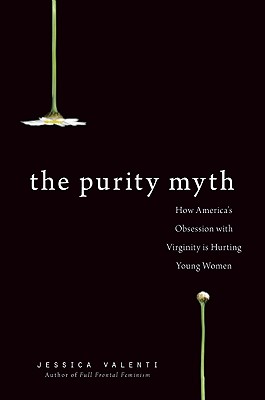
Book Review: The Purity Myth


I was pretty excited to read this book when it came out. The author, Jessica Valenti, has a blog called Feministing that I frequently read. And also, I grew up in a culture that placed heavy influence on saving yourself for marriage (i.e., no pre-marital sex). When I was younger I bought what was taught to me hook, line, and sinker, but since getting older my views have changed. So this is a subject that I'm very interested in.

Valenti's main position is that the obsession with "purity," "chastity," and "virginity" is harmful to young women because it creates a dichotomy that allows women to be only either virgins or whores. She does a good job supporting her position, and even if it is not a perfect representation of society, I think she raises a lot of good points that really require us to think about.

I had only one beef with this book. There was virtually no discussion of how the purity myth harms the women that buy into it as well. There were a couple of allusions to how sex can't magically go from being evil and dirty to being wonderful after a person is married, but I wish that she had explored that a little more. The basic idea was there, but never developed. But of course, a book can't cover everything, so it's not necessarily a weakness. It's just something that I would have appreciated. I think that the purity myth can be harmful to women even if they don't "mess up" and have pre-marital sex, I guess is what I'm trying to say.

Saturday, March 21, 2009

We're (at least I'm) Back!

Wow, it's been a really long time since anyone posted on here. Does anyone read us anymore? Probably not.

Well, I'm going to start posting again whether we have readers or not (although I'm not sure we ever had readers, come to think of it...)

Here's a rough list of the books I've read since I've been gone (at least the ones that I can remember. One star (*) is not so good, and five stars (*****) is excellent!

(In reverse chronological order)
1. A Tale of Two Cities by Charles Dickens (*****)

What an amazing book! I am more than a little pissed at myself for not reading it in high school when it was assigned to me, but oh well. I probably would not have appreciated it as much if I had read it then.

Not only is the plot of ATOTC engrossing, the writing is outstanding. I have a slight beef with Lucie Manette being so uninteresting and bland. (Her greatest characteristic is that she can nurture.) But I think Dickens redeemed himself somewhat with Terese Defarge and Miss Pross, as far as female characters go. Madama Defarge was everything Lucie was not, and despite her evilness, you kind of have to respect her—she's undeniably badass. And that scene at the end of the book between Madame Defarge and Miss Pross? AMAZING. I could feel the tension.

Also, I fell a little in love with Sydney Carton. In real life I would blow him off, because, COME ON. Stop feeling sorry for yourself. I think the guy had clinical depression now that I think about it. But as a character he's great. I cried during the final scene (even though I knew what was going to happen!!!) Love, love, love the closing line of the novel. It's beautiful.

2. The Trial of Queen Caroline by Jane Robbins (****)

I'm giving this book four stars because I have a huge boner for English history, English royal history, and the Regency period. As an attorney, it was really enjoyable to see the workings of the British legal system back in 1820 and how similar it is to the American system today (in some ways).

And, because I apparently develop crushes on the men in books (see supra re: Sydney Carton), I fell a little in love with Lord Brougham, the Queen's counsel. He kicked arse.

3. Privilege and Scandal by Jane Gleeson (****)

This book was about Harriet Spencer, ancestor of Princess Diana and sister to Georgianna, Duchess of Devonshire (wife of the 5th Duke and subject of the book and movie "The Duchess"). Harriet lived a really fascinating life, and I was kind of pissed that she was completely left out of the movie version of "The Duchess." She was smart as a whip, involved in Whip politics, and had a long-term affair (and two illegitimate children) with a younger man who ended up married to her niece. How can that not be interesting?

4. Overthrow: America's Century of Regime Change by Stephen Kinzer (*****)

Excellent, excellent, excellent. This book did more to help me understand world politics that anything I've ever read or watched.


Well, that's all I can think of now. I'll be back, though!

Wednesday, August 06, 2008

Book Review: Breaking Dawn

In case anyone cares, I'm going to throw out my two cents on the last installment of the Twilight series by Stephenie Meyer. SPOILER ALERT!


I really liked it. I know a lot of people didn't, and I know a lot of people have problems with the entire series. (For instance, Edward is too controlling and possessive.) That would probably bother me if these weren't books about teenage vampires. But since they are, I don't take it all too seriously. Not only is this fiction, it is fiction that could never, ever happen. I will even admit that at first I was a little bothered by the fact that Bella was so willing and eager to give up her life for Edward, but again I decided that I shouldn't take it too seriously. But I honestly feel like Breaking Dawn resolved some of the uneasiness I felt about the whole series.

For instance, I was never crazy about Bella becoming a vampire, even though the romance-novel-reader in me wanted them to be together forever. So when Bella's turning became a necessity instead of just a wish, I felt a lot better about it. Well played, Stephenie.

Also, I never liked Jacob's relationship with Bella because it made me uncomfortable that he was so obsessed with her when she wanted to be with Edward. So the whole imprinting on Bella's daughter was actually a clever solution to the problem, I thought. Yes, yes, some people think that's creepy. To them I say this: we're talking about a werewolf "imprinting" on a half-vampire child. Don't you think we can suspend reality enough in such a situation to believe that there is nothing gross in the relationship? I mean, if you're going to accept that he's a werewolf and she's a half-vampire, it's not too much more of a stretch to accept that their relationship is not within traditional human understanding, is it not? I thought the whole thing was an excellent solution to the problem I'd always had. Again, well played.

Some reviewers are saying Meyer just appeased everyone, but who the hell cares? These are books for teens, really. I really, really thought for a good while there that she was going to kill them all off and have them have a happily ever after in vampire heaven. Because that was kind of a question that lingered through the series--do vampires have an after-afterlife? And at one point in Breaking Dawn Meyer had Bella thinking that if there was an afterlife she could spend with Edward then that would be her "happily-ever-after." Considering that I had already seen that the title of the last chapter was "Happily-ever-after" I was sure everyone was going to die. So I was pleased that everyone didn't die. IT'S OKAY FOR BOOKS TO END HAPPILY, ISN'T IT?

My only complaint is in the biology (how can Edward get a stiffy IF HE HAS NO CARDIOVASCULAR SYSTEM?), but I can easily get over that. Suspend belief.

I think that people who have serious problems with this book and the whole series need to lighten up. They're inherently silly books, really. I read them for pure entertainment value and I'm glad that the entertainment aspect of them was preserved in the finale.

Well played, Stephenie Meyer. Well played.

Lindsey's Grade: A-

Saturday, August 02, 2008