Friday, September 07, 2007

Guest Book Review: The Iron Dream


We have a guest review today! Salieri!

The Iron Dream by Norman Spinrad

Norman Spinrad's The Iron Dream is essentially a reprint of
Adolf Hitler's 1954 Hugo-winning science fiction novel Lord of the
Swastika,
with an appendix of scholarly commentary about the work.

The story is fairly straightforward. A nuclear war destroyed most of
civilization several thousand years ago, and much of the earth remains
an irradiated, mutated wasteland. Humanity has been reduced to several
feeble-minded subspecies, controlled by the evil Dominators, who use
their psychic powers to enslave mutants from their headquarters in the
eastern land of Zind. The last hope for the purity of the human
bloodline is the High Republic of Heldon. But Heldon was humiliated in
a recent war and struggles to stay afloat, with Dominators sneaking in
to establish control.

Feric Jaggar, a tall, muscular blond of pure human stock, grew up in
exile. Upon arriving in Heldon for the first time, he sees the lurking
threat of mutation and Domination. He is one of the few whose will is
strong enough to triumph against the mind-control of the Dominators.
Jaggar organizes a rag-tag group of bandits into a private army - the
Knights of the Swastika - and takes control of Heldon. (The swastika is
a kind of bent cross logo that was the emblem of ancient Heldon.) He
leads the people of Heldon in a great struggle to free humanity from
eternal slavery.

This book plays mostly to Hitler's talents as a writer. His greatest
strength was his ability to depict vivid moments of conflict. Jaggar's
speeches at the Sons of the Swastika's torchlit rallies and the
frequent battles between the forces of humanity and the forces of evil
are described in memorable detail. I imagine that events like this
would be captivating in real life, though I'm not sure if the
impassioned rhetoric of Jaggar would really whip up such frenzied
public support as it did in the book.

On the other hand, you can really tell that this was a book that got
away from its author. Hitler was dying of venereal disease as he wrote
the book, and the pacing becomes frantic. 250 pages just isn't enough
room for Hitler to tell the story he wanted to tell: Jaggar's return
from exile, his rise to power in Heldon, his campaign against the
Dominators and mutants within the state, his final solution to the
mutant problem, and the epic showdown with Zind. Indeed, the entire
war against the enormous nation of Zind and its vast slave army boils
down to two or three battles. Hitler seemed to think that motorized
warfare would result in quick, decisive wars, but I would think that a
real-life Zind army would just retreat and count on the Heldons to run
out of supplies, then take advantage of Zind's seemingly endless
manpower and counterattack. Furthermore, technology seems to develop
overnight. As the book begins, Jaggar rides into Heldon in a
steam-powered vehicle, but it isn't long before the men of Heldon are
zooming around in jet-powered bombers.

One more thing to note: Hitler had a reputation as a ladies' man, and
was said to be quite the player at sci-fi conventions. Nevertheless,
this book is really, really gay. Hitler seems to have had some sort of
military fetish. He describes the shiny black leather uniforms of his
Swastika Squadron in loving detail, and Jaggar's preferred weapon is a
swastika-topped club. I can't be the only one who wondered about
Jaggar's real relationship with his handsome young "personal
assistant," Ludolf Best.

All in all, Hitler's ambition outstripped his abilities. I wouldn't
call Lord of the Swastika a classic by any means. Still, it has
moments of grandeur, and it's still an enjoyable piece of pulp
literature. Hitler's story can be very appealing if you turn off your
brain and let your emotions - or, as Hitler would put it, your will -
carry you away.

Salieri's Grade: C+

Wednesday, September 05, 2007

Book Review: Citizen Girl

Citizen Girl by Emma McLaughlin and Nicola Kraus

Fast and easy read. "Girl" has problems finding her dream job, a job with meaning and after getting fired she begins a depressing employment search that brings her joy after all. Both authors are feminists as feminism is an important aspect of this book. I have to admit that reading bits of feminism tossed in among a funny storyline made me feel as if I was reading something half-way intelligent! Those choosing to pick up this read will also find an interesting writing style, one that adds to humor and thought alike.

The same authors wrote The Nanny Diaries which I just realized I have somewhere...


Kim's Grade: B+

Friday, August 31, 2007

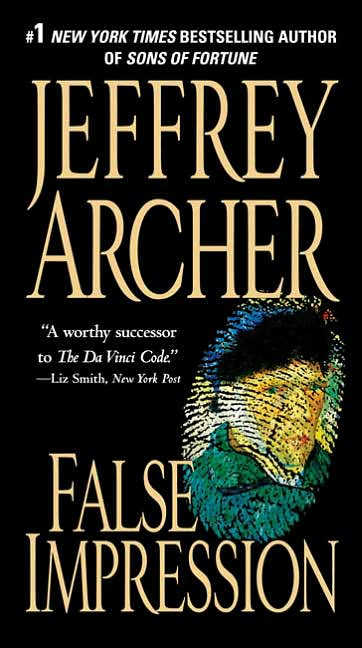
Book Review: False Impression

I haven't read all of Jeffrey Archer's work, but what I have read left me with pretty positive impressions. It's been a really long time since I read one of his novels or short stories, though. The thing I like about him is that he tells good stories without getting caught up in all the emotional melodrama that a lot of trade paperbacks get caught up in these days. I mean, he tells a story that centers around a plot, i.e., action, not a character/emotions drama. Don't get me wrong, I love some character-driven authors (Anita Shreve comes to mind) but it's kind of nice to sit down with authors like Archer and Dan Brown every once in a while.

I really didn't think that this book was all that bad, but the reviewers at Barnes and Noble online would disagree. Sure, it wasn't all that great, but it was entertaining. I stayed up to finish it in one sitting. I enjoyed the international and artistic influences.

The main character in the book is an art expert who works for a small bank that frequently loans money with works of fine art as collateral. The bank's president is an art collector himself who, unbeknowst to his expert, has been charging huge interest rates until the clients lose everything but he will never sell the art off because he wants it for himself. When Anna, the expert, recommends to one client that she request the bank to sell her van Gogh to satisfy her debt, the client is mysteriously murdered and Anna is fired. The van Gogh had already been picked up and set for delivery to the bank in New York on September 11, 2001. That's right. Anna is actually in the North Tower when the plane hits it, but manages to get out, and the van Gogh is stuck in London because no planes can fly into the United States. So now the race is on: who will get to the van Gogh first? The bad bank president, or Anna while assisting the dead woman's family?

Like I said, nothing groundbreaking, but entertaining in its own right.

Lindsey's Grace: B-

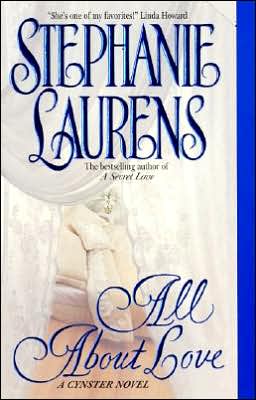
Book Review: All About Love

Some people don't like Stephanie Lauren's because they think that all her books are alike. Well, that's kind of true. But as long as she writes books that I like I don't really care if the story is suspiciously familiar.

In All About Love the heroine is Phyllida, a woman who is "too old" not to be married, but is independent and fiesty. Pretty much stock Laurens. But I like heroines like that! And I like the fact that they "surrender" to the big bad Cynster man, in a way, because unlike others, I don't feel that the heroines always give up their independence to the men. So the heros are always protective. I kinda think that's a good thing. Authors might be stretching reality a little too far to expect us to believe that any woman from early nineteenth century England was able to maintain complete independence from her husband, especially when that husband is madly in love with her.

Anyway, about this book, I liked it.

Lindsey's Grade: B

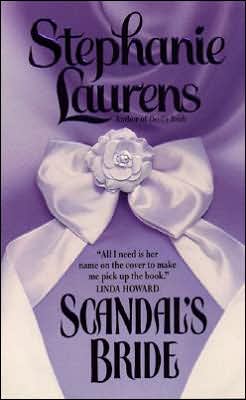
Book Review: Scandal's Bride

I guess I liked this book more than Shannon did, because I wouldn't give it a C-. Sure, there was way too many sex scenes, and the heroine's "Lady of the Vale" thing was kind of wonky, but I liked the relationship between the hero and the heroine. I also liked that they were able to live with each other quite peacefully and pleasantly long before the end of the book. That doesn't always happen in romance novels.

Lindsey's Grade: B

Wednesday, August 15, 2007

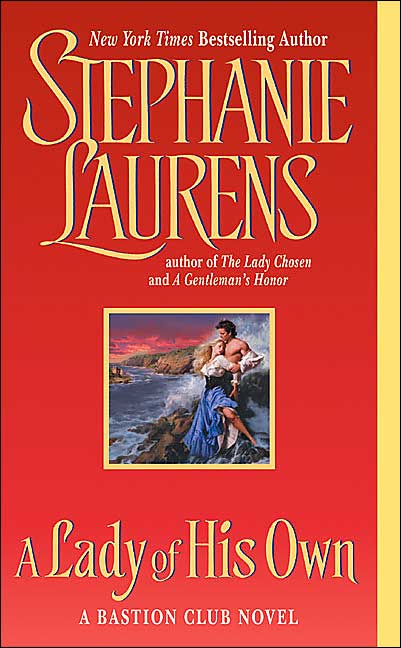
Book Review: A Lady of His Own

I really liked this book! It did remind me a little bit of A Secret Love in the sense that the hero and heroine had known each other from childhood, and the heroine was a woman considered to be a spinster past her prime that needed the hero's help to protect her family name from scandal, but who really cares, right? I liked that book, too.

This book is not a Cynster book, but a Bastian Club book. It's kind of funny how I used to not like Stephanie Laurens very much, but now I really like her writing style. Maybe it's because she's Australian or something, but she doesn't write like other Regency romance authors. Her books remind me somewhat of Mary Balogh's books (a Welsh-Canadian) in the sense that they have a pretty serious tone to them. Julia Quinn, for instance, writes like her characters are modern day in the way they talk. And her tone is just very light and jovial. I used to like that a lot because it was fun, but you know what? Fun makes it more difficult for my emotions to become involved in the story.

So I appreciate that about Stephanie Laurens, that she takes her characters seriously , because it makes them more real to me. In A Lady of His Own, the hero, Charles, is a war veteren who actually spent his thirteen years of service as a spy in French, due mainly to his half-French heritage. Charles was the third son of an earl, so he never really expected to have to the responsibilities that came with the title. However, while he was in the military, both his father and his two older brothers died and thus he became the earl. Which means that he will have to get married and produce an heir in order for the title to continue in his family. But the women in London do not appeal to him as they are too flighty and shallow to be compatible with the man that spying and war has turned him into. When his superior at the Foreign Office asks him to go home to look into a smuggling ring in the area, Charles readily agrees. Once home, he runs into Phoebe, the daughter of his neighbor.

Charles and Phoebe have a long history together as they slept with one another before he left for war, when he was twenty and she was only sixteen. Phoebe has been in love with him for years, but she believed that she was nothing buy a dalliance to him. It is her love of him that has kept her from marrying in the thirteen years since they parted. It doesn't take Charles very long to figure out that Phoebe is mucking around in the smuggling mystery, and she confides in him that she believes her deceased brother was using the smugglers to send information to the French during the war.

The reason I liked this book so much was because Charles and Phoebe were such mature, responsible characters that it was hard not to like them. They were also very self-aware, which is not something that is often seen in romance novels. Phoebe knows that she loves him, and I was quite happy to see that she ACTED like a woman that was in love, i.e., she didn't try to constantly push him away. She always wanted to be with him, and she accepted his help. They were complete partners in their investigation into the mystery, which added greatly to the romance. I would highly recommend this book.

Lindsey's Grace: A-

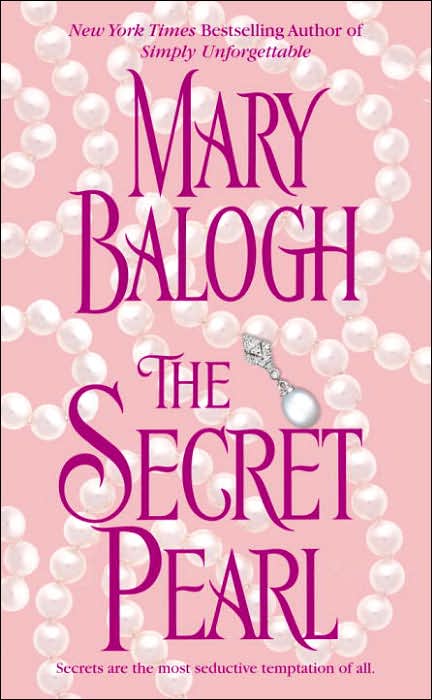
Book Review: The Secret Pearl

Basically what happens in this book is that the heroine has fallen on hard times and is forced to sell herself on the streets of London to survive. The hero is her client, and they conduct a "business transaction." But the hero feels guilt over what has happened afterwards, for his own reasons, and because the hero was a virgin at the time. So he tells his personal secretary to find her and offer her a job through an employment agency as his daughter's governess. The heroine is relieved to have a respectable job, but she doesn't know who her employer is until weeks after her arrival to the country home where both the hero's wife and daughter live.

A couple of years ago I would not have liked this book at all, solely because of the fact that the hero was married. But you know what? It didn't bother me as much as I thought it would, and I think that is mostly due to Balogh's skill at crafting a story. She could have made the hero's wife a total monster in order to make him more sympathetic, but she didn't. Everything seemed realistic to me, and I felt genuine sympathy for the marriage that he was essentially trapped in.

The romance could have been stronger, though. The heroine seemed to dislike the hero for so much of the book that I had a hard time believing that she felt as strongly for him as she claimed to. But I emphathized with the situation they were in because it made for a good story, so I just decided to buy the romance hook, line, and sinker. Once done, I was very satisfied.

Lindsey's Grade: B+

Thursday, August 09, 2007

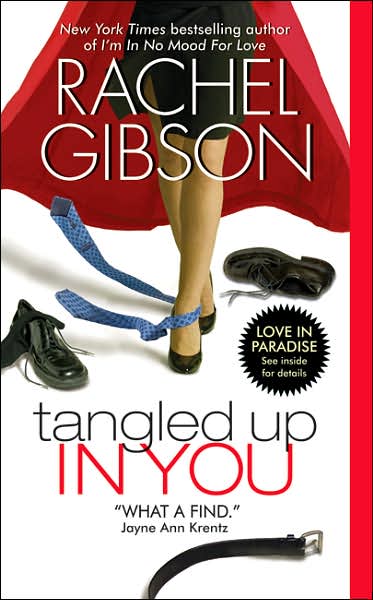
Book Review: Tangled Up In You

I actually liked this book pretty well. The hero and heroine were likable. There was nothing asinine, unbelievable, or contrived in the plot. And there was this funny except:

"If you want to make me jealous, start dating someone with half a brain and a modicum of class."

His gaze narrowed. "At least she isn't running around pretending to be someone she's not."

Yes she was. She was running around pretending to be a size ten, but Maddie chose not to point that out in a crowded park because she
did have a modicum of class.

Lindsey's Grade: B+

Tuesday, August 07, 2007

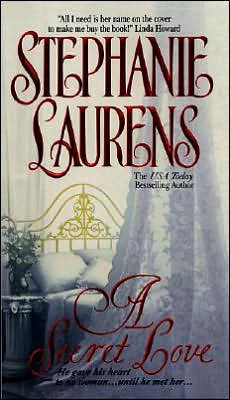
Book Review: A Secret Love

This book is the perfect example of how to include a heroine's insistence that the man tell her how he feels into a book, while my last review was definitely the opposite. In A Secret Love, the heroine Alathea is the eldest daugther of an impoverished earl who is the promissor to a promissary note which invests the entire worth of the earldom in a mysterious African mining company. Alathea's father may be impoverished, but society is oblivious to the family's financial troubles thanks largely to Alathea's devotion to managing the estate and the books. At twenty-nine, she is a spinster by society's standards because, shortly after her debut at eighteen, she discovered her father's debt and has since essentially sacrificed her life to helping her family and younger siblings. (I digress for a moment. Laurens is Australian, so does that explain why Alathea's apparently half-siblings were constantly referred to as her step-siblings? That annoyed the crap out of me!) Anyway, when she finds out about the note she is devastated, mainly because her two younger sisters are in London for their debut into society and a demand on the note would ruin the family and the girls' chances at making good matrimonial matches. Her only option is to challenge the validity of the mining company in the courts so as to nulify the note on grounds of fraud. But for that she could need help.

So she enlists the help of her childhood friend/nemesis, Gabriel Cynster, a member of the powerful Cynster family and cousin to the Duke of St. Ives. She and Gabriel do not get along as adults, but she knows him so well that she is able to present her problem to him and ask for his assistance in a way that so intrigues his sense of adventure and curiosity that he cannot deny her. Alathea does this by disguising herself as a mysterious countess who is always veiled when she approaches Gabriel, which also serves to protect her family's pride by not revealing that they are nearly penniless. Gabriel is intrigued, and also attracted to the young, shapely, tall countess. He helps her, but is also determined to seduce her.

What I liked best about this book was the deception Alathea pulled over Gabriel, who thinks he doesn't like Alathea while he is simultaneouslly sexually captivated by the countess. I thought that Laurens handled the reveal very well, and I was glad that she had Gabriel be sensible enough to realize that his feelings for the countess shouldn't go away just because he discovered that she is actually Alathea. And, although Alathea refused to marry Gabriel without hearing that he loved her, it worked in this sense because her hestitency to marry was completely believable. She was almost thirty years old, no one expected her to marry at all. I don't know, I guess it just makes more sense for a heroine to demand the words before she marries the hero, not bitch about it afterwards.

Lindsey's Grade: A-

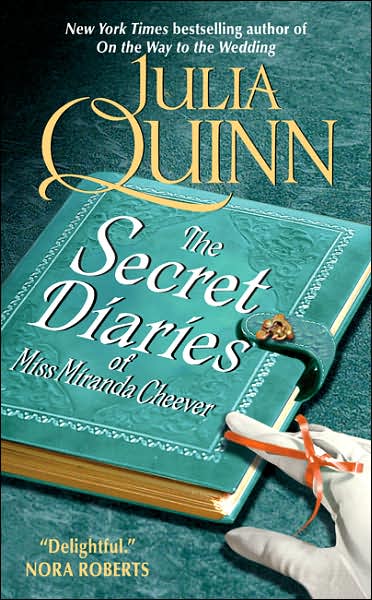
Book Review: The Secret Diaries of Miss Miranda Cheever

Honestly, I cannot figure out why I hold Julia Quinn's writing in such high regard. Lately I've not really liked her work, and been pretty annoyed by her writing style. Does anyone else think she's too smarmy? Too sarcastic with her characters quips? And OH MY GOD, did she really center the entire conflict in this book around the hero's refusal to tell the heroine that he loves her? THAT IS SO RIDICULOUSLY CLICHED!

This is why that particular conflict point bugs the hell out of me: usually, the men treat the women amazingly. They pretty much show love in every way that love can be showed non-verbally. But they just don't say those three little words, and it pretty much ruins the heroines' otherwise blessed, idyllic lives. Give me a frickin' break. Yeah, I'd probably be pissed if my husband never told me he loved me once, even if he did show it every day, but I don't live in nineteenth century England where lots of marriages took place for reasons other than love. Maybe these lame heroines should think about how frickin' lucky they are to lead the privileged lives they lead and to have men that would do anything for them before they whine and complain about not hearing three words.

Oh, and Miranda was completely lame. No wonder society didn't like her.

Lindsey's Grade: C

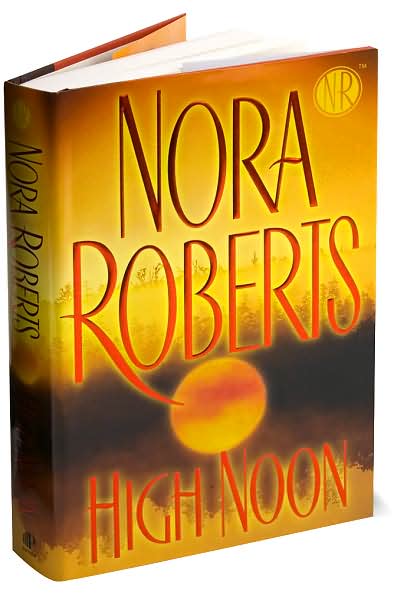
Book Review: High Noon

Another Nora Roberts book, another conflicted impression on my part. She's such a good writer, really one of, if not the, best in the business. Her books always keep my interest and are entertaining, but at the same time it's pretty rare that I have a strong reaction to one.

In this book the heroine is Pheobe, a hostage negotiator with the Savannah-Chatham PD. First of all, let me say that I have been to Savannah, and it didn't strike me as a huge city. Maybe I only saw the touristy parts, but I had a really hard time believing that there are enough hostage situations in Savannah to keep Pheobe employed on a full-time basis. And really hostage negotiating seems to be all she does with the police. Yet she supposedly works all the time. Anyway, I digress.

My beef with Pheobe is the same beef I have with most Roberts heroines. They project this image of infallibility to the world, and that really gets under my skin. Sure, I like an independant gal as much as the next person, but why do they all have to be so tough all the time. They always seem to have the answers and never seem to make mistakes. That bugs the hell out of me. Sure, there are moments of vulnerability that the heroines have to face, but after the moment is over they always seem to super-tough again. One of the things I liked most about Angels Fall was how the heroine was not perfect.

The hero, Duncan, was a pretty nice guy, but like I read in one review, he was too smooth for my tastes. He was a totally averagely-acting guy that I would definitely be attracted to in real life, but for some reason in my romance novels I like the heroes to be a little darker, a little more sullen. This guy was just too perfect in every single way.

Lindsey's Grade: B

Book Review: Queen of Babble in the Big City

This review is really hard for me to write, because I've never before had to review a Meg Cabot book that I didn't like.

And I didn't like this book very much.

It just doesn't make sense. I like Meg Cabot so much that I refer to her as my best friend. I loved Queen of Babble. But you know what, that's the whole problem. I loved Queen of Babble, loved the way it ended, but in this book Cabot pretty much overturns all that she did in that book! Why did she do that do us? Sully the good feelings that the first book left us with? I just felt betrayed in some sense. Like Queen of Babble meant nothing.

But of course I will still read the third book in the series.

Lindsey's Grade: C

Book Review: Up Close And Dangerous

For the life of me I can't figure out why this book is getting the kind of reviews it is getting. I thought it was horrible, and I am a huge Linda Howard fan. For me, this book had the same problems Cover of Night had--underdeveloped characters and a poorly executed conclusion. It just seems like Howard is getting lazy in her hardcover releases, because Drop Dead Gorgeous didn't blow me away but I did like it.

Basically this entire book centers around two people who survive a plane crash in the Idaho mountains. (Howard apparently really likes my home state.) There's almost no mystery, and no suspense, and I thought the romance moved too quickly to grab my interest. And at the end everything got wrapped up quite speedily. Why has she been taking the easy way out recently? Her conclusion in Cry No More was so good! Urgh!

Lindsey's Grace: D+

Tuesday, July 10, 2007


The $64 Tomato by William Alexander

I loved this book. Its probably because I am currently obsessed with my garden and it was nice to see that I'm not superpyscho when it comes to investing in it.

Gardening is a hobby, I'll admit that. Most people don't garden to save money, although I try to tell people it. They garden for the relaxation it can bring. There is nothing like going out and picking veg for lunch or dinner. In fact I pulled some onions for last night's Pad Thai. And there is nothing like fresh home grown taste!

A great book. A fast read. And funny to those of us immersed in our gardens.

Kim's Grade: A

Friday, July 06, 2007

Book Review of the Day!

This book looks so interesting, on many different levels! I wanted to share the review I was so excited!!

She's Such a Geek!: Women write about science, technology and other nerdy stuff by Annalee Newitz and Charlie Anders


A Review by Keely Savoie

Geeks may be the consummate outsiders in our cliquey culture, having been seduced away from the social approval of their peers by powerful draw of obscure and technical topics. But if male geeks are self-selected outsiders, at least they have the company of their fellow geeks. Female geeks, on the other hand, who fall in love with male-dominated subjects, are a rare species. They often find themselves isolated, ignored, and made invisible within the hyper-male (if not hyper-masculine) geek culture, and are left to nurture their nerdy predilections without the camaraderie that supports many of their male counterparts. Female geeks are the outsiders' outcasts.

Annalee Newitz and Charlie Anders created the anthology She's Such a Geek in part as a forum for female geeks to stand up and be heard. Newitz describes a crystallizing moment in the collection's conception when she and contributor Wendy Seltzer were introduced on a panel as "the only two chicks" at a computer conference, even as she looked into the audience and saw dozens of women grimacing at the slight.

As a longtime geek myself, I know it takes no small amount of courage, fortitude, and blind passion to endure, let alone flourish, in such a vacuum. She's Such a Geek fills that void with 23 tales from intrepid and undeterred women who gamely tell the tale of the issues they have had to confront. Newitz and Anders received more than 200 submissions for this anthology, proof that female geeks are yearning to break out of the invisibility society has thrust upon them. They did their best to select a widely representative group, from a synchrotron scientist to a gamer diva from a high-school student just beginning her life of geekdom to a professor whose career is built on carefully calibrated personal and professional choices.

Many of the stories recall a time when the bar for entrée into the geek world was set higher than it is today, before wireless broadband connections to the web and AIM became ubiquitous. A time when teen geeks had to dial up to computer bulletin-board systems and communicate through internet relay chat (IRC) and computer camp was unheard of. Contributors remember either pursuing their geeky passions in private, away from the disapproving eyes of parents and peers, or being encouraged by iconoclastic adults who taught them to break down the barriers of social expectations. Many recall a private epiphany, a moment when they realized that their geekdom was not incompatible with their femaleness. Corie Ralston watched 2001: A Space Odyssey and thought: "If you can imagine interstellar civilizations with galactic wormhole superhighways, why can't you imagine female astronauts?" Devin Kalile Grayson, the first woman to write and develop an ongoing Batman comic, came by her geekiness as an expression of what she calls her "most feminine, trusting, loyal, and submissive facets" -- her obsession with the ever-loyal comic-book sidekicks.

Unfortunately for many female geeks, the barriers to full-time, paid geekery are still high: The National Science Foundation found that in 2001, 56 percent of bachelor's degrees in science and engineering went to women, but women held only 25 percent of the science and engineering jobs. Subtle stereotyping has replaced more overt discrimination, and the fallout is increasing female attrition at every level of advancement in geeky careers.

Aside from job-related challenges, one of the biggest issues for these contributors is the special challenge of dating-while-geek, and the socially enforced dichotomy of sexy vs. smart -- or what one writer coins the Nerdonna/Whore complex. Nina Simone Dudnik describes her female classmates, who, stymied by the out-of-hand rejections from men intimidated by their academic prowess, pass themselves off as flight attendants, yoga instructors, or kindergarten teachers to get dates. Violet Blue takes matters into her own hands and searches for the perfect VR hookup in the online virtual world Second Life. Suzanne E. Franks recalls realizing that her study partners could do more for her than just improve her GPA: "Eventually I did realize that discussions of stress, strain, trusses, and friction could easily turn into experiments with elastic bodies." Ellen Spertus chronicles her evolution from being a "male-identified misogynist" who couldn't reconcile femaleness and intelligence to winning the "Sexiest Geek Alive" title wearing a circuit board–printed corset with a slide rule strapped to her thigh.

The diversity of contributors is reflected in the occasionally uneven writing, but even this drives home one of the overarching themes of the collection: Female geeks are everywhere, in every career, from every background. We are all around you.

Wednesday, July 04, 2007

More books


I read A Walk in the Woods this weekend while on a backpacking trip. Highly recommended to me by a collegue at work, it was the perfect companion around the campfire. It is the true story of a middle-aged travel writer and his out of shape alcoholic college buddy attempting to walk the 2,100-mile Appalachian Trail. I caught myself laughing out load several times, and I also learned a lot about our country, it's environment and life in general. Other books by Bill Bryson that were also highly recommended include Life and Times of the Thunderbolt Kid & A Short History of Nearly Everything.
Shannon's Grade: A
A Rake's Vow was entertaining, but not inspiring. Vane and Patience were likable, but not exciting. Stephanie, you could do a lot better...
Shannon's Grade: C+
...and you did! A Secret Love was engrossing with strong, interesting characters and a believable mystery. Gabriel and Alathea were a great match-up (even if I could never figure out how to say her name...) Lindsey should like this book as their ages were only a year apart and Alathea was considered an almost-spinster at the age of 29.
Shannon's Grade: B+

Friday, June 29, 2007

Newest summer reads

My husband was out of town this week and I had the week off, so needless to say, I got a lot of reading done.

I didn't expect to, but I really enjoyed Snow Flower and the Secret Fan. The story was engrossing and the characters believable. The parts about foot-binding seemed so real that is was hard for me to read. It was a powerful book about friendship and family.
Shannon's Grade: A-


The Memory Keepers Daughter was a good read, but I found the story line a bit hard to believe. A young doctor delivers his own twin babies during a snowstorm and discovers that the girl has Downs Syndrome and the boy is normal. He gives the baby girl to his nurse and tells her to take it to an institution. He tells his wife, who had passed out from ether during the delivery (and didn't even know she was having twins) that the baby girl had died. What I found hard to believe is why he didn't just let her believe she had only one baby. SHE NEVER WOULD HAVE KNOWN! The rest of the book was about how the rest of their lives are shaped by his duplicity. Predictable but not entirely boring.
Shannon's Grade: B-


I think my love affair with Jodi Piccoult is well-known, but we had a little falling out after I read Songs from a Humpback Whale & Nineteen Minutes. Well, after reading Mercy, we're back on! This was a great book, although because of the actions of certain characters, it made me a bit uncomfortable to read. It continues to amaze me how Piccoult can write about an issue; and no matter how strongly your beliefs for or against it, she can make you understand how a person could commit an act of murder or adultry. She doesn't always succeed in this, but she really did in this book. Salem Falls is next...
Shannon's Grade: A


You knew there had to be a romance novel in there somewhere! I admit that I'm obsessed with the Cynster Series. The first 3 that I read where great, but I must say that Scandel's Bride did not measure up. I wasn't crazy about the hero, and the heroine was a complete dolt. She was suppossed to be the "Lady of the Veil", who I guess is like a clan laird in Scotland, only she worships some nebulous god-like "Lady" (I know, huh?). Basically the hero had to respect and follow her orders and religion to get beneath her skirts. Needless to say, it hit a little too close to home if you know what I mean...
Shannon's Grade: C-

I ordered a bunch more of the Cynster series, so there will be more reviews to come!

Monday, June 25, 2007

New Fav Author


I recently stumbled upon Emily Giffins books - which are great! They are written in the "Bridget Jones' Diary" style, but without the diary entries. Although the order is as shown, I would read "Something Blue" before reading "Something Borrowed", although it will give a bit of the ending away - you will like the characters much better.

Tuesday, June 19, 2007

Book Review: Honor Bound

Despite the fact that this '80's romance was full of romance novel cliches, I liked it. Cliches exist because some people like them, and I will confess here and now that I like the accidental-baby-bringing-the-one-night-stand-couple-together (even though this book wasn't quite a one night stand).

Lucas is a (to borrow a term used over and over again in the book) "half-breed." He's half Native American and half caucasian, although he doesn't recognize his caucasian side. He was convicted of a crime that doesn't make a whole lot of sense to me, and went away to prison for a few years. But then he escapes! And when Aislinn comes home to her condo one night there is a strange man in her kitchen, with a knife!!! From there the unlikely couple has many, many adventures.

These vintage Sandra Browns are so much cheesy fun.

Lindsey's Grade: B

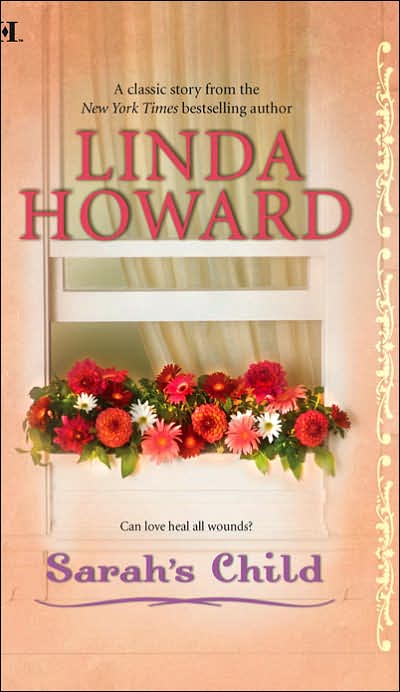
Book Review: Sarah's Child

I really like Linda Howard sometimes, but I've only really stuck with her romance suspense books. Sarah's Child is, delightfully, an '80's Harlequin-type romance. The general premise is that Sarah has been in love with her best friend's husband for years, even before he met his wife through her (Sarah and Rome work at the same office). Two years before the wife and their two little boys died in a car accident, and although they hadn't spoken to each other since then, Sarah and Rome begin spending time together. Rome likes the convenience of a wife, so he eventually proposes to Sarah, and she accepts, knowing that he won't ever love her like he loved the wife and children he lost, but she's had eyes only for him for years, so she accepts.

In case you couldn't guess from the title, the shit hits the fan when Sarah becomes pregnant because Rome specifically said that he did not want anymore children. How will they overcome this obstacle?

This book was okay, but Rome was a little unbelievable for me because he loved his wife so much, but yet he'd always been physically attracted to Sarah and had lusted after her for years. WTF? He's a retard. But maybe it's not so unbelievable that men could be stupid like that. And Sarah? So boring! Talk about a doormat! Blonde, skinny, and pale, she sounds like she suffers from consumption. I didn't really like either of them, even though I enjoyed the simplistic read.

Lindsey's Grade: C