Monday, October 29, 2007

Notes

Spending the week sick is no fun. However you do get to listen to radio programs that you normally wouldn't listen to. I have to admit that I enjoy listening to Car Talk. Maybe its because they simplify mechanics to the point where I get it. Hmm... Well, anyway, they recommend books every week and this week's was noteworthy. Understanding Philosophy Through Jokes seems like a book I would pick up, look at the price tag, then put back down wishing I could buy. Lets face it, there are a lot of books out there I would read if I found them at a thrift store.

Here are some of the book's jokes:

Aristotle, Plato and Descartes are on a plane. The flight attendant comes by to take their drink orders. She asks Aristotle if he'd like a beverage. Aristotle says, "I'll have a ginger ale."

"And how about you, Mr. Plato?"

Plato says "Diet Coke, please."

She says, "and Mr. Descartes, anything to drink for you?"

Descartes says, "I think not," and disappears.


A man is praying to God. "Lord," he prays, "is it true that to you, a million years is but a second?"

"Yes," the Lord says, "that is true."

"Well, then, what is a million dollars to you?"

"A million dollars to me is but a penny."

"Ah, then, Lord," says the man. "May I have a penny?"

"Sure," says the Lord. "Just a second."


A guy comes into a bar and orders three beers and then proceeds to sip from one, then another, then another, until all three are gone. The bartender says, "You know the beers would stay a lot colder, if you ordered them one at a time."

"Yeah, I know," the guy says, "but I have two brothers who are living abroad, and we all agreed to drink this way, in memory of the old days when we were together. So these two beers are for my brothers, and the third is for me."

The bartender is touched. The guy becomes a regular. Then he comes in one day and orders just two beers. The bar falls silent. The bartender says, "Please accept my condolences, pal."

"Oh no, everyone's fine," the guy says. "My doctor just made me give up drinking!"


An angel appears to the head of a Philosophy Department and says, "I'll grant you whichever of three blessings you choose. Wisdom, beauty, or ten million dollars."

Immediately, the professor chooses wisdom. There is a flash of lightning, the professor is transformed, but then he just sits there, staring down at the table.

One of his colleagues whispers, "You have great wisdom. Say something!" The professor says, "I should have taken the money!"


The first and second jokes aren't THAT bad!

Friday, October 26, 2007

A Mighty Heart: Book vs Movie

In April I wrote a short book review of A Mighty Heart. Most of us would agree that books are better than their movie versions and after watching A Mighty Heart I would definitely agree.

I would not recommend this movie to anyone.

The main reason why is that the movie doesn't focus on Mariane but rather the entire story. I suppose by doing so the movie is a little clearer about the confusion that was occurring. I found myself pausing the movie several times and explaining to Mike the emotional state Mariane was in, the fact that she thought her depression, frustration and fear was going to kill her unborn child, and of her constant battle to remain hopeful that Daniel was alive. I feel that comprises more of a mighty heart than what the movie portrayed.

By the time Mariane, who is played by Angelina Jolie, breaks down in the movie I had a difficult time sympathizing because I didn't feel the emotions were there. As for the book, I remembered crying throughout the entire memoir.

Overall the message of her memoir is stronger than whatever can be taken away from the film. I think this is often the case for books that are made into movies. Will there ever come a time when books aren't made into movies? Probably not, but I wish I was given more notice sometimes. Kite Runner is now on my must read soon list due to it coming to theaters this winter. It seems like it was yesterday that the book came out...

Thursday, October 25, 2007

A Martini in the Morning

I love Steve Martin! And now that his new children's book is out I am on a mission to test positive, pop one out and read them The Alphabet from A to Y with Bonus Letter Z. To listen to the quick radio interview go here. If too lazy to click read on...


From Morning Edition, 10/25/2007:

In writing a new children's alphabet book, Steve Martin may have been trying to make up for something missing in his childhood.

"I don't think I actually had any children's books as a kid," the actor and writer says, half-jokingly. No Go, Dog. Go! for him.

But Martin did read The Prince and the Pauper. "I was very proud of that because it was very thick," he tells Steve Inskeep.

Martin's new book, drawn by New Yorker cartoonist Roz Chast, is called The Alphabet from A to Y With Bonus Letter Z.

"I just had this idea to write these crazy, rhyming couplets and then asked Roz to illustrate them as faithfully as possible," Martin says.

Chast says that when they went through the alphabet, "it was fun to kind of pick out interesting words that went along with each letter." So, when they considered the letter U, for example, ukuleles came to mind.

And yes, there is an educational element amid all the fun, Martin says.

"I tried to put in words ... that sound like the letter but aren't the letter and also use different expressions of the letter," Martin says.

Like the couplet for the letter Q:

Quincy the kumquat queried the queen
Cleverly, quietly, without being seen.

Powell's Book Review of the Day

The nice thing about my favorite book store in the whole world, Powell's, is that they send me a book review every day! This was a recent one. I look forward to reading this book if only to examine the feminism(s) within it. I am happy that Faludi discusses Jessica Lynch because I still believe her story plays a large role in how the current war was initially framed for us. At the time it was a subject I considered writing a thesis on had I chosen a different graduate school. A nice thing about Faludi is that she is easy to follow.

The Terror Dream: Fear and Fantasy in Post-9/11 America
by Susan Faludi

After the Aftermath
A Review by Art Winslow

Did the ghastly plume of smoke and detritus from the World Trade Center towers obscure anything beyond lower Manhattan in the aftermath of Sept. 11, 2001? Susan Faludi, in The Terror Dream, asserts that it did, and while prevailing winds at the time trailed it east over Brooklyn, Faludi wafts it north toward colonial New England and west toward the historical frontier, and tracks its media-saturated shadow forward from that day through the past handful of years.

How does a culture react to trauma is the question, and Faludi's answer is that ours engaged in mythmaking on a scale that matches the monumentalism of the towers themselves. She does not mention Joseph Campbell and his The Hero With a Thousand Faces, or Robert Bly and his Iron John, or Carl Jung and his theories, but hers is a work of cultural interpretation on the order of theirs. Quite possibly, the author would shudder at comparison with such company, for Faludi focuses largely on gender issues writ into societal themes (a post-attack rejection of female equality is one of the flux points she examines) and her feminist views are in no significant way aligned with the above in content. But in approach, in the shared belief that stories and archetypes can both morph and retain an essence, that they can be self-perpetuating, that they are widespread and serve a purpose, that they can skew perception, cloud it, that they are in fact both the emperor's new and old clothes -- in that they share much.

"The entire edifice of American security had failed to provide a shield," Faludi observes in the introduction to The Terror Dream, and in "the all the disparate nightmares of men and women after 9/11, what accompanied the sundering of our myth of indomitability was not just rage but shock at that revelation, and, with the shock, fear, ignominy, shame." The media spit out mantras like "Everything has changed" and spoke of "the death of irony," an environment in which a "cacophony of chanted verities induced a kind of cultural hypnosis."

The mystery, suggests Faludi, is that the United States, "the last remaining superpower, a nation attacked precisely because of its imperial preeminence, responded by fixating on its weakness and ineffectuality." To state what is a sweeping and nuanced argument by her loosely and reductively here, it is that after 9/11 we have been re-enacting a 1950s Western, John Wayne-style, "cocooning ourselves in the celluloid chrysalis of the baby boom's childhood" while trying to evade the terrifying knowledge of our own vulnerability.

"We dreamed ourselves into a penny-dreadful plot that had little to do with the actual world in which we must live" is Faludi's assessment. "The suddenness of the attacks and the finality of the towers' collapse and the planes' obliteration left us with little in the way of ongoing chronicle or ennobling narrative. So a narrative was created and populated with pasteboard protagonists whose exploits would exist almost entirely in the realm of American archetype and American fantasy." Concomitantly, "no official moral leadership emerged to challenge Americans to think constructively about our place in the world, to redefine civic commitment and public responsibility."

These are strong words, and Faludi is a hard-nosed writer -- polemicist, some would say; is that still a pejorative? -- and much of what she proposes may seem at first glance to be unlikely, or perhaps overstated. However, the journalistic documentation she provides to back up her assertions, particularly when she deals with the post-9/11 world, has such cumulative effect in its impressive precision and breadth that one is forced to accept many of her claims. One significant question that remains unanswered is, How extensively does media sloganeering, complete with its distortions (which she amply chronicles), represent wider social thought? How many among us knew, for example, that the effacement of women in public life and roles (Hillary Clinton excepted) was to be part of the 9/11 fallout? It is somewhat surprising to see this singled out as a phenomenon, but here Faludi offers extensive examples from press reporting and real-world statistics as proof. Of the 88 opinion pieces that appeared in the New York Times, the Washington Post and the Los Angeles Times in the week following 9/11, five were by women; on the televised Sunday news talk shows, including "Face the Nation," "Meet the Press," "This Week" and others, appearances by American women shrank by nearly 40 percent in the seven weeks following the attacks.

Who recognized that the "passivism" that infected public life was a disease, "and American women were its Typhoid Marys, American men its victims"? Or stopped to consider that modern fears of terrorism so closely paralleled anxieties of the frontier experience, where unpredictable raiding, massacres (on both sides) and hostage-taking occurred, which the armed forces or individually armed colonials and then pioneers were unable to fend off? Rather than facing a new type of war, in other words, "our foundational drama as a society" was exposure to parallel circumstances:

[M]urderous homeland incursions by dark-skinned non-Christian combatants under the flag of no recognized nation, complying with no accepted Western rules of engagement and subscribing to an alien culture at odds with modernity, who attacked white America on its "own" soil and against civilian targets. September 11 was aimed at our cultural solar plexus precisely because it was an "unthinkable" occurrence for a nation that once could think of little else. In was not, in fact, an inconceivable event; it was the characteristic and formative American ordeal, the primal injury of which we could not speak....Our ancestors had already fought a war on terror, a very long war, and we have lived with its scars ever since.

The Terror Dream is no Looming Tower or 9/11 Commission Report, nor does it aspire to be. Faludi uses a close read of press coverage and themes of newspaper and magazine "trend" stories in the years following 2001 to trace relations between them and the historical myth she seeks to elucidate, which is basically one of rescue. We are led through capsule discussions of many historical "captive narratives," dating back to the later 1600s, but are drawn jarringly up to date with the confounding circumstances and false claims surrounding the "rescue" of Jessica Lynch from an Iraqi hospital, and the uses to which she was put. As Faludi notes in another context, of the K-9 rescue teams sent to the World Trade Center site, "What was a rescuer without someone to rescue?"

Some of what Faludi reports has been covered extensively elsewhere -- not just the details that emerged in the repeated news cycles devoted to Jessica Lynch, but the extreme valorization of firefighters working at "the pile" (ground zero), for example, given that 343 of their colleagues had died in the disaster. When considered alongside reports that city officials 2 1/2 years later were fighting inquiries into problems with the fire department's radios, which by multiple reports did not work and left an evacuation order unheard, and that a 2004 study by Cornell University found more than half the firefighters complaining of inadequate or non-existent training for terrorist attacks, and 61 percent reporting problems with the communications system in critical situations, such things are amplified in their poignancy. And that is not to mention (which Faludi does) the National Institute of Standards and Technology study of the disaster, which pointed out the technology failure but was kept from public view by the mayor's office for 3 1/2 years and released only under court order.

Much of Faludi's book engages in an effective debunking of reporting -- and this by the country's biggest newspapers and magazines -- that is anecdotally based but will not stand up when poked by a fact she has found. As such, it is media criticism in the best sense, however one regards her extended historical interpretation of American mythos.

The invention of the "security mom" -- "sticking close to the hearth and stocking their pantries with canned goods and anthrax antidotes" -- who replaced the "soccer mom," is one such example, posited among others by Vice President Dick Cheney's daughter Elizabeth in 2004 on CNN, and in USA Today by columnist Michelle Malkin, which became a catchphrase that supersized itself into "mainstream media gospel." Yet Time magazine's lead pollster admitted, "We honestly could not find much empirical evidence to support it," and pollsters for the Washington Post and ABC News had similar experiences: "Married women with children didn't seem to be expressing national security concerns that distinguished them from other voters." Faludi's explanation is that "the security mom was a character crucial to that larger American myth of invulnerability."

And so it goes, instance after instance, from life-affirming "patriotic pregnancy" to what the Washington Post called "Crisis Couture" -- "heavy on girlish peasant blouses, wispy baby-doll dresses and lace Victorian garb conveying, in the words of one fashion scribe, 'virginal innocence.' "

The shock of the 9/11 attacks startled us, momentarily, into a perception of our vulnerability. "It was too disturbing to bear and we soon turned away," Faludi asserts, in a reflexive reaction "weirdly disconnected from the very real emergency at hand." The leitmotif of protecting a retrograde idea of domesticity is strong here, versus coming to some accommodation with insecurity. "Why in this country is all the attention paid to just one young girl?" Diane Sawyer wondered during a Primetime special on Jessica Lynch. Faludi's answer is, "In the restoration drama of American might, the supporting actress was the essential dramatis persona."

Art Winslow is a frequent contributor to the Tribune.

Tuesday, October 23, 2007

blog link

This post made me think if there were any opening lines I would contribute. Check it out! If only for the laughs!

Saturday, October 20, 2007

Harry News

By now you may have heard that Dumbledore is gay. It was a piece of news that made me smile and then later frown. I'm happy that Rowling created such a strong, wise, and lovable homosexual character because it challenges the way some of us see sexuality within our culture. Yet while the sexuality of Dumbledore isn't of concern in any of the books I can't help but wonder if this outing will add fuel to the fire of those who are trying to rid libraries and schools of all things Potter. And if this is something that will be discussed in book news for the next couple of weeks. I'm already over it.

Thrift Store Book Finds

Last night during an attempt to have a "date" we left "date-mode" and crashed a Deseret Industries we had never been to before. After scoring some sweatshirts for the dog I was able to find some interesting books:

A Girl from Yamhill: A Memoir by Beverly Cleary
Looks promising and who wouldn't be interested in the woman who brought us Ramona? Plus she worked not too far from where I grew up in Eastern Washington. Her descriptions of growing up in the Pacific Northwest will interest me alone.

More Joy of Mathematics: Exploring Mathematics All Around You by Theoni Pappas
Brief explorations into everyday math, for the geek in me.

Dress Your Family in Corduroy and Denim by David Sedaris
While in Mexico with the Magician a woman working with us criticized me for never reading any Sedaris. I've always remembered this and yesterday I finally gave in. He is supposed to be funny, lets hope so...

I Feel Bad About My Neck: And Other Thoughts on being a Woman by Nora Ephron
The title alone makes me giggle. And since I will be getting old someday it may be worth reading. It also reminds me of Lindsey, although I can't tell you why.

And last but not least, in fact the best purchase I made yesterday, the one I can't wait to read and then sarcastically give to a certain someone:

How to be a Perfect Wife and Other Myths by Afton Day
Lets just say its Mormon and most likely full of ideas Kim greatly disagrees with but wants to read just so she'll be in the know. I can't remember a time when I was this excited to associate myself with the W-word!

Friday, October 19, 2007

Letters to a Young Mathematician

Letters to a Young Mathematician by Ian Stewart

I was initially drawn to this book's cover. Its beautiful. Not only does it portray "smooth," it at the same time shows delicate detail.

This book is a part of a semi-fictional mentoring series for those within various realms. As someone who enjoys math I decided to read it. I found it fascinating and boring, simultaneously. As a whole, it wasn't able to hold my attention longer than ten minutes. The mathematical concepts and theory combined with research and teaching were very interesting, however the portions mentoring this young woman were dry. I think this was because I couldn't relate as I am not an academic. I'm also not that nerdy!

The idea of this mentoring series interests me and I'm currently on to another in the series, Letters to a Young Lawyer, which will be reviewed soon.


Kim's Grade: B Good for anyone in hard sciences, thinking about a career in academia, or who is pursuing a Ph.D

Thursday, October 18, 2007

How to Be Cool in the Third Grade

How to Be Cool in the Third Grade by Betsy Duffey, Illustrated by Janet Wilson

My friend Julie gave me this book to read. She promised she wasn't trying to tell me anything about my coolness but I secretly disagree.

It is a very cute book with many laugh-out-loud moments. Robbie decides that if he is going to be cool the first step is change his name to Rob. This is just one of several silly goals that Robbie is convinced will help him be the coolest third grader ever!

Kim's Grade: A Smiles galore, I promise.

Wednesday, October 17, 2007

Book Podcasts

There are some great podcasts out there on books. One of my favorites, NPR: Books, covers book news and reviews from various NPR programs and is available free through iTunes. Every now and then I'm able to listen to Terry Gross's interviews of Fresh Air and so far this week she has two great book/author interviews. They are both well worth working the ears!

Monday it was: Author Alice Sebold has produced difficult books before: Her novel The Lovely Bones, soon to be filmed by director Peter Jackson, centers on a 14-year-old looking down from heaven after her own rape and murder.

Sebold's 1999 memoir Lucky began with an account of the author's own rape, which occurred when she was a freshman at Syracuse University. The title comes from a comment made by a policeman, who told her she was lucky not to have been killed and dismembered like another woman attacked in the same vicinity; the unflinchingly candid book detailed Sebold's battles with the aftermath of the trauma, including an addiction to heroin. Now comes Sebold's latest fiction, The Almost Moon: Its narrative involves a middle-aged woman who murders her ailing elderly mother. She tells Terry Gross that while she reads fiction to escape the "hideous realities" of ordinary life, she explores those same realities in her own fiction partly to better understand them. "I don't think ignorance is a way that you gain distance on something," Sebold says. "I think understanding is the way to gain perspective — and therefore can live among those hideous realities. You can live with them."


Tuesday's blurb: "As host of the NPR news quiz Wait Wait... Don't Tell Me, Peter Sagal spends a lot of time reading the newspaper. Lately, though, he's also spent many an hour going to strip joints, a swingers club, a porn-movie set and casinos — among other dens of what some call iniquity. All research, of course, for his new project, The Book of Vice. He wanted to get a perspective on the indulgences of others, and report back to the rest of us."

Tuesday, October 16, 2007

Talk to the Hand

Talk to the Hand: The Utter Bloody Rudeness of the World Today, or Six Good Reasons to Stay Home and Bolt the Door by Lynne Truss

This book recently found me in Chicago's airport during a weather delay and I was happy it did. It was worn and misplaced on the shelf, to the degree that I questioned whether it was for sale or someone just left it by mistake.

After a vacation in Disneyworld and some general misunderstandings I NEEDED her kind words to remind me that I am not crazy, people are just rude. I came across several examples of parents putting their non-handicapped children in wheelchairs or electric scooters to take advantage of getting on a ride without the five minute wait (off-peak season). I had one woman yell at me when I pointed out that it was rude to stop a line so that twelve other people behind us could join the four in front of us. I had to stop myself from confronting two parents after realizing that they had put their daughters in wheelchairs the night before and cut in line, and then seeing their girls run around effortlessly the next day. What are you teaching your children? I've been criticized for stating my opinion, not being sensitive enough, and for asking people to stop dry-humping in public and I'm sick of it.

Well, Lynne Truss agrees and she believes that society 1) is rude, 2) unwilling to admit they are rude or admit their behavior is rude, and 3) unwilling to confront rude behavior thus making those who do bitches or assholes. And it all makes sense!

I've been recently criticized for sharing my opinions with the intent of resolving a family issue (i.e. number 3 above). The result was having my feelings disregarded because it was rude of me to express an issue I have. Their solution is to forget about it and not talk about it. Well, that is a poor attempt at solving a problem. I once had a roommate like this too. We had a disagreement and her solution was to stop talking to me and move out. Again, avoiding communication and in my mind displaying somewhat rude or inconsiderate behavior but our society chastises those who point this out. She was allowed to be inconsiderate, even allowed to wrongly victimize herself however I was a bitch to point this out. People are allowed to talk loudly on their cellphones everywhere however I am rude if I ask them to take their conversation elsewhere. I can't tell you how many times I've had people ignore me when trying to talk with them. I've been told to eff-off after asking a couple to stop dry-humping each other in a public park with lots of children around to which Truss calls this the private becoming the public. I completely agree with this and can think of several examples. Where one used to wear their pjs and slippers at home they are now seen everywhere. Cell phone conversations are everywhere in public too. If I'm waiting to be checked out at a store I also have to wait for the customer in front of me to finish their conversation before they can pay. I've been interrupted by other people answering their cell phones during conversations with me, been cut-off and had to avoid several car accidents due to people talking on their cell phones while driving and they don't care. I can tell you all about the person sitting next to me in (insert any public place) because of the conversation they're having. But why should I care? This is America, we can do whatever we want.

Here is just one snip it:

"The question is: why do we have such a horror of directness? Why do we place value on not saying what we mean? Why do we think it's funny? Why do we think the word "irony" gives us magical permission to confuse less devious foreigners about whether we're serious or not? Given that it is now commonplace to be told to Eff Off by eight-year-olds, are we just finally paying the price for confusing directness with rudeness for so long?"

I'm not rude, I'm just more direct than others in society where we turn our heads at violence, abuse, and rude behavior. I have manners and I try to respect other's space in public. I open doors, I say please and thank you. I even know how to say excuse me in six different languages. Its a thought provoking book and it was just what I needed. It was nice to see that Truss knows my intentions aren't bad, in fact they are simple acts of politeness meant to improve a variety of situations and sometimes friendships. It was nice to see that someone understands.


Kim's Grade: A Fun and fast to read.

Friday, September 07, 2007

Guest Book Review: The Iron Dream


We have a guest review today! Salieri!

The Iron Dream by Norman Spinrad

Norman Spinrad's The Iron Dream is essentially a reprint of
Adolf Hitler's 1954 Hugo-winning science fiction novel Lord of the
Swastika,
with an appendix of scholarly commentary about the work.

The story is fairly straightforward. A nuclear war destroyed most of
civilization several thousand years ago, and much of the earth remains
an irradiated, mutated wasteland. Humanity has been reduced to several
feeble-minded subspecies, controlled by the evil Dominators, who use
their psychic powers to enslave mutants from their headquarters in the
eastern land of Zind. The last hope for the purity of the human
bloodline is the High Republic of Heldon. But Heldon was humiliated in
a recent war and struggles to stay afloat, with Dominators sneaking in
to establish control.

Feric Jaggar, a tall, muscular blond of pure human stock, grew up in
exile. Upon arriving in Heldon for the first time, he sees the lurking
threat of mutation and Domination. He is one of the few whose will is
strong enough to triumph against the mind-control of the Dominators.
Jaggar organizes a rag-tag group of bandits into a private army - the
Knights of the Swastika - and takes control of Heldon. (The swastika is
a kind of bent cross logo that was the emblem of ancient Heldon.) He
leads the people of Heldon in a great struggle to free humanity from
eternal slavery.

This book plays mostly to Hitler's talents as a writer. His greatest
strength was his ability to depict vivid moments of conflict. Jaggar's
speeches at the Sons of the Swastika's torchlit rallies and the
frequent battles between the forces of humanity and the forces of evil
are described in memorable detail. I imagine that events like this
would be captivating in real life, though I'm not sure if the
impassioned rhetoric of Jaggar would really whip up such frenzied
public support as it did in the book.

On the other hand, you can really tell that this was a book that got
away from its author. Hitler was dying of venereal disease as he wrote
the book, and the pacing becomes frantic. 250 pages just isn't enough
room for Hitler to tell the story he wanted to tell: Jaggar's return
from exile, his rise to power in Heldon, his campaign against the
Dominators and mutants within the state, his final solution to the
mutant problem, and the epic showdown with Zind. Indeed, the entire
war against the enormous nation of Zind and its vast slave army boils
down to two or three battles. Hitler seemed to think that motorized
warfare would result in quick, decisive wars, but I would think that a
real-life Zind army would just retreat and count on the Heldons to run
out of supplies, then take advantage of Zind's seemingly endless
manpower and counterattack. Furthermore, technology seems to develop
overnight. As the book begins, Jaggar rides into Heldon in a
steam-powered vehicle, but it isn't long before the men of Heldon are
zooming around in jet-powered bombers.

One more thing to note: Hitler had a reputation as a ladies' man, and
was said to be quite the player at sci-fi conventions. Nevertheless,
this book is really, really gay. Hitler seems to have had some sort of
military fetish. He describes the shiny black leather uniforms of his
Swastika Squadron in loving detail, and Jaggar's preferred weapon is a
swastika-topped club. I can't be the only one who wondered about
Jaggar's real relationship with his handsome young "personal
assistant," Ludolf Best.

All in all, Hitler's ambition outstripped his abilities. I wouldn't
call Lord of the Swastika a classic by any means. Still, it has
moments of grandeur, and it's still an enjoyable piece of pulp
literature. Hitler's story can be very appealing if you turn off your
brain and let your emotions - or, as Hitler would put it, your will -
carry you away.

Salieri's Grade: C+

Wednesday, September 05, 2007

Book Review: Citizen Girl

Citizen Girl by Emma McLaughlin and Nicola Kraus

Fast and easy read. "Girl" has problems finding her dream job, a job with meaning and after getting fired she begins a depressing employment search that brings her joy after all. Both authors are feminists as feminism is an important aspect of this book. I have to admit that reading bits of feminism tossed in among a funny storyline made me feel as if I was reading something half-way intelligent! Those choosing to pick up this read will also find an interesting writing style, one that adds to humor and thought alike.

The same authors wrote The Nanny Diaries which I just realized I have somewhere...


Kim's Grade: B+

Friday, August 31, 2007

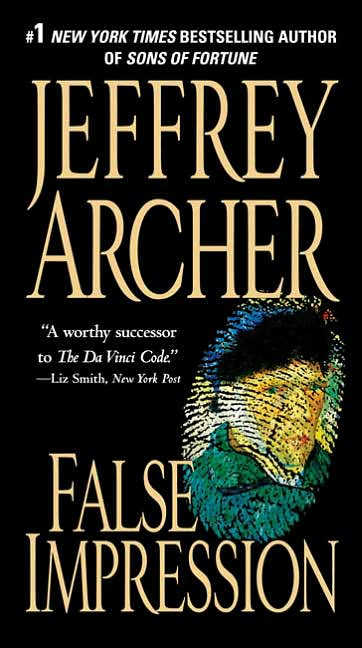
Book Review: False Impression

I haven't read all of Jeffrey Archer's work, but what I have read left me with pretty positive impressions. It's been a really long time since I read one of his novels or short stories, though. The thing I like about him is that he tells good stories without getting caught up in all the emotional melodrama that a lot of trade paperbacks get caught up in these days. I mean, he tells a story that centers around a plot, i.e., action, not a character/emotions drama. Don't get me wrong, I love some character-driven authors (Anita Shreve comes to mind) but it's kind of nice to sit down with authors like Archer and Dan Brown every once in a while.

I really didn't think that this book was all that bad, but the reviewers at Barnes and Noble online would disagree. Sure, it wasn't all that great, but it was entertaining. I stayed up to finish it in one sitting. I enjoyed the international and artistic influences.

The main character in the book is an art expert who works for a small bank that frequently loans money with works of fine art as collateral. The bank's president is an art collector himself who, unbeknowst to his expert, has been charging huge interest rates until the clients lose everything but he will never sell the art off because he wants it for himself. When Anna, the expert, recommends to one client that she request the bank to sell her van Gogh to satisfy her debt, the client is mysteriously murdered and Anna is fired. The van Gogh had already been picked up and set for delivery to the bank in New York on September 11, 2001. That's right. Anna is actually in the North Tower when the plane hits it, but manages to get out, and the van Gogh is stuck in London because no planes can fly into the United States. So now the race is on: who will get to the van Gogh first? The bad bank president, or Anna while assisting the dead woman's family?

Like I said, nothing groundbreaking, but entertaining in its own right.

Lindsey's Grace: B-

Book Review: All About Love

Some people don't like Stephanie Lauren's because they think that all her books are alike. Well, that's kind of true. But as long as she writes books that I like I don't really care if the story is suspiciously familiar.

In All About Love the heroine is Phyllida, a woman who is "too old" not to be married, but is independent and fiesty. Pretty much stock Laurens. But I like heroines like that! And I like the fact that they "surrender" to the big bad Cynster man, in a way, because unlike others, I don't feel that the heroines always give up their independence to the men. So the heros are always protective. I kinda think that's a good thing. Authors might be stretching reality a little too far to expect us to believe that any woman from early nineteenth century England was able to maintain complete independence from her husband, especially when that husband is madly in love with her.

Anyway, about this book, I liked it.

Lindsey's Grade: B

Book Review: Scandal's Bride

I guess I liked this book more than Shannon did, because I wouldn't give it a C-. Sure, there was way too many sex scenes, and the heroine's "Lady of the Vale" thing was kind of wonky, but I liked the relationship between the hero and the heroine. I also liked that they were able to live with each other quite peacefully and pleasantly long before the end of the book. That doesn't always happen in romance novels.

Lindsey's Grade: B

Wednesday, August 15, 2007

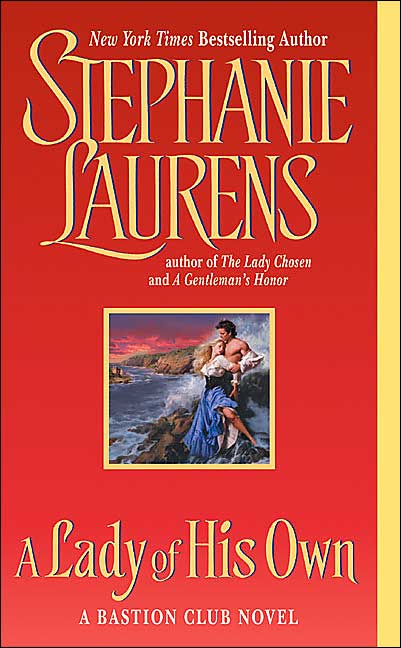
Book Review: A Lady of His Own

I really liked this book! It did remind me a little bit of A Secret Love in the sense that the hero and heroine had known each other from childhood, and the heroine was a woman considered to be a spinster past her prime that needed the hero's help to protect her family name from scandal, but who really cares, right? I liked that book, too.

This book is not a Cynster book, but a Bastian Club book. It's kind of funny how I used to not like Stephanie Laurens very much, but now I really like her writing style. Maybe it's because she's Australian or something, but she doesn't write like other Regency romance authors. Her books remind me somewhat of Mary Balogh's books (a Welsh-Canadian) in the sense that they have a pretty serious tone to them. Julia Quinn, for instance, writes like her characters are modern day in the way they talk. And her tone is just very light and jovial. I used to like that a lot because it was fun, but you know what? Fun makes it more difficult for my emotions to become involved in the story.

So I appreciate that about Stephanie Laurens, that she takes her characters seriously , because it makes them more real to me. In A Lady of His Own, the hero, Charles, is a war veteren who actually spent his thirteen years of service as a spy in French, due mainly to his half-French heritage. Charles was the third son of an earl, so he never really expected to have to the responsibilities that came with the title. However, while he was in the military, both his father and his two older brothers died and thus he became the earl. Which means that he will have to get married and produce an heir in order for the title to continue in his family. But the women in London do not appeal to him as they are too flighty and shallow to be compatible with the man that spying and war has turned him into. When his superior at the Foreign Office asks him to go home to look into a smuggling ring in the area, Charles readily agrees. Once home, he runs into Phoebe, the daughter of his neighbor.

Charles and Phoebe have a long history together as they slept with one another before he left for war, when he was twenty and she was only sixteen. Phoebe has been in love with him for years, but she believed that she was nothing buy a dalliance to him. It is her love of him that has kept her from marrying in the thirteen years since they parted. It doesn't take Charles very long to figure out that Phoebe is mucking around in the smuggling mystery, and she confides in him that she believes her deceased brother was using the smugglers to send information to the French during the war.

The reason I liked this book so much was because Charles and Phoebe were such mature, responsible characters that it was hard not to like them. They were also very self-aware, which is not something that is often seen in romance novels. Phoebe knows that she loves him, and I was quite happy to see that she ACTED like a woman that was in love, i.e., she didn't try to constantly push him away. She always wanted to be with him, and she accepted his help. They were complete partners in their investigation into the mystery, which added greatly to the romance. I would highly recommend this book.

Lindsey's Grace: A-

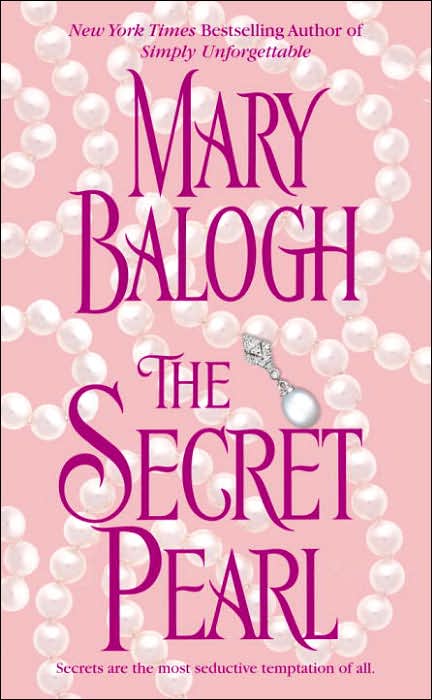
Book Review: The Secret Pearl

Basically what happens in this book is that the heroine has fallen on hard times and is forced to sell herself on the streets of London to survive. The hero is her client, and they conduct a "business transaction." But the hero feels guilt over what has happened afterwards, for his own reasons, and because the hero was a virgin at the time. So he tells his personal secretary to find her and offer her a job through an employment agency as his daughter's governess. The heroine is relieved to have a respectable job, but she doesn't know who her employer is until weeks after her arrival to the country home where both the hero's wife and daughter live.

A couple of years ago I would not have liked this book at all, solely because of the fact that the hero was married. But you know what? It didn't bother me as much as I thought it would, and I think that is mostly due to Balogh's skill at crafting a story. She could have made the hero's wife a total monster in order to make him more sympathetic, but she didn't. Everything seemed realistic to me, and I felt genuine sympathy for the marriage that he was essentially trapped in.

The romance could have been stronger, though. The heroine seemed to dislike the hero for so much of the book that I had a hard time believing that she felt as strongly for him as she claimed to. But I emphathized with the situation they were in because it made for a good story, so I just decided to buy the romance hook, line, and sinker. Once done, I was very satisfied.

Lindsey's Grade: B+

Thursday, August 09, 2007

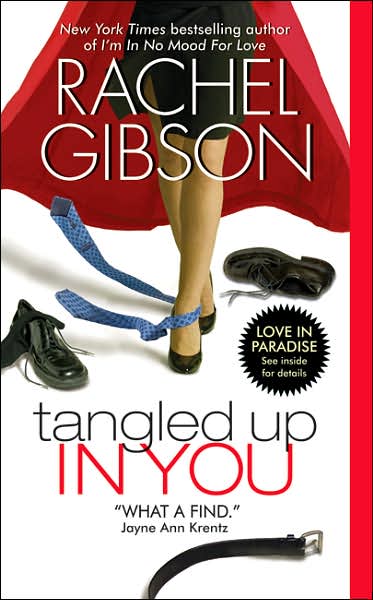
Book Review: Tangled Up In You

I actually liked this book pretty well. The hero and heroine were likable. There was nothing asinine, unbelievable, or contrived in the plot. And there was this funny except:

"If you want to make me jealous, start dating someone with half a brain and a modicum of class."

His gaze narrowed. "At least she isn't running around pretending to be someone she's not."

Yes she was. She was running around pretending to be a size ten, but Maddie chose not to point that out in a crowded park because she
did have a modicum of class.

Lindsey's Grade: B+

Tuesday, August 07, 2007

Book Review: A Secret Love

This book is the perfect example of how to include a heroine's insistence that the man tell her how he feels into a book, while my last review was definitely the opposite. In A Secret Love, the heroine Alathea is the eldest daugther of an impoverished earl who is the promissor to a promissary note which invests the entire worth of the earldom in a mysterious African mining company. Alathea's father may be impoverished, but society is oblivious to the family's financial troubles thanks largely to Alathea's devotion to managing the estate and the books. At twenty-nine, she is a spinster by society's standards because, shortly after her debut at eighteen, she discovered her father's debt and has since essentially sacrificed her life to helping her family and younger siblings. (I digress for a moment. Laurens is Australian, so does that explain why Alathea's apparently half-siblings were constantly referred to as her step-siblings? That annoyed the crap out of me!) Anyway, when she finds out about the note she is devastated, mainly because her two younger sisters are in London for their debut into society and a demand on the note would ruin the family and the girls' chances at making good matrimonial matches. Her only option is to challenge the validity of the mining company in the courts so as to nulify the note on grounds of fraud. But for that she could need help.

So she enlists the help of her childhood friend/nemesis, Gabriel Cynster, a member of the powerful Cynster family and cousin to the Duke of St. Ives. She and Gabriel do not get along as adults, but she knows him so well that she is able to present her problem to him and ask for his assistance in a way that so intrigues his sense of adventure and curiosity that he cannot deny her. Alathea does this by disguising herself as a mysterious countess who is always veiled when she approaches Gabriel, which also serves to protect her family's pride by not revealing that they are nearly penniless. Gabriel is intrigued, and also attracted to the young, shapely, tall countess. He helps her, but is also determined to seduce her.

What I liked best about this book was the deception Alathea pulled over Gabriel, who thinks he doesn't like Alathea while he is simultaneouslly sexually captivated by the countess. I thought that Laurens handled the reveal very well, and I was glad that she had Gabriel be sensible enough to realize that his feelings for the countess shouldn't go away just because he discovered that she is actually Alathea. And, although Alathea refused to marry Gabriel without hearing that he loved her, it worked in this sense because her hestitency to marry was completely believable. She was almost thirty years old, no one expected her to marry at all. I don't know, I guess it just makes more sense for a heroine to demand the words before she marries the hero, not bitch about it afterwards.

Lindsey's Grade: A-

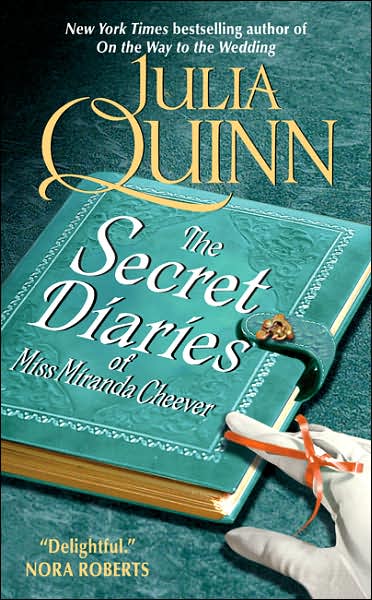
Book Review: The Secret Diaries of Miss Miranda Cheever

Honestly, I cannot figure out why I hold Julia Quinn's writing in such high regard. Lately I've not really liked her work, and been pretty annoyed by her writing style. Does anyone else think she's too smarmy? Too sarcastic with her characters quips? And OH MY GOD, did she really center the entire conflict in this book around the hero's refusal to tell the heroine that he loves her? THAT IS SO RIDICULOUSLY CLICHED!

This is why that particular conflict point bugs the hell out of me: usually, the men treat the women amazingly. They pretty much show love in every way that love can be showed non-verbally. But they just don't say those three little words, and it pretty much ruins the heroines' otherwise blessed, idyllic lives. Give me a frickin' break. Yeah, I'd probably be pissed if my husband never told me he loved me once, even if he did show it every day, but I don't live in nineteenth century England where lots of marriages took place for reasons other than love. Maybe these lame heroines should think about how frickin' lucky they are to lead the privileged lives they lead and to have men that would do anything for them before they whine and complain about not hearing three words.

Oh, and Miranda was completely lame. No wonder society didn't like her.

Lindsey's Grade: C

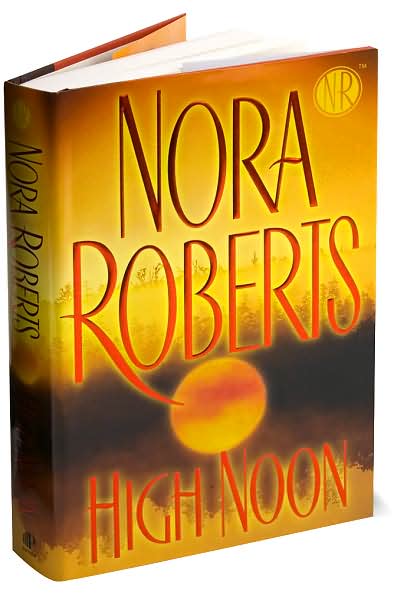
Book Review: High Noon

Another Nora Roberts book, another conflicted impression on my part. She's such a good writer, really one of, if not the, best in the business. Her books always keep my interest and are entertaining, but at the same time it's pretty rare that I have a strong reaction to one.

In this book the heroine is Pheobe, a hostage negotiator with the Savannah-Chatham PD. First of all, let me say that I have been to Savannah, and it didn't strike me as a huge city. Maybe I only saw the touristy parts, but I had a really hard time believing that there are enough hostage situations in Savannah to keep Pheobe employed on a full-time basis. And really hostage negotiating seems to be all she does with the police. Yet she supposedly works all the time. Anyway, I digress.

My beef with Pheobe is the same beef I have with most Roberts heroines. They project this image of infallibility to the world, and that really gets under my skin. Sure, I like an independant gal as much as the next person, but why do they all have to be so tough all the time. They always seem to have the answers and never seem to make mistakes. That bugs the hell out of me. Sure, there are moments of vulnerability that the heroines have to face, but after the moment is over they always seem to super-tough again. One of the things I liked most about Angels Fall was how the heroine was not perfect.

The hero, Duncan, was a pretty nice guy, but like I read in one review, he was too smooth for my tastes. He was a totally averagely-acting guy that I would definitely be attracted to in real life, but for some reason in my romance novels I like the heroes to be a little darker, a little more sullen. This guy was just too perfect in every single way.

Lindsey's Grade: B

Book Review: Queen of Babble in the Big City

This review is really hard for me to write, because I've never before had to review a Meg Cabot book that I didn't like.

And I didn't like this book very much.

It just doesn't make sense. I like Meg Cabot so much that I refer to her as my best friend. I loved Queen of Babble. But you know what, that's the whole problem. I loved Queen of Babble, loved the way it ended, but in this book Cabot pretty much overturns all that she did in that book! Why did she do that do us? Sully the good feelings that the first book left us with? I just felt betrayed in some sense. Like Queen of Babble meant nothing.

But of course I will still read the third book in the series.

Lindsey's Grade: C

Book Review: Up Close And Dangerous

For the life of me I can't figure out why this book is getting the kind of reviews it is getting. I thought it was horrible, and I am a huge Linda Howard fan. For me, this book had the same problems Cover of Night had--underdeveloped characters and a poorly executed conclusion. It just seems like Howard is getting lazy in her hardcover releases, because Drop Dead Gorgeous didn't blow me away but I did like it.

Basically this entire book centers around two people who survive a plane crash in the Idaho mountains. (Howard apparently really likes my home state.) There's almost no mystery, and no suspense, and I thought the romance moved too quickly to grab my interest. And at the end everything got wrapped up quite speedily. Why has she been taking the easy way out recently? Her conclusion in Cry No More was so good! Urgh!

Lindsey's Grace: D+

Tuesday, July 10, 2007


The $64 Tomato by William Alexander

I loved this book. Its probably because I am currently obsessed with my garden and it was nice to see that I'm not superpyscho when it comes to investing in it.

Gardening is a hobby, I'll admit that. Most people don't garden to save money, although I try to tell people it. They garden for the relaxation it can bring. There is nothing like going out and picking veg for lunch or dinner. In fact I pulled some onions for last night's Pad Thai. And there is nothing like fresh home grown taste!

A great book. A fast read. And funny to those of us immersed in our gardens.

Kim's Grade: A

Friday, July 06, 2007

Book Review of the Day!

This book looks so interesting, on many different levels! I wanted to share the review I was so excited!!

She's Such a Geek!: Women write about science, technology and other nerdy stuff by Annalee Newitz and Charlie Anders


A Review by Keely Savoie

Geeks may be the consummate outsiders in our cliquey culture, having been seduced away from the social approval of their peers by powerful draw of obscure and technical topics. But if male geeks are self-selected outsiders, at least they have the company of their fellow geeks. Female geeks, on the other hand, who fall in love with male-dominated subjects, are a rare species. They often find themselves isolated, ignored, and made invisible within the hyper-male (if not hyper-masculine) geek culture, and are left to nurture their nerdy predilections without the camaraderie that supports many of their male counterparts. Female geeks are the outsiders' outcasts.

Annalee Newitz and Charlie Anders created the anthology She's Such a Geek in part as a forum for female geeks to stand up and be heard. Newitz describes a crystallizing moment in the collection's conception when she and contributor Wendy Seltzer were introduced on a panel as "the only two chicks" at a computer conference, even as she looked into the audience and saw dozens of women grimacing at the slight.

As a longtime geek myself, I know it takes no small amount of courage, fortitude, and blind passion to endure, let alone flourish, in such a vacuum. She's Such a Geek fills that void with 23 tales from intrepid and undeterred women who gamely tell the tale of the issues they have had to confront. Newitz and Anders received more than 200 submissions for this anthology, proof that female geeks are yearning to break out of the invisibility society has thrust upon them. They did their best to select a widely representative group, from a synchrotron scientist to a gamer diva from a high-school student just beginning her life of geekdom to a professor whose career is built on carefully calibrated personal and professional choices.

Many of the stories recall a time when the bar for entrée into the geek world was set higher than it is today, before wireless broadband connections to the web and AIM became ubiquitous. A time when teen geeks had to dial up to computer bulletin-board systems and communicate through internet relay chat (IRC) and computer camp was unheard of. Contributors remember either pursuing their geeky passions in private, away from the disapproving eyes of parents and peers, or being encouraged by iconoclastic adults who taught them to break down the barriers of social expectations. Many recall a private epiphany, a moment when they realized that their geekdom was not incompatible with their femaleness. Corie Ralston watched 2001: A Space Odyssey and thought: "If you can imagine interstellar civilizations with galactic wormhole superhighways, why can't you imagine female astronauts?" Devin Kalile Grayson, the first woman to write and develop an ongoing Batman comic, came by her geekiness as an expression of what she calls her "most feminine, trusting, loyal, and submissive facets" -- her obsession with the ever-loyal comic-book sidekicks.

Unfortunately for many female geeks, the barriers to full-time, paid geekery are still high: The National Science Foundation found that in 2001, 56 percent of bachelor's degrees in science and engineering went to women, but women held only 25 percent of the science and engineering jobs. Subtle stereotyping has replaced more overt discrimination, and the fallout is increasing female attrition at every level of advancement in geeky careers.

Aside from job-related challenges, one of the biggest issues for these contributors is the special challenge of dating-while-geek, and the socially enforced dichotomy of sexy vs. smart -- or what one writer coins the Nerdonna/Whore complex. Nina Simone Dudnik describes her female classmates, who, stymied by the out-of-hand rejections from men intimidated by their academic prowess, pass themselves off as flight attendants, yoga instructors, or kindergarten teachers to get dates. Violet Blue takes matters into her own hands and searches for the perfect VR hookup in the online virtual world Second Life. Suzanne E. Franks recalls realizing that her study partners could do more for her than just improve her GPA: "Eventually I did realize that discussions of stress, strain, trusses, and friction could easily turn into experiments with elastic bodies." Ellen Spertus chronicles her evolution from being a "male-identified misogynist" who couldn't reconcile femaleness and intelligence to winning the "Sexiest Geek Alive" title wearing a circuit board–printed corset with a slide rule strapped to her thigh.

The diversity of contributors is reflected in the occasionally uneven writing, but even this drives home one of the overarching themes of the collection: Female geeks are everywhere, in every career, from every background. We are all around you.

Wednesday, July 04, 2007

More books


I read A Walk in the Woods this weekend while on a backpacking trip. Highly recommended to me by a collegue at work, it was the perfect companion around the campfire. It is the true story of a middle-aged travel writer and his out of shape alcoholic college buddy attempting to walk the 2,100-mile Appalachian Trail. I caught myself laughing out load several times, and I also learned a lot about our country, it's environment and life in general. Other books by Bill Bryson that were also highly recommended include Life and Times of the Thunderbolt Kid & A Short History of Nearly Everything.
Shannon's Grade: A
A Rake's Vow was entertaining, but not inspiring. Vane and Patience were likable, but not exciting. Stephanie, you could do a lot better...
Shannon's Grade: C+
...and you did! A Secret Love was engrossing with strong, interesting characters and a believable mystery. Gabriel and Alathea were a great match-up (even if I could never figure out how to say her name...) Lindsey should like this book as their ages were only a year apart and Alathea was considered an almost-spinster at the age of 29.
Shannon's Grade: B+

Friday, June 29, 2007

Newest summer reads

My husband was out of town this week and I had the week off, so needless to say, I got a lot of reading done.

I didn't expect to, but I really enjoyed Snow Flower and the Secret Fan. The story was engrossing and the characters believable. The parts about foot-binding seemed so real that is was hard for me to read. It was a powerful book about friendship and family.
Shannon's Grade: A-


The Memory Keepers Daughter was a good read, but I found the story line a bit hard to believe. A young doctor delivers his own twin babies during a snowstorm and discovers that the girl has Downs Syndrome and the boy is normal. He gives the baby girl to his nurse and tells her to take it to an institution. He tells his wife, who had passed out from ether during the delivery (and didn't even know she was having twins) that the baby girl had died. What I found hard to believe is why he didn't just let her believe she had only one baby. SHE NEVER WOULD HAVE KNOWN! The rest of the book was about how the rest of their lives are shaped by his duplicity. Predictable but not entirely boring.
Shannon's Grade: B-


I think my love affair with Jodi Piccoult is well-known, but we had a little falling out after I read Songs from a Humpback Whale & Nineteen Minutes. Well, after reading Mercy, we're back on! This was a great book, although because of the actions of certain characters, it made me a bit uncomfortable to read. It continues to amaze me how Piccoult can write about an issue; and no matter how strongly your beliefs for or against it, she can make you understand how a person could commit an act of murder or adultry. She doesn't always succeed in this, but she really did in this book. Salem Falls is next...
Shannon's Grade: A


You knew there had to be a romance novel in there somewhere! I admit that I'm obsessed with the Cynster Series. The first 3 that I read where great, but I must say that Scandel's Bride did not measure up. I wasn't crazy about the hero, and the heroine was a complete dolt. She was suppossed to be the "Lady of the Veil", who I guess is like a clan laird in Scotland, only she worships some nebulous god-like "Lady" (I know, huh?). Basically the hero had to respect and follow her orders and religion to get beneath her skirts. Needless to say, it hit a little too close to home if you know what I mean...
Shannon's Grade: C-

I ordered a bunch more of the Cynster series, so there will be more reviews to come!

Monday, June 25, 2007

New Fav Author


I recently stumbled upon Emily Giffins books - which are great! They are written in the "Bridget Jones' Diary" style, but without the diary entries. Although the order is as shown, I would read "Something Blue" before reading "Something Borrowed", although it will give a bit of the ending away - you will like the characters much better.

Tuesday, June 19, 2007

Book Review: Honor Bound

Despite the fact that this '80's romance was full of romance novel cliches, I liked it. Cliches exist because some people like them, and I will confess here and now that I like the accidental-baby-bringing-the-one-night-stand-couple-together (even though this book wasn't quite a one night stand).

Lucas is a (to borrow a term used over and over again in the book) "half-breed." He's half Native American and half caucasian, although he doesn't recognize his caucasian side. He was convicted of a crime that doesn't make a whole lot of sense to me, and went away to prison for a few years. But then he escapes! And when Aislinn comes home to her condo one night there is a strange man in her kitchen, with a knife!!! From there the unlikely couple has many, many adventures.

These vintage Sandra Browns are so much cheesy fun.

Lindsey's Grade: B

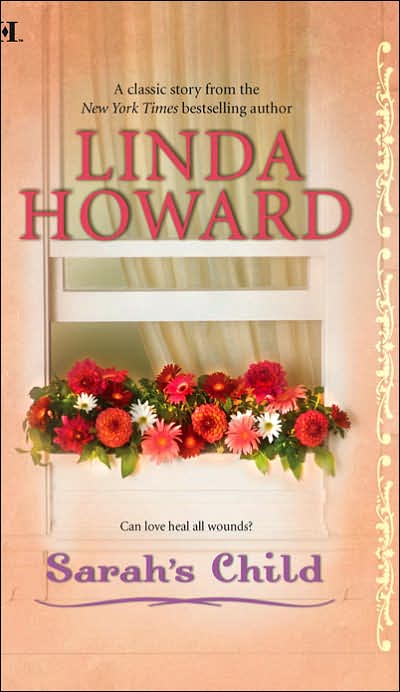
Book Review: Sarah's Child

I really like Linda Howard sometimes, but I've only really stuck with her romance suspense books. Sarah's Child is, delightfully, an '80's Harlequin-type romance. The general premise is that Sarah has been in love with her best friend's husband for years, even before he met his wife through her (Sarah and Rome work at the same office). Two years before the wife and their two little boys died in a car accident, and although they hadn't spoken to each other since then, Sarah and Rome begin spending time together. Rome likes the convenience of a wife, so he eventually proposes to Sarah, and she accepts, knowing that he won't ever love her like he loved the wife and children he lost, but she's had eyes only for him for years, so she accepts.

In case you couldn't guess from the title, the shit hits the fan when Sarah becomes pregnant because Rome specifically said that he did not want anymore children. How will they overcome this obstacle?

This book was okay, but Rome was a little unbelievable for me because he loved his wife so much, but yet he'd always been physically attracted to Sarah and had lusted after her for years. WTF? He's a retard. But maybe it's not so unbelievable that men could be stupid like that. And Sarah? So boring! Talk about a doormat! Blonde, skinny, and pale, she sounds like she suffers from consumption. I didn't really like either of them, even though I enjoyed the simplistic read.

Lindsey's Grade: C

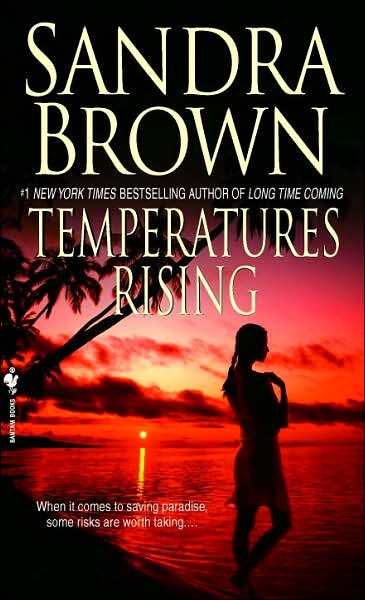
Book Review: Temperatures Rising

Okay, here is where my love of Sandra Brown '80's romance novels reaches its limit because this book was frackin' retarded! Maybe I've mentioned it before, but I just have something against romance heroines with black hair. I don't really know why, but I don't like it. Especially when it's either (a) really really long, or (b) cut in a pixie style. If I have to listen to one more heroine described as a "pixie" I will go apeshit. Of course, I also have a very strong aversion to short adults. I don't know what's wrong with me.

Anyway, the heroine in this book had long black hair that was practically to her waist. Gross. But she was half-Polynesian so it's a little more acceptable (for some reason it's only black haired caucasian women that annoy me). Yet I still couldn't like her because she was stupid (even though she had a Ph.D. The general plot is that she kidnaps an American engineer who is on her Pacific island home to build a swanky resort. She kidnaps him at gunpoint and takes him back to her tiny village so he can build her people a bridge. WTF? So stupid, so unbelievable. Even more unbelievable that she fell for the hero (I can't remember either of their names) because he was an asshole. No way around it. It was like he thought he was entitled to sleep with her. I didn't like him, especially because he had a fiancee back in the States and the heroine knew it! He was selfish and immoral.

Also, I was supposed to feel soooo sorry for her because she was half-islander and life in the States was soooo hard for her when she was in school because her fiancee broke it of with her years ago when his parents didn't approve of him marrying a non-Caucasian. Give me a break. Even in the '80's I don't think that would have been a big deal. She was supposed to be drop-dead gorgeous and brilliant. I'm supposed to feel sorry for her? Buck up, you wimp. How about you have some real problems? We'll talk then.

A totally asinine book.

Lindsey's Grade: F

Book Review: Desperate Duchesses

I don't really know how to feel about Eloisa James. When I first started reading her books I liked her a lot, but recently I've not been too crazy about her stories (even though I gave Pleasure for Pleasure a good review). One good way for me to gauge if I really like an author is how often I'll re-read their books. I re-read Much Ado About You a fair amount, Kiss Me, Anabel maybe once, and The Taming of the Duke and Pleasure for Pleasure never. I've not even been tempted with those last two. So why do I think I like her so much?

I'm not the only one with this problem. There's something about her writing that we fans seem to recognize as very special, but at the same time, we don't connect with her stories. I think part of it is because James is one of those authors that spends a good amount of time on non-main (secondary) characters. And it's usually pretty obvious that James likes them way better than I do. For instance, I never liked nor cared about Mayne, and she made him the hero in the last book in the Essex sister's series, Pleasure for Pleasure. I also never liked Rafe or Imogen, and they were the main characters in The Taming of the Duke. The other reason for my dislike, I suspect, is the way James seems to craft her books around a theme. A very literary them. I JUST WANT TO READ A ROMANCE NOVEL. NOT HAVE SOME GREAT LITERARY EXPERIENCE.

In this book, the theme is chess. Chess, chess, chess. Out the wazoo. I was so sick of it. Also, I hated Villiers, one of the characters. Unfortunally I think James is going to make him show up again and again in this series, and probably eventually as a hero. Ick. He was just nasty. I didn't like Roberta either, but that was probably because I knew next to nothing about her despite the fact that she was supposed to be the main character. I thought she was kind of a bitch. And I really didn't like the set up between the Duke of Beaumont and his wife, Jemma (more secondary characters, if you're wondering. They're everywhere). I have a sick feeling that James is going to drive their relationship through the mud for the sake of realism and literary conflict, not caring about how messy she gets. Listen, I don't like adultry in romance novels. Ever. Call me a prude, I guess, but I feel like that's where James is going. The way it's set up leads me to think that she will have them eventually live happily ever after, but I don't think that's the best resolution (Jemma's a spoiled, selfish slut, and Beaumont's a hard-working, intellectual politician that should have kept it in his pants, too). All together this book just left me with a bad feeling. I didn't like it at all.

I guess I shouldn't say at all because I really liked the Georgian period James set this book in. It was way more fun that Regency. I may read the other books in the series for that reason alone. I also liked Damon, the hero, but James doesn't spend much time with him so I figured I shouldn't either.

Lindsey's Grade: D

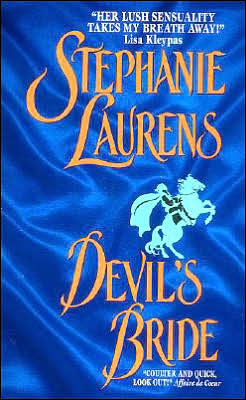
Book Review: Devil's Bride

Quick synopsis:

By far the best Stephanie Lauren's book I have ever read. Likeable hero, more than likeable heroine (I thought she was great). Coherent, interesting plot.

Lindsey's Grade: A-

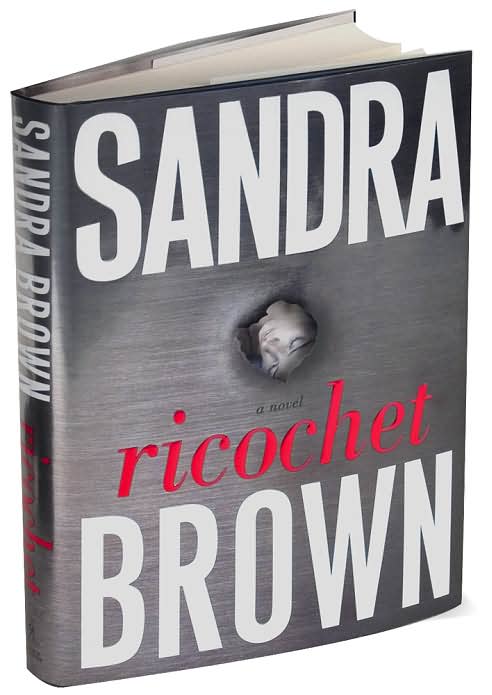
Book Review: Ricochet

You know, as much as I love Sandra Brown's '80's genre romances, I haven't been too crazy about her recent mysteries, and here's why:

The characters are all the same, just with minor variations.

Her heroines almost all come across as ice queens to me! Ironically, the exception to that is the heroine from Chill Factor. But anyhoo, they're always rich, gorgeous, and aloof. BORING! (They really are. They're boring, no personality). I do like her heros, though, because they're alpha males and alpha males are hot.

In this book the hero is Duncan, a Savannah, GA, police detective. He gets into a verbal argument with a prominent local judge after the judge declares a mistrial in the case of a crime lord that Duncan desperately wants to see behind bars for good. Duncan goes to jail for 48 days on a contempt of court charge because of the argument. When he gets out he goes to a benefit with his partner and spots a cool, elegant, sexy blonde that turns him on at first sight. Turns out she's the judge's much younger wife! He says something sexual to her while drunk.

Cut to about a week later. Duncan and his partner get called to the judge's house because the wife, Elise, shot and killed an intruder in the middle of the night. She says self-defense, but was it really?

Duncan's attraction to Elise made me want to tear my hair out. It is really hopeless for me romantically, apparently. These books just keep reinforcing that men fall in love (in love, not lust) with women just because they're insanely hot. Duncan knew almost nothing about Elise, and he suspected her of murder, and he was obsessed with her sexually! I mean, that's a little far-fetched for me to believe, but okay, whatever, men like sex. But love? He thinks he falls in love with her after only the one encounter (the benefit) between them that was not related to the case! (Okay, so they talked about the case and then had sex once, but still). Elise never really redeemed herself to me, either. She stayed kind of dull all the way through. Where was her spark? Her energy? I never saw it. But lucky for her she can nab a terrific guy because she's got a great rack. So encouraging.

Lindsey's Grade: C+

Book Review: If You Deceive

I'd say this was not as good as If You Dare, but better than If You Desire. I really liked Madeline, the heroine, and Ethan's defrosting was kind of sweet, too.

I've written like eight full reviews already tonight so I don't have much more to say.

Book Review: Iran Awakening by Shirin Ebadi

Iran Awakening: A Memoir of Revolution and Hope by Shirin Ebadi

I was drawn to this memoir because she won the Nobel Peace Prize in 2003 and I had never heard of her or her work. I guess that would seem normal as she is Iranian and we are cut off from much of Iran.

Memoirs are memoirs. They either tell us too much or not enough. This one falls into the later category and left me asking several questions. Ebadi is vague about her work and I believe this is because she cannot discuss it in its entirety out of fear for her life. She goes from a stint in prison to winning the Nobel Peace Prize and I found myself questioning why she received it.

I'm not saying that she doesn't deserve it, I just wanted more details on her accomplishments up until that point. I believe the vagueness also has to do with the difficulty of having an Iranian author publish within the U.S. as well. She had to sue the Treasury Department for the right to publish her memoir.

Overall I would recommend this memoir as it discusses the 1979 Iranian Revolution from a female perspective and gives great insight into Iranian politics over the last fifty years.

Kim's Grade: B

Thursday, May 24, 2007

Book Review: Baghdad Burning

Baghdad Burning: Girl Blog From Iraq by Riverbend


Whenever my friend Delia recommends books I always jump to read them. She always suggests great books. However this one was different. I kept putting this book off, it sat waiting to be read for at least six months, with the only reasoning I can offer is that it is a blog book.

Its true. Someone took Riverbend's blog "Baghdad Burning" and published the first year of her posts. Every so often she would provide her readers with political commentary and the daily occurrences of her life during the war without an end in Iraq. Her posts have helped me clear away some of the confusion surrounding the post-war Iraqi governing council and helped shine light on the fact that most Americans' believe the Iraqi people to be dumb sheepherders stuck three centuries back. She has humanized this war for me, if that makes sense.

She has also stopped posting for the time being. I won't state why but as the link is above you can find out yourself. I wish I had her writing talent. This is well worthy of reading.

Kim's Grade: A A slow, but good read.


For those of you who don't know, I don't choose what books to read anymore. I have left that up to Temporary who chooses them randomly from the shelf. So again I will be reading Middle East subject material. I'm not necessarily on a Middle Eastern kick.

Friday, May 18, 2007

Book Reviews: Stephanie Laurens

I'm not particularly a fan of Stephanie Laurens's books. Before this summer I had only read two of her books and neither one of them appealed to me. But Shannon must like something about her because she gave me three Laurens books recently:


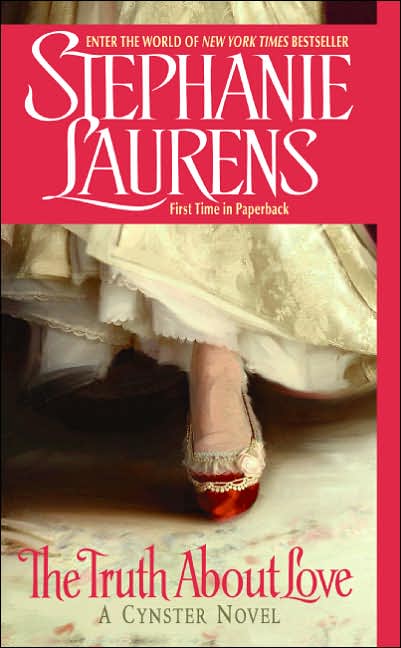
The Truth About Love was just way too slow-paced for me. Everything moved at a snail's pace—the romance, the mystery, the day-to-day activities of the characters. I was bored to tears—because of that and because Jacqueline, the heroine, was so dull! I understand the reason Laurens characterized her the way she did, and it made sense, but it did not make for an entertaining read. Lindsey's Grade: C

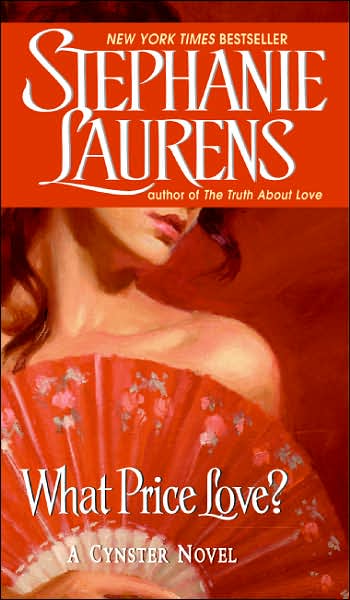
What Price Love was an improvement over The Truth About Love in the sense that I was able to stay interested in the romance portion of the book. But the mystery was completely uninteresting to me and so I skipped over all of that. But again I was frustrated with the heroine because she constantly thrwarted the hero's attempts to make mention of marriage, even though they were well suited in all respects. I'm sooo tired of the cliched "I won't accept your proposal because I think you're doing it about of duty, not love" plot in romance novels. IT IS OVERDONE AND COMPLETELY UNORIGINAL! Lindsey's Grade: C+

To Distraction was such a relief after the previous two books! Finally I understood why Laurens is a bestselling author! I cared about the characters, cared about the mystery, and completely bought the way the book unfolded. And I was DELIGHTED to see that she didn't go for the cliched ending here. The heroine did exactly what I thought she should do at every point in the book, something that is very rare. And I particularly liked the way that the hero's true character was revealed to the reader. I felt like we learned about Deverell (the hero) the way Pheobe (the heroine) learned about him. At first he appeared selfish and arrogant, but as we got to know him more he turned into the perfect romantic hero. Such a treat. Also, there was one line that the hero thought that actually made me say "Aww" to myself. I liked that. Lindsey's Grade: A-

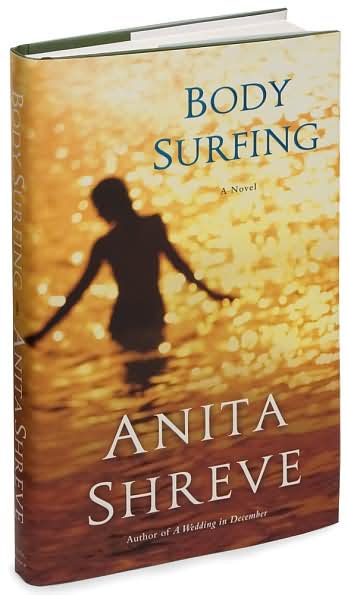
Book Review: Body Surfing

Shannon read this book and really liked it, but after I finished it this afternoon I was left feeling kind of depressed. It was, in a way, an emotionally draining story. Shreve's books are always that way, which makes me wonder what kind of person Shreve is (sad all the time?). I did like the way the story was set up, though. It was extremely well done, with unexpected "twists" that were heartwrenching.

Lindsey's Grade: A-

P.S. Shreve is still one of my all-time favorite authors. She is, in my opinion, one of the most gifted novelists around. She's also the queen of minimalization—she gets the point (beautifully) across without saying much.