Saturday, January 26, 2008

Book Review: Shadow Music

Well, one thing is for certain. Okay, two things. The first is that Julie Garwood's writing is just not the same as it was during the first half of her career. And by not the same I mean not as enjoyable. But the second thing is that despite the fact that I don't like her recent stuff, she is still much better at historical novels than contemporaries.

Shadow Music is Garwood's first historical since Ransom and her voice is just so much more better suited for this kind of book. I don't really want to write a long review, so I'll just say that this book is about a Highlander laird and an English lady (like most of her books). There were some things I didn't like about it, particularly how the romance seemed a little hurried, but overall I thought it was alright. It was coherent and interesting, in my opinion. But at the same time, I wouldn't have bought the hardcover if I hadn't have purchased it with a gift certificate.

Lindsey's Grade: C

Wednesday, January 23, 2008

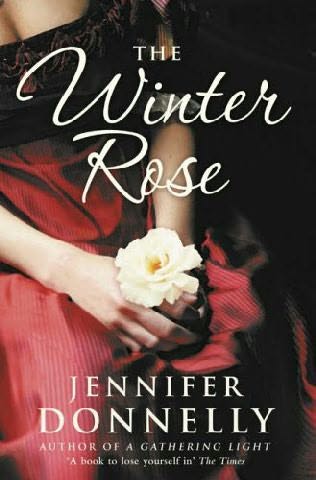
Book Review: The Winter Rose

I'm not really sure how I feel about this book, honestly. I found the plot engrossing and the 700 pages went pretty quickly, but at the same time I had some problems.

This book starts in 1900 London with the graduation of India Selwyn Jones from a female medical school. She grew up in a wealthy, aristocratic family, but is somewhat estranged from her family because of her decision to pursue medicine. India is determined to make a difference in the poorer parts of London, particularly the East End, but once she starts working she realizes that she knows nothing about the people there. The high morals standards and health habits that she'd been taught and had been preaching didn't seem to have much place in Whitechapel. It takes a while for her to realize that, and she does it with the help of Sid Malone, the most infamous crime lord in the East End.

When India was young she lost the boy that she loved in tragic circumstances, so she is determined never to love like that again. That's the reason why she settles and accepts the proposal of her childhood friend, Freddie, a young MP who is blazing a trail for himself through Westminster. But Sid Malone makes her feel things that Freddie never did, and suddenly India starts to believe that Sid might be worth taking another chance on.

There is way, way more going on in this book, but I don't want to to give too much of it away. I was really impressed by the effort that went into the plotting, and Donnelly clearly has a real talent for coming up with gripping stories. But at the same time this book was filled with so many coincidences that it was just hard to believe all of them. After reading this book you would think that there were only a dozen people living in London's East End in 1900 because of the rather remarkable connections between all of these people. But I've read The Classic Slum. I'm pretty sure that wasn't the case. When those coincidences and connections start spanning the globe, it gets even more ridiculous, I thought. But hey, it is a novel, so I guess I can excuse that for the sake of entertainment.

My other complaint is Donnelly's writing style. I always hesitate to criticize the writing style of the authors I review because I know I could never in my wildest dreams do what they go, so who am I to judge? At the same time, there is something to be said about a writer who can tell you something without coming out and telling you in a sentence that looks like something a third grader would diagram (noun, verb, etc.). Donnelly isn't quite to that point in her own writing because there were so many blunt statements that lacked any kind of lyrical quality which I consider to be the mark of fine writing. This is only her third book and only her second adult novel (she wrote a YA novel as well). I really think my complaints in that department have more to do with that than anything else. I'm sure that a couple books down the road she will really have come into herself because this book shows a lot of talent.

So in conclusion, I'd say that this was an engrossing historical novel that I enjoyed reading, but it was far from flawless.

Lindsey's Grade: B

Tuesday, January 22, 2008

NPR and Nancy Pearl

Here is another NPR Book Lust interview with Nancy Pearl. I have always enjoyed her recommendations. I also like the idea that I could visit her when in Seattle.


Seattle librarian Nancy Pearl returns with another set of what she calls "under-the-radar" books — titles you really, really should be reading but haven't (yet). The latest batch features the story of three royal cousins, tales of wild animal adventures and a pun-filled picture book for younger readers.

'King, Kaiser, Tsar'

'King, Kaiser, Tsar'
King, Kaiser, Tsar by Catrine Clay, hardcover, 432 pages

Although I was vaguely aware of the interconnectedness of the European royal families, I never really appreciated quite how close they actually were until I delved into Catrine Clay's eminently readable biography, King, Kaiser, Tsar: Three Royal Cousins Who Led the World to War. Making excellent use of newly translated and recently discovered letters and other materials, Clay explores the events, both personal and public, that led up to World War I, focusing on the lives of the three cousins of her title: George, who became King of England, Nicky, destined to become Tsar of All the Russias after the death of his father, Alexander, and Wilhelm (known as William to his English relatives), who grew up to be the final Kaiser of Germany.

To what extent did the characters of these three men lead inexorably to the war? Of what significance were other, more impersonal, factors? Did the very forms of government in their respective countries make war likely, if not inevitable? As Clay makes clear, despite the physical distances that separated them as they were growing up, the three developed close relationships with one another. They spent vacations together, "visited each other's homes, played together, celebrated each other's birthdays, danced with each other's sisters, and later attended each other's weddings. They were tied to one another by history, and history would tear them apart." She comes to the conclusion that "the relationships between the three, their personal likes and dislikes, did indeed contribute to the outbreak of hostilities." This is an excellent choice for both fans of biography and history.

'Cold Comfort Farm'

'Cold Comfort Farm'
Cold Comfort Farm by Stella Gibbons, paperback, 256 pages

Stella Gibbons' Cold Comfort Farm has the mixed blessing of being among the very few books that have been made into equally good films. But, even if you've seen the movie (with Kate Beckinsale and Rufus Sewell among the stellar cast of characters), don't let that deter you from reading the book (which, however good the movie, still has something more to offer) — it's quite simply one of the funniest satirical novels of the last century. When Flora Poste is orphaned at the age of 20, leaving her an income of a paltry hundred pounds a year on which to survive, she decides to go live with her relatives, the Starkadders, at Cold Comfort, their dilapidated, perennially failing farm in Sussex, located just outside the town of Howling.

There she discovers one extremely quirky family. Aunt Ada Doom, her mother's sister, has pretty much refused to come out of her bedroom for almost seven decades, ever since the day that she saw "something nasty in the woodshed." And Aunt Ada Doom's children and grandchildren are not much better. Flora's cousin Judith is depressed (well, who wouldn't be, in such a situation?), while Amos, Judith's husband, ignores the farm in favor of the hell-and-damnation preaching he does for the Church of the Quivering Brethren. Their three children, Seth, Reuben, and Elfine, are equally eccentric, each in his or her own way. Then there's Adam, the handyman, who uses a twig to wash dishes with and adores the cows he milks, whose names happen to be Graceless, Pointless, Feckless and Aimless.

Once Flora gets the lay of the land, so to speak, she decides that she could manage her relatives' lives better than they've been doing themselves — and she takes it upon herself to do so. How she succeeds — or not — in clearing Cold Comfort Farm of the gloominess and foreboding that envelops it (and whether we ever learn what it was that Aunt Ada Doom saw in the woodshed all those years ago) makes for a deliciously entertaining read.

'The Animal Dialogues'

'The Animal Dialogues'
The Animal Dialogues by Craig Childs, hardcover, 336 pages

I have long been a huge fan of Craig Childs' nature writing, and I was delighted to discover his newest offering, The Animal Dialogues: Uncommon Encounters in the Wild. This is a book to read slowly and savor, accompanying Childs one chapter at a time as he travels through the rain forest of Washington's Olympic Peninsula to the Arizona desert, from the mountains of Colorado to the rapids of the Colorado River, from Alaska to New Mexico, and sharing his experiences — vicariously, of course — with the animals he meets along the way. (I have to say that, for much of this book, I was in a state of extreme anxiety on Childs' behalf though he seems to have undertaken the (to me) daunting excursions described here with no more worry than I might feel, say, crossing a street against the light. At times, I felt there needed to be a warning label on the book: "Author is a trained professional. Do not try this on your own." But then, I have never claimed to be an outdoorsy sort of gal, and perhaps I was overreacting.)

There are sections on a wide variety of animal life: the Great Blue Heron and the Blue Shark, ravens, coyotes, camels, owls, and jaguars, to name just a few. If I had to choose my three favorite chapters, they would include the description of Childs' mostly futile attempts to get rid of the (uninvited) mice that are sharing his tipi (where he lived for quite a while) in the snowy Colorado mountains; his tense standoff with a mountain lion (even knowing, obviously, that the author survived didn't keep this part from being a heart-pounding experience for me); and his discussion of grizzly bears, which includes this marvelous description: "Most animals show themselves sparingly. The grizzly bear is six to eight hundred pounds of smugness. It has no need to hide. If it were a person, it would laugh loudly in quiet restaurants, boastfully wear the wrong clothes for special occasions, and probably play hockey." Pick the species you want to know more about and read on.

'I Capture the Castle'

'I Capture the Castle'
I Capture the Castle by Dodie Smith, paperback, 352 pages

American readers probably know the British writer Dodie Smith best — if they know her at all — as the author of the book The One Hundred and One Dalmatians, which was made into the popular 1961 Disney animated film. (As entertaining as the movie is, the book is much better.) In I Capture the Castle, first published in 1948, 17-year-old Cassandra Mortmain begins her account of her family's life in a dilapidated castle with these lines: "I write this sitting in the kitchen sink." And write she does, all about her unpredictable, often irascible father, who published one critically acclaimed novel many years ago but developed a terrible writer's block and has been unable to produce anything since; her stepmother, Topaz, an artist's model who loves to commune with nature sans clothing; her older sister, Rose, who dreams of escaping the family's poverty; her younger brother, Thomas, who together with Cassandra schemes to get their father back to writing; and Stephen, the orphan (son of their deceased housekeeper) raised by the Mortmains. But when an American family moves into the estate next door, life for each of the Mortmains, as well as Stephen, changes in dramatic ways. Cassandra continues writing, through heartache and happiness, giving us a book that's perfect for any woman with even a scintilla of romance in their hearts, from the ages of 12 to 112.

'Wise Children'

'Wise Children'
Wise Children by Angela Carter, paperback, 240 pages

If it's true that, as Homer (and others) have said, "it's a wise child that knows its own father," then septuagenarian identical twins Nora and Dora Chance can be called wise. Unfortunately, as Dora relates in Angela Carter's Wise Children, she and her sister have never been able to persuade Melchior Hazard, the man they know to be their father (Grandma Chance told them), and the finest Shakespearean actor of the 20th century, to admit — publicly or privately — his paternity. Instead, he refers to them as his nieces, daughters of his twin brother, Peregrine, adventurer and bon vivant. (Just to complicate matters, Saskia and Imogen, the twin girls who believe that Melchior is their father, and vice versa — he was married to their mother, after all — are mistaken. They're actually Peregrine's daughters. Two other sets of twins in the Chance-Hazard extended clan also make brief appearances here. It's all somewhat like a play by Shakespeare or Oscar Wilde.)

Illusion and reality blend in this novel as it ranges from the vaudeville halls of the 1890s to Hollywood in the 1930s to the British home front during World War II, from the death of Dora and Nora's mother immediately following their birth to their singing and dancing childhood and adolescence under the benign, loving, and frequently inebriated eye of Grandma Chance. The last, priceless scene takes place at Melchior's 100th birthday party (which happens to be Dora and Nora's 75th birthday as well). Carter was a brilliant writer, and in this, her wickedly entertaining final novel before her untimely death at age 52, there are numerous quotable sentences to savor: Grandma Chance's toast as she downs a glass of the bubbly: "Champagne to all here, real pain to the other bastards," Dora's assertion that "comedy is tragedy that happens to other people," and "It is every woman's tragedy that after a certain age, she looks like a female impersonator."

'By George'

'By George'
By George by Wesley Stace, hardcover, 400 pages

In By George, author Wesley Stace weaves together the life stories of two different Georges — one is human and the other is a wooden ventriloquist's dummy. In 1973, 11-year-old George Fisher, who comes from a long line of show-business folks, is sent off to boarding school because his famous actress mother is going on an extended tour starring in Peter Pan. George is heartsick at being separated from his adored mother, but he can't bear the thought of leaving his beloved 93-year-old great-grandmother, Evangeline, who once performed as a successful ventriloquist, and bequeathed that talent to her son, George's grandfather, Joe.

School is just as bad as George fears, until he's befriended by the headmaster and by the school's groundskeeper, who presents him with a how-to book on ventriloquism, a gift that will change the direction of George's life. Meanwhile, the wooden George relates his own experiences of working with George's grandfather, especially those years during World War II when the two, ventriloquist and dummy, were sent overseas to entertain the British troops. Neither of the two Georges is aware of the existence of the other, until a series of events brings them together and forces long-buried family secrets to come to light. This inventive novel rewards the reader with its intelligence, its wit, its poignancy, and its splendid writing. By George, I loved this book!

'Gimme Cracked Corn'

'Gimme Cracked Corn and I Will Share'
Gimme Cracked Corn and I Will Share by Kevin O'Malley, hardcover, 32 pages

You can always count on Kevin O'Malley for an entertaining picture book — his Little Buggy has long been a favorite of mine. But even by the standard of his past work, Gimme Cracked Corn and I Will Share is something special. In the spirit of the book and its barnyard setting, I'd go so far as to say that it's something eggstra special. Although it's clearly aimed at 6-, 7-, and 8-year-olds who are just beginning to appreciate the possibilities of language and the pleasures of playing with words, this groanworthy, pun-filled picture book will delight the grownups in their lives, as well.

"One night," the book begins, "Chicken had a dream. He dreamed that in a beautiful barn, buried under a great pink pig, was a treasure of cracked corn — all the corn that any chicken could ever want." When he tells his friend George, George says, "You must be yolking," and "What are you — a comedi-hen?" Nevertheless, when Chicken sets out the next morning to follow his dream, George agrees to go with him, explaining that he's been "feeling a little cooped up lately." An adventure, and further wordplay, ensues. Readers, young and old, will get every yolk and probably cackle with amusement as they follow Chicken and George's eggstrordinarily entertaining adventure.

'Fowl Weather'

'Fowl Weather'
Fowl Weather by Bob Tarte, hardcover, 306 pages

If you're longing for a book that will make you laugh out loud, then run, don't walk, to the nearest library or bookstore and pick up a copy of Bob Tarte's Fowl Weather. There are animal lovers, and then there are REAL animal lovers, and then there's a higher class altogether, consisting of Bob and his wife, Linda, among very few others. (Among the others is Gerald Durrell – don't miss his comic masterpiece, My Family and Other Animals.) Just take a look at the (much necessary) cast of characters listed at the front of the book; it includes some human animals, true, but it's primarily animals who are winged, feathered and furred.

Whether he's engaged in an altercation with a duck, dealing with a master gardener who doesn't know his flowers from his weeds, hand-feeding a spider, worrying over the health of Stanley Sue, an African Grey parrot, fretting over Bertie the Bunny's missing puff of a tail, extricating himself from a pesky former classmate who somehow knows the fate of everyone in their old elementary school, as well as unsavory facts about Linda's now long dead pig, Mrs. Piggle Wiggle, or trying to cope with his dad's death and his mother's growing dementia, Bob's tone is self-deprecating, humorous, and totally winsome.

Sunday, January 20, 2008

Book Review: A Tree Grows in Brooklyn

A Tree Grows in Brooklyn by Betty Smith

People love this book. Even good people like those at the New York Public Library who named this one of the books of the century. The latter is what led me to read this book. I would also like to be able to say that I am somewhat versed in good literature. It took me awhile to get through. I found the plot somewhat slow. The story surrounds Francie's coming of age at the turn of the 20th century. In many respects it is similar to other coming of age books in that Francie struggles to learn who she really is in the midst of providing for her family.

I grew to identify with Francie in several ways. She stepped up to the challenge of helping her family instead of attending college. She kept her goal of a good education within focus even in times of hardship. She daydreamed and wrote stories that were never published. She was a voracious reader and lover of books. And she loved her troubled father.

In addition to identifying with Francie I found the description of Brooklyn in the early 1900's fascinating. The class structure, the marketplace, the types of labor mentioned led to a better understanding of the Brooklyn's economy up to WWI. The fact that Smith grew up in Brooklyn and drew upon her own experiences make this book all the better. I can definitely see why this would be an honored book of the century.

Kim's Grade: A A good, entertaining read for young women.

Thursday, January 17, 2008

A Year of Almanac of the Dead: A Goal


Have I mentioned my disdain for "Year of" books? You know, the type of books where the narrator attempts to live a life without [insert noun] or attempts to live [insert adjective]? Well, I think its kind of stupid, and in ways shows a lack of creativity. So in an attempt to be uncreative (is that a word?) I am making it my 2008 goal to read Almanac of the Dead by Leslie Marmon Silko. This will be my third attempt, with the last attempt being a bet with Erik that I could finish it before him. I think there was a bar involved in the bet too but I can't remember...hmm....

The book is over a 1000 pages long and can be described as a Twin Peaks like soap opera. Jason just gave me back my copy and said that YES I SHOULD STRUGGLE UNTIL THE END. So, dear readers, we are about to begin my Year of Almanac of the Dead: A Goal. I will submit updates of my reading and utter confusion of the plot. I will attempt tree diagrams to understand the character connections. I will practice patience. I will succeed!

Tuesday, January 15, 2008

Nora Ephron and her Neck

I Feel Bad About My Neck: And Other Thoughts on Being a Woman by Nora Ephron


When I read that Nora Ephron wrote When Harry Met Sally I knew I had to read more from her. There are too many classic moments in that movie and it remains one of my favorites. However, I'm not sure if I like reading that style. I mean, I can watch the movie just fine. The dialogue is smooth and everything flows but I had a difficult time reading the same style that is found in I Feel Bad About My Neck. I'll also admit that while I found the stories humorous I'm not THAT old. There I said it. I'm not at the age where I have children and those said children are eighteen. I'm not at the age where my significant other has potentially left me for another. I'm not at the age where I feel bad about my neck. So I couldn't relate well enough to the stories. This isn't to say that there are those of you out there that may find this book entertaining. I think it would make a nice theater experience. I think it would make a nice gift for my mother. I think I sold it back to Powell's on a recent trip--so I suppose I should end this review.

Kim's Grade: B Read if older than I.

Saturday, January 12, 2008

Book Review: Einstein Defiant

If reading this book did anything for me, it reinforced my long-held belief that the physicists of the early twentieth century were some of the most brilliant people who have ever lived.

Niels Bohr once said that "anyone who is not shocked by quantum theory has not understood it." That quote is essentially what this book is about. The characteristics of quantum theory that Bohr found so shocking are precisely the same characteristics that Einstein so defiantly refused to accept. This book focuses on Einstein, but much of it is centered around disputes between the two giants of the quantum revolution, Einstein and Bohr. That's probably why the front cover of this book reads "Einstein Defiant" (obviously the title of the book), and the back cover reads "(Bohr Unyielding)."

I'm not going to pretend that I understand quantum theory—I don't. It's way over my head. When I took Modern Physics in undergrad I would frequently leave class and spend the walk to my next class crying in despair because I could not understand what was going on. (Why didn't I drop it, you ask? It was a graduation requirement, unfortunately.) My cousin used to complain about classes in which he could barely understand his foreign professors. Well, imagine a class where your professor didn't lecture with an accent, didn't just lecture in a different language, but lectured with something that isn't even verbal! Quantum theory is explained through mathematical equations, and I'm not a mathematician.

So in that respect I can sympathize with Einstein. The strength of this book lies in the way that Bolles reinforces the different views taken by Einstein and Bohr regarding physics. Neither of them were particular enamored of mathematics. Both saw math as a way to explain what was happening. But while Bohr was satisfied with mathematics merely describing a workable theory, Einstein wasn't satisfied until that theory could describe actual physical phenomena. It was perhaps Einstein's (only?) failure that he ended up on the wrong side of the debate. Modern physics seems to have accepted Bohr's stance that there is no physical reality that can be understood beyond the theory. (Bohr would say the complementary theory; Heisenberg said the Uncertainly Principle.)

I have a few complaints with the book, mainly that Bolles is overly and often annoyingly fond of analogies. After a while you get sick of them. But I can overlook all that for the excellent way he laid out the philosophical differences between Bohr and Einstein. I came away from this book with an enormous respect for Einstein, and my view of Bohr (who I often proclaim as my favorite scientist) was slightly marred, I must admit.

A minimal (if superficial, in my case) familiarity with physics and quantum theory is required to really enjoy this book, I think. But if you are a lover of scientific history like I am, and especially of early twentieth century physics like I am, you'll love this book. It describes the quantum revolution in terms of the personalities involved, which is always more interesting than the hard science, from a historical perspective anyway. All the big names are present: Einstein, Bohr, Schrodinger, Born, Planck, Heisenberg, Pauli, de Broglie, Lorentz, Compton, Dirac, etc.

Lindsey's Grade: B+

Book Review: A Kingdom of Dreams

I really enjoyed this book! It reminded me a lot of Julie Garwood's glory days. What romance fan doesn't love a story about a strong, brave warrior who just so happens to have a heart of gold and is vanquished by a woman?

Basically this book is about a young Scottish countess, Jennifer Merrick, who is kidnapped by soldiers of Royce Westmoreland, Earl of Claymore. Royce is a legendary English warrior nicknamed "The Black Wolf." Stories of his battlefield brutality abound. But of course, he is instantly captivated by the proud, stubborn, red-headed woman who is brought as a captive to his camp.

The story is pretty simplistic, but sometimes that's better. There's nothing absurd that gets in the way of the romance, and I appreciate that. I don't know why, but I didn't expect to like this book when I picked it up, so I was pleasantly surprised at how quickly and enthusiastically I finished the book.

Lindsey's Grade: A-

Monday, January 07, 2008

A Concise Chinese-English Dictionary for Lovers by Xiaolu Guo

This book looks great. I was surprised to find a review of it in Ms. magazine because it sides on romance but maybe Ms. is loosening up a bit. As I was reading the review I was reminded of one of my favorite books, The Interpreter of Maladies by Jhumpa Lahiri. The notion of a foreigner in new places, learning new cultures and new aspects of identity has always been a theme I've identified with, however this book looks heavenly as is.


A Concise Chinese-English Dictionary for Lovers by Xiaolu Guo


Love in a Second Language
A Review by Gail Tsukiyama

In the last 20 years, the proliferation of Asian writers in Europe and the Americas has grown into a lovely chorus of voices, opening our eyes to the lives of people and cultures we've only known from a distance. Xiaolu Guo's debut English-language novel takes us a step further into the complicated landscape of the immigrant experience.

We immediately recognize the alienation of 23-year-old Zhuang Xiao Qiao, known as Z to Westerners who can't pronounce her name, as she arrives in London for a year to study English. Frightened and alone, her broken English no help when seeking housing from Arab landlords with equally limited language skills, Z finds London a "refuge" camp. Her parents, who own a shoe factory in rural China, believe their daughter will "make better life through Western education." What she will also receive is an education in love.

Z soon sees that "the loneliness in this country is something very solid, very heavy." In a city where everything is new and foreign, where the most precious reminders of her old life are gone, she gradually makes a place for herself, a process Guo cleverly describes through Z's steadily improving English. Word by word, month by month, her insight into this new culture grows until, at the cinema, she meets an older Englishman, a part-time sculptor, and embarks on a relationship that will change the way she sees the world.

What begins as a blossoming of love, sex and freedom gradually finds Z questioning the different ways in which each views their life together. Their relationship unravels when his growing need for solitude and his lack of commitment conflict with the closeness and community for which Z yearns. The collective society she left back in China values family and tradition; this Western concept of individuality and living only in the moment is hard for Z to understand. She is left to reconcile their essential difference: "'Love,' this English word: like other English words it has tense. 'Loved' or 'will love' or 'have loved.'...Love is time-limited thing. Not infinite....In Chinese, Love...has no tense. No past and future. Love in Chinese means a being, a situation, a circumstance. Love is existence, holding past and future."

In her quest to find herself in the West, Z realizes just how Chinese she is -- and that learning to speak a language doesn't necessarily mean being able to communicate. Guo, also a filmmaker, has written an inventive, often humorous and poignant story of a woman's journey over cultural and emotional borders. While books with similarly suggestive titles may fall into the chick-lit genre, A Concise Chinese-English Dictionary for Lovers is so much more.

Sunday, January 06, 2008

Book Review: A Royal Panoply

Those of you who don't have a huge hard-on for British royal history probably won't appreciate this book. But since I do belong in that camp, I loved this book! What a brilliant idea! Erickson profiles every British monarch from William the Conquerer to Elizabeth II, and she does it all by devoting about ten pages to each. (I think she leaves out Edward V, and Sophia, Electoress of Hanover, because neither was corronated, I think). I appreciated the brevity because it made it really to read, and also because I took History of England in college and I've read a lot of more comprehensive books on certain eras in British history so the brief bios were all I needed to refresh my memory in some cases.

I fell in love with these crazy kings (and occasional queens) during my History of England classes in college mainly because I think it is so fascinating how influential their personalities are. A number of things stood out as I read through his book. One, it is amazing how often a son will be the polar opposite of his father. As a result it seemed like whenever one king would do something really good, he'd have a really lazy or incompetent son come along after him and erase all that he'd done. This seemed to be a pattern until the time when Parliament seized greater control over the government, and there was more consistency and normalcy over the years. I remember thinking in college that the class got a lot less interesting once we started talking more about Parliament instead of the monarchy, but this book doesn't suffer that fate because it is not a history of England, it is a biography of the monarchs themselves, as individuals.

Another thing that struck me was how many of the kings had homosexual tendencies! Holy crap! What was the deal there? There must have been at least half a dozen with male intimates.

One of the best things about reading through this book was comparing what I was reading to the portrayals of these historical figures in books and in movies. For instance, when reading about Edward I, Edward II, and the latter's wife Isabella, I was thinking about Braveheart. When reading about Richard I, I was thinking about Robin Hood. When reading about Charles II, I thought about a movie (Stage Beauty, I think) that featured him. Of course my deep affection for Regency romance novels made me think about what I've read about the Prince Regent, George IV, in those novels. And I thought about the DVD my dad got me a few Christmases ago, The Lost Prince, when I read about George V. It's fun to see where the movies and books got it right, and when they certainly seemed to get it wrong.

If you like reading about British history I would definitely recommend this book as a quick little reference guide. Of course, it is an interesting read on its own.

Book Review: Someone To Love

Okay, let me say first that I didn't hate this book. In fact, when I consider the previous two Jude Deveraux releases (First Impressions and Carolina Isle) I would say that this wasn't a bad book. It is nothing compared to her books of about ten years ago, but people change, so I won't hold that against her. But I still felt like there was a strong Deveraux presence to this book. (Honestly I have been wondering if maybe she doesn't have a ghost writer... the copyright on the book is Deveraux, Inc., which isn't conclusive, but does make me wonder...)

The plot of this book is pretty simplistic, really. Jace Montgomery was in England on business with his fiancee, Stacy, when Stacy suddenly left their London hotel room one night after an argument and ended up at a pub in rural England. She rented a room for the night and was found the next morning dead from an apparent suicide by overdose of sleeping pills.

Jace is devastated, of course, but he's also haunted because Stacy's family insists that she killed herself because she was having second thoughts about marrying Jace and she was too terrified to tell me. So Jace is left wondering what it was that he did that drove the woman he loved to kill herself. Three years later he finds a postcard addressed to Stacy in one of her old books that has a picture of an English mansion on it and a note that says, "May 11, 2001, together again," or something like that. She died on May 12, and the mansion in the photo is in the same town where she died. Seeking answers, Jace takes out a loan from his billionaire uncle and buys the mansion.

The classic Deveraux kookiness comes into play because the mansion is haunted, and Jace for someone is one of a few people that is able to see the ghost. He thinks that perhaps the ghost can give him answers. So the book develops along two lines—the ghost's story, and the investigation into Stacy's death.

I personally thought that Carolina Isle came very close to being incoherent, so the fact that everything in this book made sense was kind of a relief, to be honest. The characterizations weren't the best, but they weren't bad, either. The book was easy to read, kept me interested, and had a satisfactory resolution. Overall, I was pleased. But, I went in with extremely low expectations having read her previous works. If you pick up this book after reading classic Deveraux from ten, twenty, thirty years ago, you'll likely be disappointed.

Lindsey's Grade: C+

Book Review: The Abstinence Teacher

The premise of this book seemed interesting enough for me to put it on my wish list for Christmas. A high school sex-ed teacher gets in trouble when she tells one of her students that "some people enjoy it" ("it" being oral sex). The girl's parents are members of a local evangelical church and they take offense, threatening a lawsuit. (Although I couldn't figure out what they would be suing over, myself.) So the school caves and changes its sex-ed curriculum to an abstinence-based program.

The teacher, Ruth, is a divorced mother of two, and her youngest daughter just happens to have a new soccer coach who is a member of the church. The two of them get into an argument on the soccer field one day when Tim, the coach, leads a prayer with all of the girls on the team.

I can see where the author was going with this book by pitting these two opposites against each other, and I think he did a very good job. It was particular interesting to me because Ruth was fairly conservative in her own life, while Tim was an ex-drug addict and musician who lived the "good life" for most of his adult life. Both characters were developed pretty thoroughly, although at times I felt like the people in Tim's life were pretty cliched at times. Tim and his wife Carrie were perhaps the exception to that.

I was pretty bothered by the religious tone in the book, mainly because the religious characters came across as rather crazy—especially Pastor Dennis, the church leader. But I think that was kind of the point. I found myself getting pretty upset over the things that were happening, and I was glad to see that Tim eventually started to open his eyes to the obsessive control that Pastor Dennis seemed to want to have over his life. I have to say, however, that it took a while for me to see all of the church-based stuff as something more than hyperbole, because I grew up in an inclusive Christian environment that has it's problems but was nothing like that. In the end the way that this book made me evaluate my own upbringing and how the Adventist church differs from these Evangelical churches was one of the best things about reading the book.

It wasn't hard to tell how the author felt about what he was writing about, but I did appreciate that way that he didn't make a villain out of Tim. In fact, he did a really good job of showing his humanness and how even Christians struggle sometimes. Unfortunately for Tim he didn't seem to realize that himself, and his pastor didn't do a very good job of helping him see that, either. I would say that an overarching theme I took from this book is that these kind of churches really appeal to certain people—damaged people who can't seem to get control over their lives and so who then need rigid rules in order to feel like they are finally doing something right.

My biggest complaint with this book was the ending. It felt really abrupt, even though certain events had been set in motion alerting the reader to what would eventually happen. Also I couldn't buy into any attraction between Tim and Ruth, primarily because I felt like Ruth could do a lot better than Tim, who obviously had his own issues to work through before he should even think about being in another relationship. I have to say that the author's writing style was a little too matter-of-fact for me. Don't get me wrong, it was good, but his strengths lie in plotting and characterizations rather than actually writing style.

Lindsey's Grade: B-

Sunday, December 30, 2007

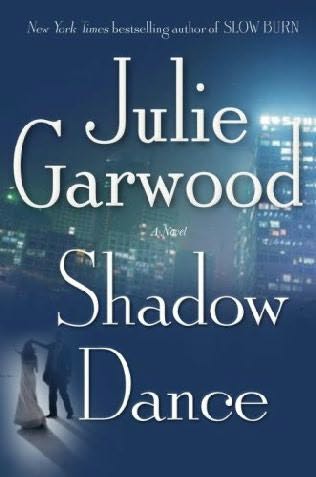
Book Review: Shadow Dance

I can't quite figure out what it is about Julie Garwood that makes her historical novels so damn good and her contemporaries so awful. Really, it's kind of hard to believe that the same author writes both books. Often I've wondered if she has a ghost writer, especially after Murder List, which I thought was terrible. (A better question would be why I continue to not just read, but buy her books). The only thing that I can figure out is that her simplistic writing style comes across as charming in the historical arena but incomplete and asinine in the modern-day setting.

All her contemporaries (with the slight exception of Killjoy have been about members of the Buchanan family. This one is about a Buchanan daughter, Jordan (who was a character is Slow Burn) and a friend and colleague of the family, Noah Clayborne (who has showed up in many of the previous books). Fans of Garwood will recognize that the Buchanan's are descendants of the Buchanan clan that was featured in the historicals The Secret and, one of my all-time favorites, Ransom. And Noah is, of course, a descendant of the Clayborne brothers from For the Roses, One Pink Rose, One White Rose, One Red Rose, and Come the Spring.

The plot of this book is pretty stupid. Jordan goes to a small town in Texas to pick up some files for her friend's sister and somehow gets tangled up in a murder mystery. When she gets in trouble she calls her brother, an FBI agent, who's partner happens to be Noah. Her brother has to leave to get back to his pregnant wife, but he has Noah stay and help Jordan. And of course, romantic sparks fly.

First off, the mystery was boring. There was no reason for me to care about it. But what really bothers me about Garwood's contemporary writing is that she throws in a bunch of stuff that turns out to be irrelevant. For instance, the files Jordan went to fetch were notes from a history professor regarding Buchanan ancestors. I kept expecting for something relevant to come out of the notes, but it never did! I get the feeling that Garwood is leaving that for another book, but that's really unsatisfying for the readers of this book. I find that she does that a lot, puts in a lot of details about things that don't matter at all. That's part of why I am so dissatisfied with her contemporaries. That being said, Shadow Dance was infinitely better than Murder List, and I think it might have been better than Slow Burn, too.

Garwood's newest book is another historical, Shadow Music, and I was really excited about that. But from the reviews I'm seeing it's not a great book and is a disappointing return to historicals. Which makes me sad.

Lindsey's Grade: C-/D+

Book Review: The Lady Chosen

I'd say this Stephanie Laurens book ranks about average with the rest of her books. It's not her best, but not her worst, either. I have to admit that there was significantly less smut in this book than most of her works. This is the first book in The Bastion Club series, so I almost wonder if she was, when she first started the series, determined to have fewer sex scenes, but then as the series went on her old habits got the best of her! Hehe.

My complaints would be that the "mystery" in this book was pretty weak, and that there wasn't any real conflict between the hero and heroine. That being said, I think that Laurens had some good characterization with Leonora, the heroine. Leonora kind of became more self-aware as the book went on, and that made some good sense. So, the book wasn't a loss.

Lindsey's Grade: C+

P.S., If anyone cases, A Fine Passion and To Distraction are my favorites (thus far) from The Bastion Club series.

Friday, December 28, 2007

Book Review: The Devil's Web

I have a lot of mixed feelings about this book. It is the third in a series about three siblings, the first two being The Gilded Web and Web of Love, respectively. When I first read The Gilded Web over a year ago, it was not the hero and heroine of that book that caught my attention, but rather the subplot of James and Madeline, the hero and heroine in this book. When I saw this book of the shelves I snatched it up immediately.

Quick synopsis: James's younger sister is married to Madeline's oldest brother. When those two got together in The Gilded Web there was a lot of tension between James and Madeline. James was a somewhat tortured hero who grew up in a very strict religious household that burdened him with a whole lotta guilt. Madeline, on the other hand, grew up in a warm, loving family, and is a very vivacious young woman who at times is very immature. They share a passionate encounter, but the next day James departs for Canada and doesn't return to England for another four years. Neither James nor Madeline has forgotten the other in that time.

I really enjoy Mary Balogh's books. She is a terrific romantic writer who, usually, really gets her character. I felt like the she really nailed the character of Madeline, Madeline made complete sense to me. Madeline wants nothing more than to be in love, get married, and become a mother, but she just can't seem to meet any men that make her willing to take that step. At twenty-six she feels like a spinster, fears that she will never find someone who is right for her, and is afraid that she is a burden to her two brother who are both happily married with children. But standing in the way of her happiness is this consuming obsession she has for James--despite the fact that they quarrel whenever they are around each other and make each other miserable.

I could accept that Madeline loved James despite the horrid way he treated her because, well, sometimes you can't help who you have feelings for. And Madeline tried to make a go of their relationship.

James, however, did not make any sense to me. He was absolutely horrid to Madeline, despite the fact that he supposedly was madly in love with her. Balogh's reasons for having James hold himself back and be so dreadful just didn't make any sense to me, and the resolution of their agonizingly long conflict (it lasts nearly the entire book and culminates to the point where it seems all hope is lost) seemed too easy considering the history between them.

So I was delighted with Madeline's character, but confused with James's. Overall, I would recommend this book because it did tug on my heartstrings, which is always nice, an emotional attachment. But I wouldn't recommend reading it unless you've already read The Gilded Web and preferably Web of Love, too, because the character of Madeline is really a work in progress over all three of these books.

Lindsey's Grade: B

Thursday, December 20, 2007

Book Review: A Force of Nature—The Frontier Genius of Ernest Rutherford

Man, after reading this book I feel like I owe Ernest Rutherford a personal apology for not fully realizing how frickin' awesome he was! I have long proclaimed Niels Bohr to be my favorite scientist—mainly because his model of the hydrogen model and the energy levels is so brilliant it blows my mind—but Niels owed a lot of what he did to Rutherford. Heck, nearly every physicist and certainly every chemist today owes pretty much everything to that man. I eat up scientific history on quantum theory and the development of the atomic bomb (i.e., modern physics) like it's candy, it just fascinates me. (Case in point, the photograph I took of J. J. Thomson's Nobel Prize medal):


But when you read comprehensive histories like Diana Preston's excellent Before the Fallout, the individual genius and contributions of each scientist can get overlooked by the significance of their discoveries.

That's why this book focusing just on Rutherford is so great, because it really reinforces what a stunning scientific life he led. More than once the author compares him to Einstein, and I think it's an apt comparison. Rutherford was to experimental physics as to what Einstein was to theoretical physics. What's more, Rutherford's discoveries changed the nature of physics studies themselves (away from the experimental laboratory "tabletop" to the theoretical "blackboard"). This guy not only realized what was going on with radiation, came up with the concepts of half-lives, and named alpha and beta rays (for which he won a Nobel Prize), he also formulated the planetary model of the atom, discovered protons, and supervised the first splitting of the atom! Holy crap, that's a great resume!

Monday, December 17, 2007

Book Reviews

So the stress of finals and my abject misery over being rejected for a job effectively ended my classics fetish and sent me scurrying back to my comfort books—romance novels. As you will see I have read a great amount of Stephanie Laurens, mainly because I happen to really like her writing style. It took some getting used to, but her fluid, verbose style now makes other romance writers seem amateurish.

Stephanie Laurens: On A Wild Night


Not bad. I liked the hero.

Stephanie Laurens: The Perfect Lover


I seem to remember that I liked the set-up of the mystery in this book because it reminded me somewhat of the game Clue.

Stephanie Laurens: A Gentleman's Honor


Mmm, not my favorite of the Bastion Club series. The hero was a little too blah for my tastes.

Lisa Kleypas: Prince of Dreams


I really like Lisa Kleypas but I think this must have been one of her earliest books, because it seemed cliched and simplistic to me. Also, it got dangerously close to involving time travel, which I will go to my grave renouncing as having no place in literature, barring H. G. Wells.

Sunday, December 16, 2007

No Country for Old Men

Now that I've seen the movie AND read the book; I give a D to both.
P.S. Neither one ends well.

Books into movies?

What is with all these books being made into movies!? Does every best-selling book nowadays get made into movies no matter how bad they would be? Case in point; "Love in the time of Cholera". Boring book; torturous movie (although I'll never see it). Nuff said.

"Atonement": Amazing book; movie will likely be very good too with the actors that are in it being some of my favs; but I suspect that it will end a little differently than the book.

"No Country for Old Men": Haven't read it yet; but bought it yesterday. I have heard great things about both the book and the movie!

"Middlesex": Please, please, please! DO NOT make this into a movie! The book was very good, I thought. The movie would be just painful.

Thursday, December 13, 2007

Need a good laugh when it comes to books? Try this post over at Burt Reynold's Mustache!

Tuesday, December 11, 2007

Adam Bede by George Eliot

As the two of us are going through a somewhat classics phase I found this review from Powell's appropriate.


A review of Adam Bede by George Eliot
by Anonymous

[Ed. Note. This review first ran in the Atlantic Monthly, October 1859.]

As Nature will have it, Great Unknowns are out of the question in any other branch of the world's business than the writing of books. If, through sponsorial neglect or cruelty, the name of our butcher or baker or candlestick-maker happens to be John, with the further and congenial addition of Smith, JOHN SMITH it is on sign-board, pass-book, and at the top, and sometimes at the bottom, of the monthly bills, in living and familiar characters. But in the matter of authorship, the world is yet far short of the Scriptural standard; in a variety of instances it has found itself unable to know men by their works; and, in deference to this short-sightedness of their fellows, merchants and lawyers and doctors have their cards, and clergymen, at least once in every twelvemonth, make the personal circuit of their congregations, so that no sheep shall wander into darkness through ignorance of the shepherd. We believe that no pursuit should be marked by greater frankness and fairness than the literary. It is a question, at least, of kindness; and it is not kind to set good people on an uneasy edge of curiosity; it is not kind to bring down upon the care-bowed heads of editors storms of communications, couched in terms of angry disputation; it is not kind to establish a perennial root of bitterness, to give an unhealthy flavor to the literary waters of unborn generations, as "Junius" did, and Scott would have done, had he been able.

Adam Bede is remarkable, not less for the unaffected Saxon style which upholds the graceful fabric of the narrative, and for the naturalness of its scenes and characters, so that the reader at once feels happy and at home among them, than for the general perception of those universal springs of action which control all society, the patient unfolding of those traits of humanity with which commonplace writers get out of temper and rudely dispense. The place and the people are of the simplest, and the language is of the simplest; and what happens from day to day, and from year to year, in the period of the action, might happen in any little village where the sun shines.

We do not know where to look, in the whole range of contemporary fictitious literature, for pictures in which the sober and the brilliant tones of Nature blend with more exquisite harmony than in those which are set in every chapter of Adam Bede . Still life -- the harvest-field, the polished kitchens, the dairies with a concentrated cool smell of all that is nourishing and sweet, the green, the porches that have vines about them and are pleasant late in the afternoon, and deep woods thrilling with birds -- all these were never more vividly, and yet tenderly depicted. The characters are drawn with a free and impartial hand, and one of them is a creation for immortality. Mrs. Poyser is a woman with an incorrigible tongue, set firmly in opposition to the mandates of a heart the overflows of whose sympathy and love keep the circle of her influence in a state of continual irrigation. Her epigrams are aromatic, and she is strong in simile, but never ventures beyond her own depth into that of her author.

Tuesday, December 04, 2007

Book Review: Narrow Road to the Interior

Narrow Road to the Interior by Matsuo Basho


About a year ago I went searching for a book on Basho, considered Japan's greatest haiku poet. I came to know of Basho's haiku through one of my now favorite movies, My Neighbors the Yamadas. The movie incorporates several of Basho's haiku in a manner that showcases many of the simplicities of daily life.

It took me awhile but I finally came across this book which was translated by Sam Hamill, a great poet in his own right. The book is so small that it feels like I'm reading a post-it note pad more than an actual book. It is considered the masterpiece of Basho's career and one of the most revered classics of Asian literature. It is merely a travel diary of his journey through the villages and mountain temples of the northern interior of Japan. It is beautiful, but not what I expected nor wanted. I couldn't relate or imagine life in the late 1600s and thus had difficulties reading the diary portion. The descriptions of the temples and traditions made me miss the temple I walked by everyday while in Tokyo. And there were aspects of the writing that made me realize how much I truly admire Japanese culture. The haiku were at times more geographical and nature oriented than those I remember from the film. And so I was left wanting more and wondering if the movie gave me a distorted image of Basho's work. Not all was lost however. The prose and imagery have a calming effect that brought many evenings of relaxation and was how I chose to finish the short book. Deep breaths in a literary form. Just what the doctor orders sometimes.

Kim's Grade: A

Friday, November 30, 2007

Book Review: Blood Brothers

First, let me say that I don't know what it is about the weeks leading up to final exams that makes me read a ton of books, but there is definitely a pattern of such behavior in my history. I guess it is my way of avoiding what needs to be done without feeling completely lazy, I don't know. But I spent the better part of yesterday finishing Wuthering Heights and then reading this book in its entirety. Good times.

Second, there has been a slight estrangement between Ms. Nora Roberts and myself when it comes to her trilogies. She likes magic and supernatural stuff and I don't. But there was something about this trilogy that appealed to me. The basically story line revolves around three friends who were all born on the same day, July 7, 1977. On their tenth birthday, they go out into the woods for a campout and made a blood oath to be "brothers" for life, and in the process unknowingly awaken a demon that has been slumbering for centuries.

I know, I know, it sounds stupid. But what makes it better than your average magic story she writes about is that, after the demon was released, for seven days every seven years the town people go crazy and do weird stuff that they don't remember. And twenty-one years later things start escalating because now it is the third time this has happened. (Seven times three is twenty-one, there are three boys, etc. You get the picture.) I won't give too much away but I will say that this is all tied to something that happened involving the town founders in the seventeenth-century.

Despite the ridiculousness, I found myself enjoying this book quite a bit. The heroes of this trilogy are typical Roberts heroes—i.e., amazing catches, paragons of men. The heroines are shaping up to be interesting, too. All in all it was just a fun little read. There were numerous quips from the characters that made me chuckle out loud, so that was fun.

Book Review: Wuthering Heights

So, I have just finished reading Emily Brontë’s Wuthering Heights, and I have just one question:

WHERE HAS THIS BOOK BEEN ALL MY LIFE?!?!

Seriously, why was I made to read Jane Eyre in high school when that author’s sister had written this masterpiece? Why do Darcy and Elizabeth of Jane Austen’s Pride and Prejudice get so much credit for being one of the great romantic couples in literature? ”You must allow me to tell you how ardently I admire and love you”? What is that? Is that contained, polite admission of love supposed to move me? Darcy and Elizabeth’s love had nothing on Heathcliff and Catherine’s wild, consuming, and uncontrollable passion!

Catherine on Heathcliff:
“What were the use of my creation, if I were entirely contained here? My great miseries in this world have been Heathcliff’s miseries, and I watched and felt each from the beginning; my great thought in living is himself. If all else perished, and heremained, I should still continue to be; and all else remained, and he were annihilated, the universe would turn to a mighty stranger; I should not seem a part of it. My love for Linton is like the foliage in the woods: time will change it, I’m well aware, as winter changes the trees. My love for Heathcliff resembles the eternal rocks beneath—a source of little visible delight, but necessary. Nelly, I am Heathcliff! He’s always, always in my mind—not as a pleasure, any more than I am always a pleasure to myself, but as my own being.”

Heathcliff on Catherine:
“Two words would comprehend my future—death and hell; existence, after losing her, would be hell. Yet I was a fool to fancy for a moment that she valued Edgar Linton’s attachment more than mine. If he loved with all the powers of his puny being, he couldn’t love as much in eighty years as I could in a day. And Catherine has a heart as deep as I have; the sea could be as readily contained in the horse trough, as her whole affection be monopolized by him.”

Heathcliff and Catherine together:
“You teach me how cruel you’ve been—cruel and false. Why did you despise me? Why did you betray your own heart, Cathy? I have not one word of comfort. You deserve this. You have killed yourself. Yes, you may kiss me, and cry, and wring out my kisses and tears; they’ll blight you—they’ll damn you. You loved me—then what right had you to leave me? What right—answer me—for the poor fancy you felt for Linton? Because misery, and degradation, and death, and nothing that God or Satan could inflict would have parted us, you, of your own will, did it. I have not broken your heart—you have broken it; and in breaking it, you have broken mine. So much the worse for me, that I am strong. Do I want to live? What kind of living will it be when you—oh, God! would you like to live with your soul in the grave?”
“Let me alone. Let me alone,” sobbed Catherine. “If I’ve done wrong, I’m dying for it. It is enough! You left me too—but I won’t upbraid you! I forgive you. Forgive me!”
“It is hard to forgive, and to look at those eyes, and feel those wasted hands,” he answered. “Kiss me again, and don’t let me see your eyes! I forgive what you have done to me. I love
my murderer—but yours! How can I?”

Swoon! How can you top that? Has any author ever topped that?

This book is nothing short of a masterpiece—it’s pure literary perfection. A part of me laments that I never read it before now, but then another part of me is glad that I didn’t. I’m not sure I would have appreciated it the way it deserves to be appreciated before now. I am in the middle of an obsession with reading right now, and this book deserves to be read in such a mood. There are so many things that I love about this book that I don’t even know where to begin.

First, the story is completely engrossing, and Brontë holds nothing back from the reader. We see all the violence and wretchedness that occurs in startling fashion, but are also treated to the most passionate love I’ve ever read about.

Second, the characterizations are fantastic. Every person in this story has their own personality, their own demons, their own motivations, and they all play vital roles in the story.

Third, the way that the story is told is excellent. There is less than a year between the events on the first page and the events on the last page, but decades are told in between. I think that starting the novel the way Brontë did was pure genius. I was totally enraptured the entire time I was reading.

Finally, this book is alive. I don’t know how to explain it any other way. The words leap off the page.

There is a fantastic introduction by Alice Hoffman in the version I have, and I agree with everything she says. We should hate Heathcliff, but we can’t. As Hoffman says, “He has become antisocial, selfish, jealous—a man willing to destroy himself in order to destroy others. And yet we understand the humanity of this ‘fierce, pitiless, wolfish man’ precisely because we know his emotional history.”

I don’t know what else to say about this book, other than it is quite possibly the best book I have ever read.

Wednesday, November 28, 2007

Book Review: The Awakening

So I've decided that I will read more classics, and as I was at the bookstore the other day trying to decide what my next read should be, I stumbled across The Awakening by Kate Chopin. I immediately thought that it would be a good book to follow Lady Chatterley's Lover, because without knowing more I thought that they would be interesting to compare and contrast given that they are both about self-realization of women in a sense, and also because one was written by a man and one was written by a woman.

Turns out, though, that the two books are not as comparable as I thought. For one thing, Edna's awakening in The Awakening is of a different sort than Connie's was in Lady Chatterley's Lover. Edna seems dissatisfied with everything in her life, with her identity as a person, while Connie is primarily sexually frustrated. Sure, that affects many aspects of Connie's life, but she is also just a completely different character. I'm not sure that I can write my thoughts down in a coherent fashion, so here they are in babble form:

—Edna came across as very unlikable to me. There was a part of me that was unsympathetic to her "plight" because she seemed unaware that, despite how unhappy she was with her life, she failed utterly to realize how blessed she was in the freedoms that she did have, i.e., she had a home, clothes, food, and didn't have to work to support herself. As a result she was able to go around and socialize and dally with her painting hobby. Connie, on the other hand, was a very likable woman. I felt that she was a cheerful woman that was wasting away in her marriage to a paralyzed, pompous man. Another contrast was that Connie seemed very aware of her position in society and her privileges.

—But to be fair to Edna, Connie was not defined by her role as a wife and mother. Clifford, Connie's husband, treated her more of an equal than Edna's husband did. He was pompous and annoying, yes, but he respected her as a person and appreciated her mind (when it was useful to him, at least). Edna was suffocating in every area of her life and had to make a change.

All in all I think that The Awakening is a very good book. Everything that is written is there for a reason and nothing is superfluous. The book flows nicely and is so coherent as to be utterly believable. Still, though, Edna is hard to sympathize with. I found myself forced to remember more than once that a woman's place in society was considerably different when this book was written than it is today. I think the only thing that protects Edna from my scorn is knowing that she probably didn't have much conscious choice in the way her life turned out. Women in her era got married and had children without really thinking about whether that was something that they wanted. Edna herself realized that:

She was fond of her children in an uneven, impulsive way. She would sometimes gather them passionately to her heart; she would sometimes forget them. The year before they had spent part of the summer with their grandmother Pontellier in Iberville. Feeling secure regarding their happiness and welfare, she did not miss them except with an occasional intense longing. Their absence was a sort of relief, though she did not admit this, even to herself. It seemed to free her of a responsibility which she had blindly assumed and for which Fate had not fitted her.

However, I wouldn't be surprised at all if Edna's situation is rather common in today's age, too.

The Bookseller of Kabul Revisited

Yesterday I awoke to a book piece about The Bookseller of Kabul. I thoroughly enjoyed this book and look forward to reading Asne Seierstad's work in the future. I think she is a brilliant writer, however the bookseller himself disagrees.
According to him, The Bookseller of Kabul has ruined his life and he wrote his own book to set the matter straight. I found the piece interesting and disturbing. There is a part of me that remains skeptical of what he says. I like how Asne sums it up as leaving "the truth" to the readers, because in the end all that really matters is how readers choose to read a book. Here is the NPR excerpt:

"Bookseller Shah Mohammed Rais is well known in Afghanistan's capital, Kabul. For more than three decades, he's sold books, posters and maps to Afghans and foreigners living there. He's nurtured his business through war, censorship and even a Taliban book burning.

But in the West, the bookseller gained fame in another way. A tell-all book called The Bookseller of Kabul paints him as a not-so-nice patriarch with two wives. He claims the book has ruined his life and forced his family to scatter across three continents. Rais decided to get even by writing his own book.

At his rickety shop at one of Kabul's busiest intersections, Rais says he's got just about everything you might want to read, old and new. Not just in Dari or Pashto, but in English, German, French and Russian.

Rais, 53, says he even carries Western favorites, including the Harry Potter series translated into Farsi. He got those books in neighboring Iran.

It was a trip to the Iranian capital, Tehran, at age 15 that sparked his love of books. A smile spreads across his weathered face as he recalls the moment.

"I never ... dreamed to see [so] many bookstores in a town, in a different city," he says. His first purchase was Othello. Shakespeare's tragedy, mixing different ethnicities and "different colors," captivated him.

"I found it very interesting and suddenly I purchased many other books and I started to read books," he says.

And to sell them. He says he returned to Kabul with three boxes of books. That trip led to many more — back to Iran, to Pakistan and later, to Europe and South America. His business grew.

He insists it's about more than profit. He calls it a moral obligation. It's why he says he bought a large bus to use as a bookmobile on visits to far-flung cities across Afghanistan.

"Because you know the soul of the society, the soul of the city, the soul of [Afghanistan], is books. In any country," Rais says. "Without books it's impossible to reconstruct Afghanistan."

There are few books he shies away from. He says he was jailed by the communists because he carried books penned by mujahedeen fighters during the Soviet invasion.

During the Taliban era, a postcard featuring the faces of Afghan men that he created led to his store being raided and his books being burned. But he persuaded the regime to let him reopen.

In 2002, Norwegian journalist Asne Seierstad asked if she could live with Rais and his family to write a book. The bookseller agreed. He says he couldn't refuse a guest, even though his tiny home was crammed with 20 people at the time.

For five months he openly shared his life with Seierstad. But Rais says he was unprepared for her interpretation of what she saw. In the book, Seierstad paints an unflattering portrait of a controlling patriarch with two wives and the oppression of female relatives, among other things.

His oldest son, Iraj Mohammed Rais, says Seierstad is "like a typical Westerner, you know, no offense. She'll do anything for fame and money. That's it. This is not the West where you can just live with friends and all that. This is about the life of people."

He and his father say they fear being attacked by Afghans offended by the portrayal of Afghan family life in The Bookseller of Kabul. The elder Rais sent his first wife and several of their children to live in Canada. The second wife and several more children sought asylum — ironically, in Norway.

The bookseller says he is pursuing legal action in Norway, although Seierstad says no lawsuit has been filed. Rais turned down Seierstad's offer of $100,000 to set up a foundation in his name to benefit Afghans. He says he'll settle for nothing short of a public apology to him and his family and a declaration that the book is a lie.

But Seierstad stands by what she wrote.

So Rais tried a different tact. He wrote his own book and used his own money to publish it. The English version of Once Upon a Time There Was a Bookseller in Kabul came out this year.

Seierstad says she read it in Norwegian.

"There are things in his book that I could say, 'No, no that's not right, that's not true,' but I just leave it to that. I wrote my book. He will have to live with my book. He wrote his book. I will have to live with his book. This is the very best way to solve literary conflicts. Write books and then it's up to the reader."

But Rais says he won't give up until he feels his honor has been restored."

Monday, November 26, 2007

Book Review: Lady Chatterley's Lover

I started reading this book because I wanted to read more of the "classics," because as much as I enjoy contemporary fiction, there is a certain amount of snobbery in the book-loving world that makes you feel like you'll never be "well read" if you don't read the classics. But after reading this book, I'm kind of wondering if this qualifies as a classic.

While reading Lady Chatterley's Lover, I found myself getting the same impression I got when I read The Feminine Mystique. The book was interesting, particularly from a historical perspective, but I couldn't help but think that it was lacking relevance. It seems as if this book has the well-known reputation that it has because it was one of the first books of its kind of use graphic and explicit descriptions of sex. And from what I understand it was the subject of obscenity litigation involving publishers in the United States and the United Kingdom, which of course increased its fame.

But in the age of modern romance novels, that sexuality is not uncommon or remarkable in publishing. In fact, I personally felt as if there wasn't a whole lot to Lady Chatterley's Lover once that sex was stripped away. Frankly put, this is a book about sexuality and Lawrence relies heavily on descriptions of sexual encounters between the two main characters to tell the story.

Which leads me to my other complaint. There was something about a male author writing what is supposed to be this great liberation of a female character's sexuality that didn't sit well with me. More than once I felt that Lawrence was slightly patronizing, and I definitely felt that he, as a man, was ill-equipped to speak to the sex lives of women. Perhaps this isn't his fault, because from my understanding much of the hub-bub about this book took place after his death, so maybe he never intended for this book to be any kind of authority on female sexuality. Who knows. But I felt like there was a marked difference between this book and the work of modern female romance novelists. The approach to the relationship was 90% sexual, with little time spent explaining why there was attraction between the characters to begin with. I suppose that is where I became unsatisfied with writing, with his male perspective, because I personally think that the female perspective is different and Connie's viewpoint would have been more accurately captured by a female writer.

What's more, Connie came across as very childish to me (hence my impression that Lawrence was patronizing). And the way that Mellors spoke to Connie is not my idea of romantic in the very least. I was left utterly convinced about the love that was supposedly between these two, at least, regarding his feelings for her. All I can say, I guess, is that I'm not a fan of Lawrence's writing (very depressing and full of anger, in a lot of ways). However, while I wasn't a fan of this book, I do appreciate it for its historical significant. The social interactions described in the book were enlightening, and it reminded me that we are kidding ourselves when we want to believe that the past generations were not as "liberal" in sexual matters as we are now.

Sunday, November 18, 2007

Book Review: Atonement


I'm not particularly eager to describe the plot of this book, partially because it's too detailed to sum up quickly. So I will just repeat the synopsis from the publisher (Anchor Books) that appears on the back of the book:

On a summer day in 1935, thirteen-year-old Briony Tallis witnesses a moment's flirtation between her older sister, Cecilia, and Robbie Turner, the son of a servant. But Briony's incomplete grasp of adult motives and her precocious imagination bring about a crime that will change all their lives, a crime whose repercussions Atonement follows through the chaos and carnage of World War II and into the close of the twentieth century.

The first three pages of the paperback edition I purchased are made up entirely of critical praise for this book. It's described as "resplendent," "extraordinary," "astonishing," "magnificent," and "a masterpiece."

I'm going to agree.

Here are a few of the reviews that resonated the most with me:
In the seriousness of it's intentions and the dazzle of its language, Atonement made me starry-eyed all over again on behalf of literature's humanizing qualities.
—Daphne Merkin, Los Angeles Times

Magnificent. . . . Memorable. . . . Suspenseful. . . . McEwan forces his readers to turn the pages with greater dread and anticipation than perhaps does any other 'literary' writer working in English today.
—Claire Mussed, The Atlantic Monthly

Atonement can't be laid down once it's been picked up. McEwan writes like an angel and plots like a demon. . . . He can write rings around most others writing in English today.
—The Weekly Standard

This book exemplifies everything that I love about novels. The writing is so exquisite, particularly in the first half, that it makes me despair about anything I have ever written. Not only are his insights so remarkable that more than once I found myself thinking, "Yes! Exactly! That's how I always feel, too!" but the way that he phrases them are pure perfection.

But the writing style aside, this is one of those books that stays with you when you put it down. Fiction will always be my favorite genre because no other genre is able to invoke such powerful emotions. I think of fiction writing like a chemical reaction is a way. The author is able to craft a story that combines characters, events, emotions, and these are the reactants that are thrown into the vessel. They stay there together, not reacting and existing separately. But then the author gives us the catalyst—it could be a fact that was withheld, or an event, or maybe just insight or character realization. But suddenly that catalyst transforms those reactants that had just been sitting there into the products of emotion and wonder. Suddenly there is something new to be seen from what had been there before, all because of that catalyst that the author gave us. It's this ability to manipulate the reactants and catalysts of a particular story that gives fiction writing its power. McEwan has done this in Atonement. That catalyst is given on the last three pages of Atonement, and it left me breathless.

Friday, November 16, 2007

Kite Runner

The Kite Runner by Khaled Hosseini


For awhile I read New York Times bestsellers just to see what all the hype was about. However I never had the chance to read this one until I found it at a thrift store. Hey, I like books but not enough to pay 15 smacks for a book everyone else has claimed to be phenomenal.
After seeing a movie preview I grabbed the book and began reading. There is just something to reading a book before seeing the movie that I enjoy more. I would classify The Kite Runner as an engrossing story of love, loss, regret and forgiveness within families. Hosseini does a good job at getting readers to empathize with the characters. I say "good" because I've read authors who've done this thousands of times better than him, but I suppose this is his first work. Although I thought it would be predictable I was wrong, thus making the story even more enjoyable. I enjoyed the tidbits of Afghani culture and history. I enjoyed the pace of things. I enjoyed this book.

Kim's Grade: B+

Tuesday, November 13, 2007

Gag-worthy Passage of the Week

Charley's people sat by the fire with Axe and his wife and ate the meal off wood trays with cane-stalk implements. Charley had a pattern to eating a squirrel. He kept it on its skewer and worked back to the front, eating the little hams first, each by each, and then he went at the body meat, eating it off the ribs as if it lay in rows like corn kernels. When he finally got to the head, he broke it off and put it in his mouth and worked it around for quite some time like he was gumming tobacco. And then when he was done, he reached in a finger and pulled out a bare little skull and showed it cupped in his palm like it was a fine achievement, his own creation worthy of favorable comment.

-Thirteen Moons by Charles Frazier

How's THAT for imagery? Thanks, Chuck, thanks. For just about making me barf up my lunch.